Clean data has become a make-or-break factor for modern sales and marketing.
When bad records slip into your systems, they cost money, damage trust, and drag down campaign results. Repeated bounces and spam complaints can contribute to larger email deliverability issues and affect future campaigns.
An email validation API has made it possible to check contacts instantly, right at the moment they enter your pipeline. This speed helps you protect your sender reputation, cut wasted sends, and keep more opportunities active.
However, providers differ in how they classify and verify catch-all addresses, which can leave teams with uncertain results.
In 2026, the difference between average results and dependable accuracy comes down to whether your API of choice can provide reliable answers for every type of address.
In this article, we’ll explore the five best email verification APIs in 2026.
These are the best email verification API solutions in 2026:
Email databases decay faster than most teams realize. According to HubSpot, email marketing databases naturally degrade by about 22.5% every year.
Job changes, inactive inboxes, and domain changes slowly weaken email databases over time. When invalid entries slip into your system, they waste resources, increase bounce rates, and create unnecessary failed delivery attempts.
Deliverability standards have also become stricter. Bulk sender policies now keep spam complaint thresholds near 0.3% for Gmail and Yahoo. Sending to known spam traps instead of legitimate emails can damage sender reputation, weaken domain reputation, and trigger filtering.
Without reliable email verification software, even one poorly managed list can impact every future send.
Another challenge is the high number of catch-all emails. They make up 30–40% of many B2B lists. Without a dependable way to identify which addresses are safe to use, companies risk missing out on active subscribers and potential leads.
An API helps solve these issues by checking data in real time through every signup form, CRM, email outreach platform, and bulk import process. With faster answers and clear verification results, businesses can reduce bounce rates and confidently validate email addresses before outreach.
Choosing an API is not only about checking if an email address exists. The best email verification tools should protect sender reputation, reduce wasted effort, and give teams confidence in the data behind every email campaign.
Look for these main features:
The right API can help protect sender reputation, cut costs, and keep campaigns running smoothly. Below is a list of the top providers worth reviewing in 2026:
Listmint is built to solve the toughest gap in email address verification: instantly validating catch-all email addresses. Other providers can take up to 48 hours and may rely on manual checks.
The API verifies standard and catch-all email addresses in real time without sending test messages, so teams get answers the moment a contact enters a system.
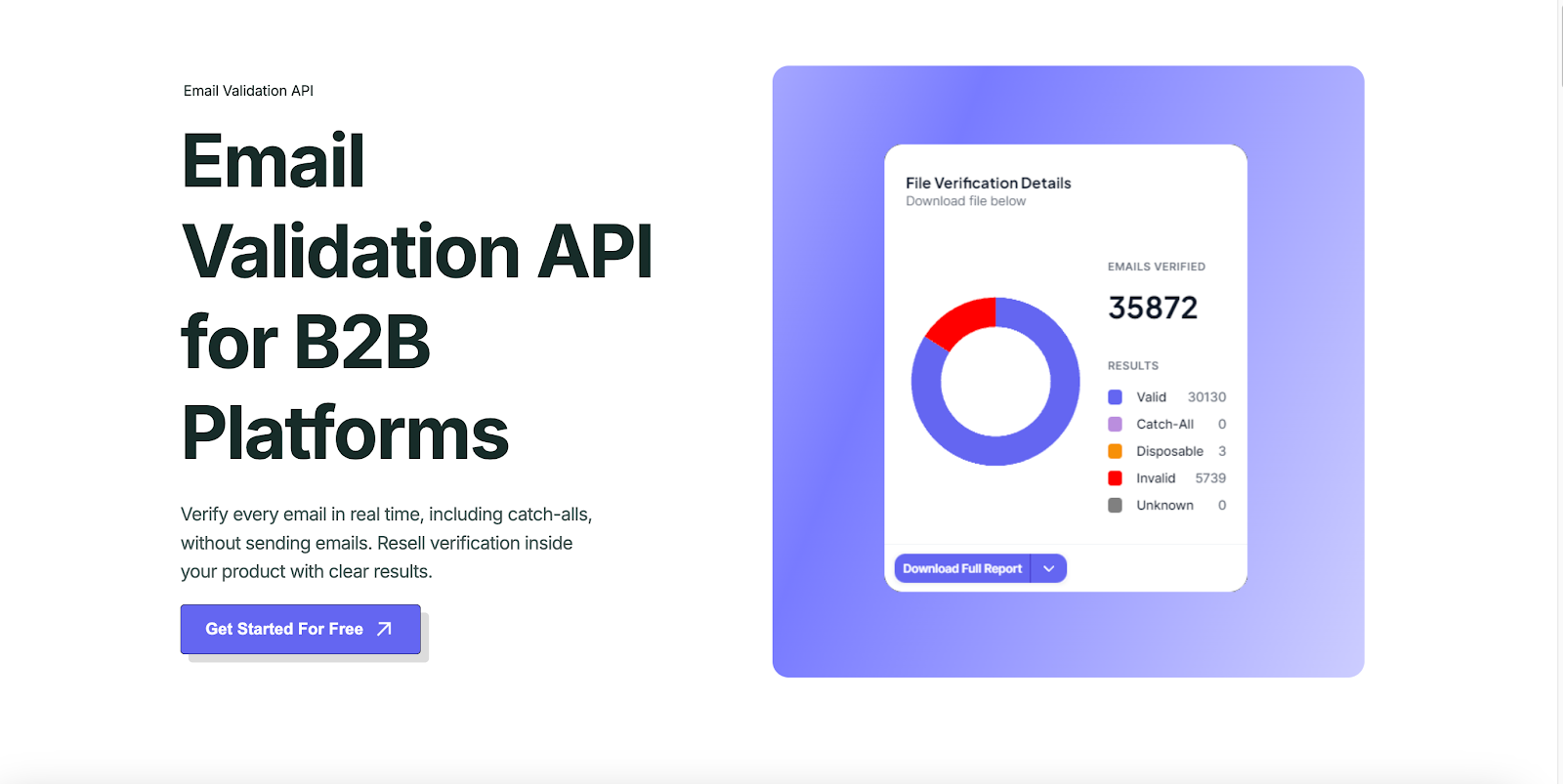
With 1B+ emails verified and 99%+ accuracy for SMTP methods and catch-all verification, Listmint delivers proven reliability at scale. The platform supports direct use by business owners and resale of B2B products.
Clear outputs label results as valid, invalid, catch_all_valid, or catch_all_invalid, which helps operations decide next steps quickly. Usage can be visualized by workspace with charts, exports, and inbox reports covering total volume, pass rates, and status breakdowns.
Agencies, SaaS platforms, and enterprise teams use Listmint in sign-up forms, CRMs, and bulk uploads for immediate checks. Security includes encrypted transport, scoped API keys, and scheduled data removal, aligning with industry privacy practices.
Listmint stands out in this comparison for its real-time catch-all verification and 99%+ accuracy. Teams use it to protect sender reputation while recovering up to 50% more usable leads from their existing lists.
Get started for free and experience instant verification built for modern sales and marketing teams.
Clearout provides an API designed for businesses that need verification at multiple points in their workflow. It covers real-time checks for new users and bulk email validation for existing databases, making it useful for sales teams focused on lead generation and email list cleaning.

The platform supports integrations with popular CRMs and email marketing platforms, making it flexible for small and mid-sized teams. It also includes an email finder feature for identifying and verifying contacts associated with a business domain.
Developers can access straightforward documentation and a clean user interface that displays verification results with detailed breakdowns.
Clearout also includes features for detecting disposable and temporary email addresses, which helps businesses filter out risky contacts early. Pricing tiers are available for both low- and high-volume needs, with free credits available for testing.
Kickbox is a long-standing provider of email verification services used by marketers and developers. Its API helps businesses verify email addresses during the signup process and supports batch processing for existing lists.
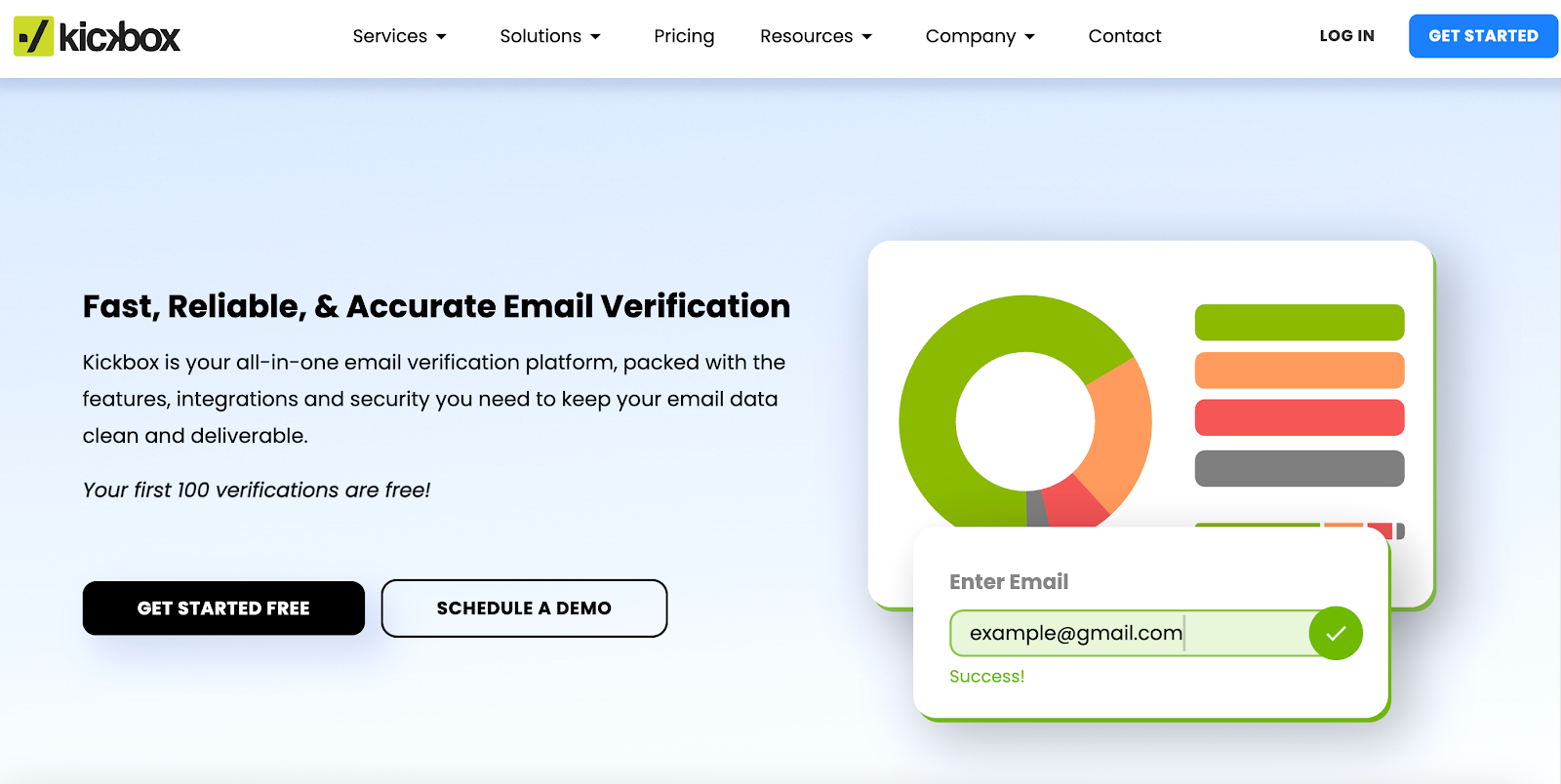
The service integrates with ESPs and marketing platforms, making it accessible for different industries. Clear documentation and examples are available for developers who want to connect the email verifier API to sign-up forms or internal systems.
Kickbox includes features such as disposable email detection, syntax validation, and role-based filtering, helping businesses identify invalid or risky email addresses before outreach.
Mailgun offers an email validation service that integrates naturally with its wider set of email delivery services. The API checks email addresses in real time and also supports batch processing for larger databases.
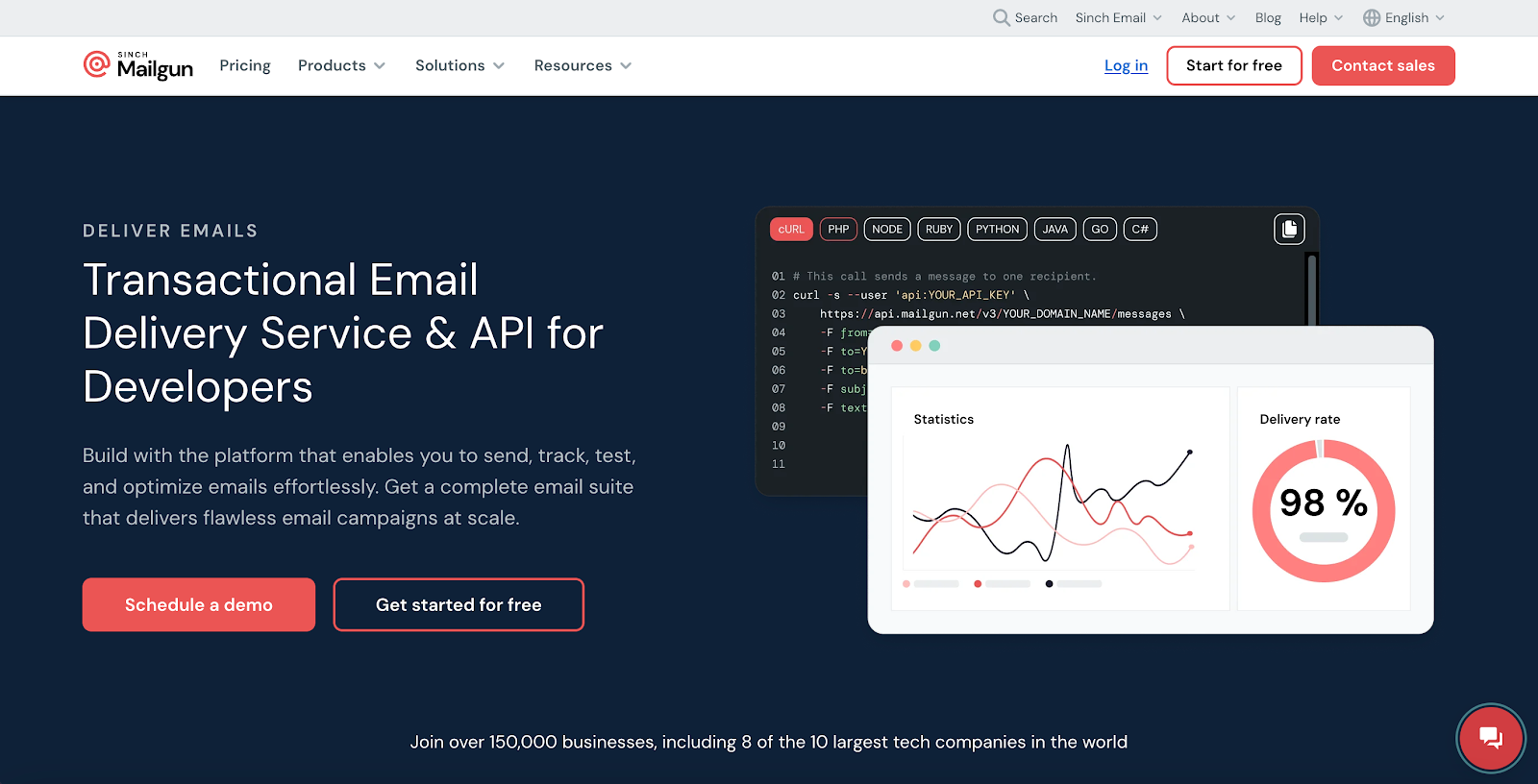
Mailgun’s service helps detect invalid email addresses, role-based accounts, and syntax errors. It also reviews MX records and mail server signals to assess whether an address is deliverable.
Results are delivered quickly, giving companies a clearer view of email quality before launching campaigns. Teams using Mailgun’s broader platform can pair email validation with separate inbox placement and email testing tools to support broader deliverability workflows.
The platform is frequently chosen by businesses already using Mailgun’s sending infrastructure, creating a single environment for both email delivery and validation. Pricing is usage-based, and the tool is part of Mailgun’s broader email platform.
Verifalia provides an API and web-based service for email list verification. It delivers detailed verification results that categorize addresses into deliverable, risky, or invalid addresses.
The platform has a focus on flexibility. Businesses can upload files through the dashboard or connect through the API to automate ongoing checks. Developers can also use client libraries in multiple programming languages, making integration simpler for different systems.
Built with distributed processing, Verifalia supports large-scale email verification while maintaining steady performance. Its reporting features also provide useful insights into email quality and list health.
Pricing is based on credits, with different monthly plans available for growing businesses. There is also a free plan for smaller verification needs or initial testing.
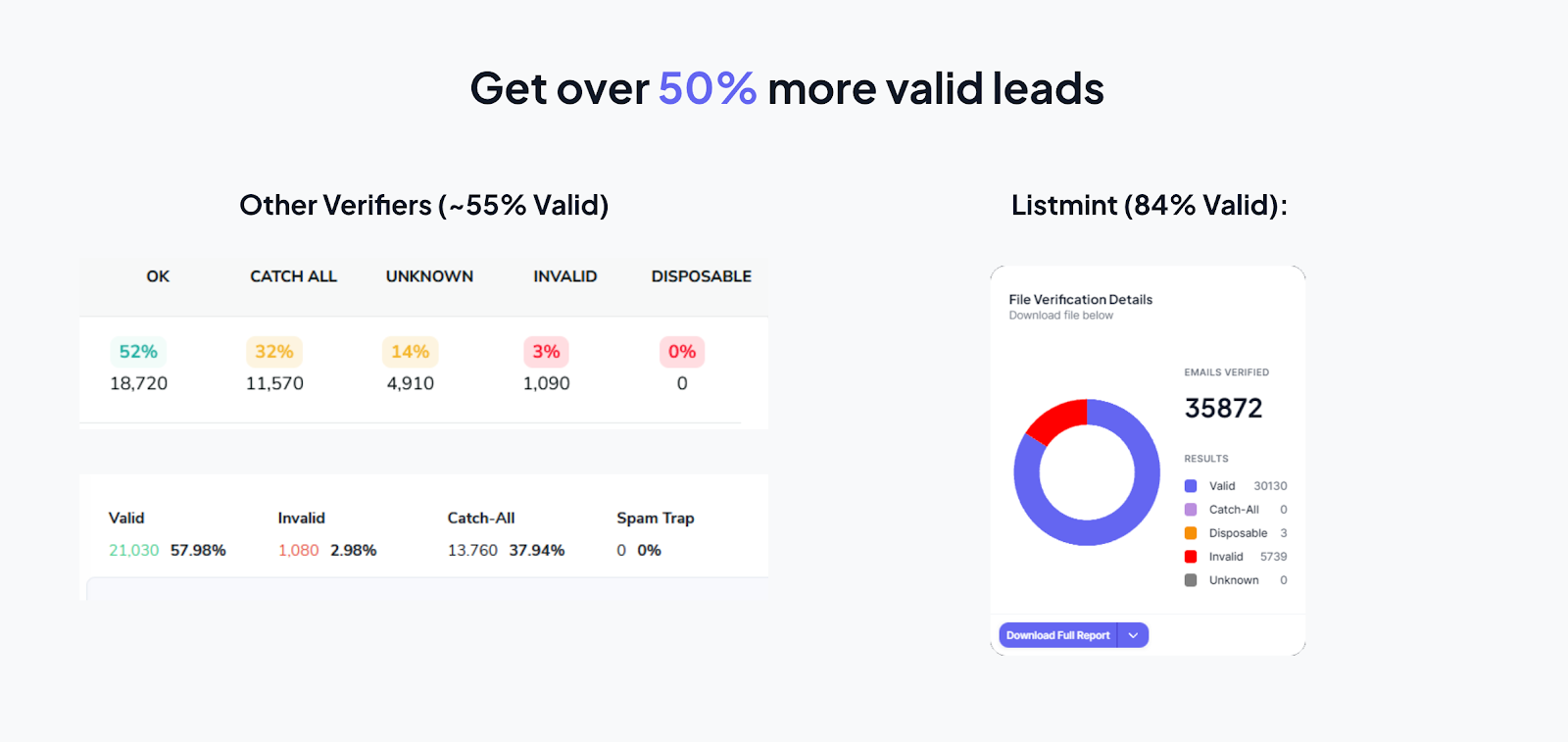
Listmint has become the preferred choice for companies that rely on accurate email data because it solves the problem most verifiers leave unresolved: catch-all addresses. Other tools often mark these addresses as risky or take up to 48 hours to confirm them.
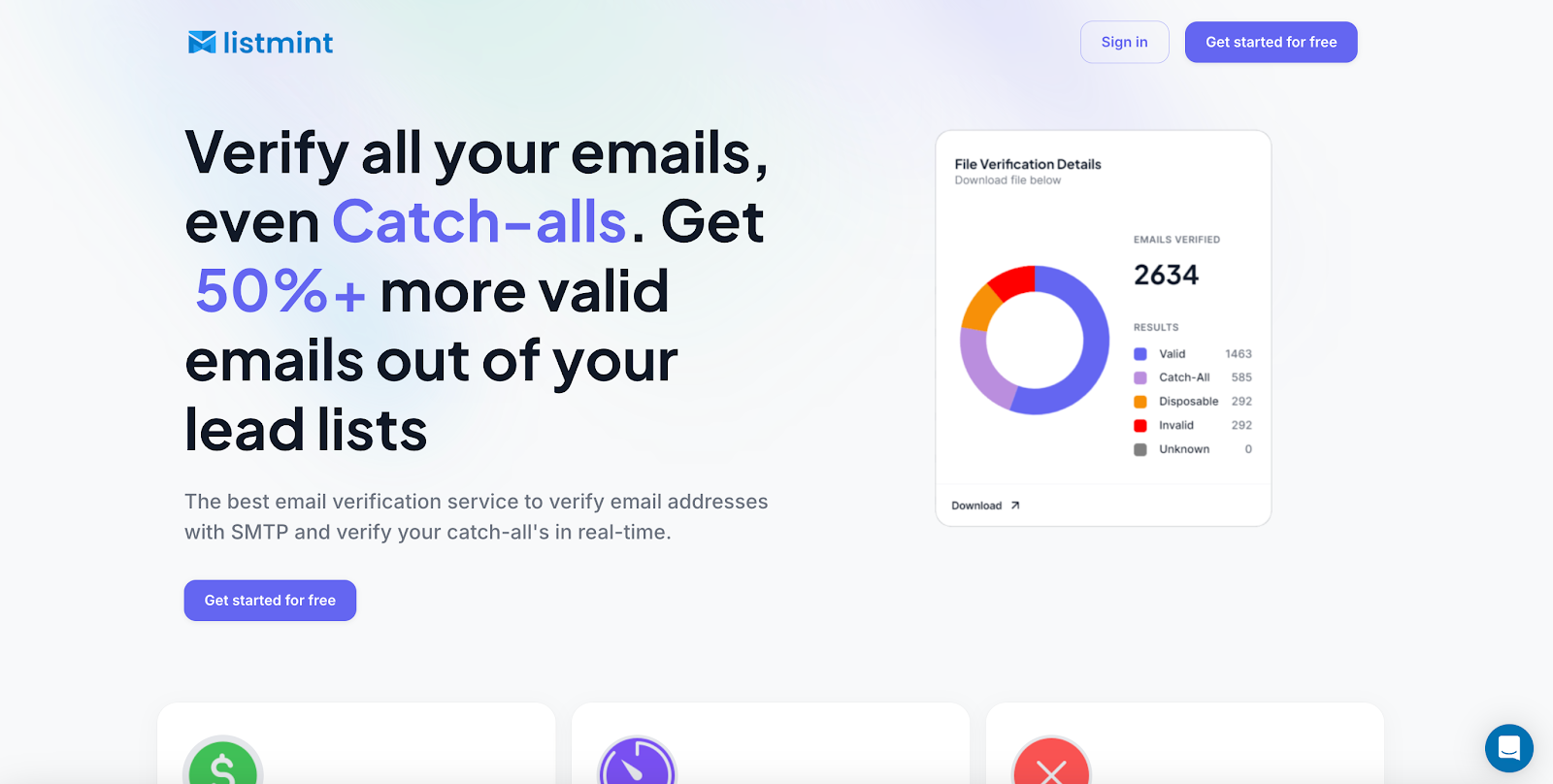
Listmint verifies them instantly without sending test emails, which means businesses no longer have to sideline a large share of their lists.
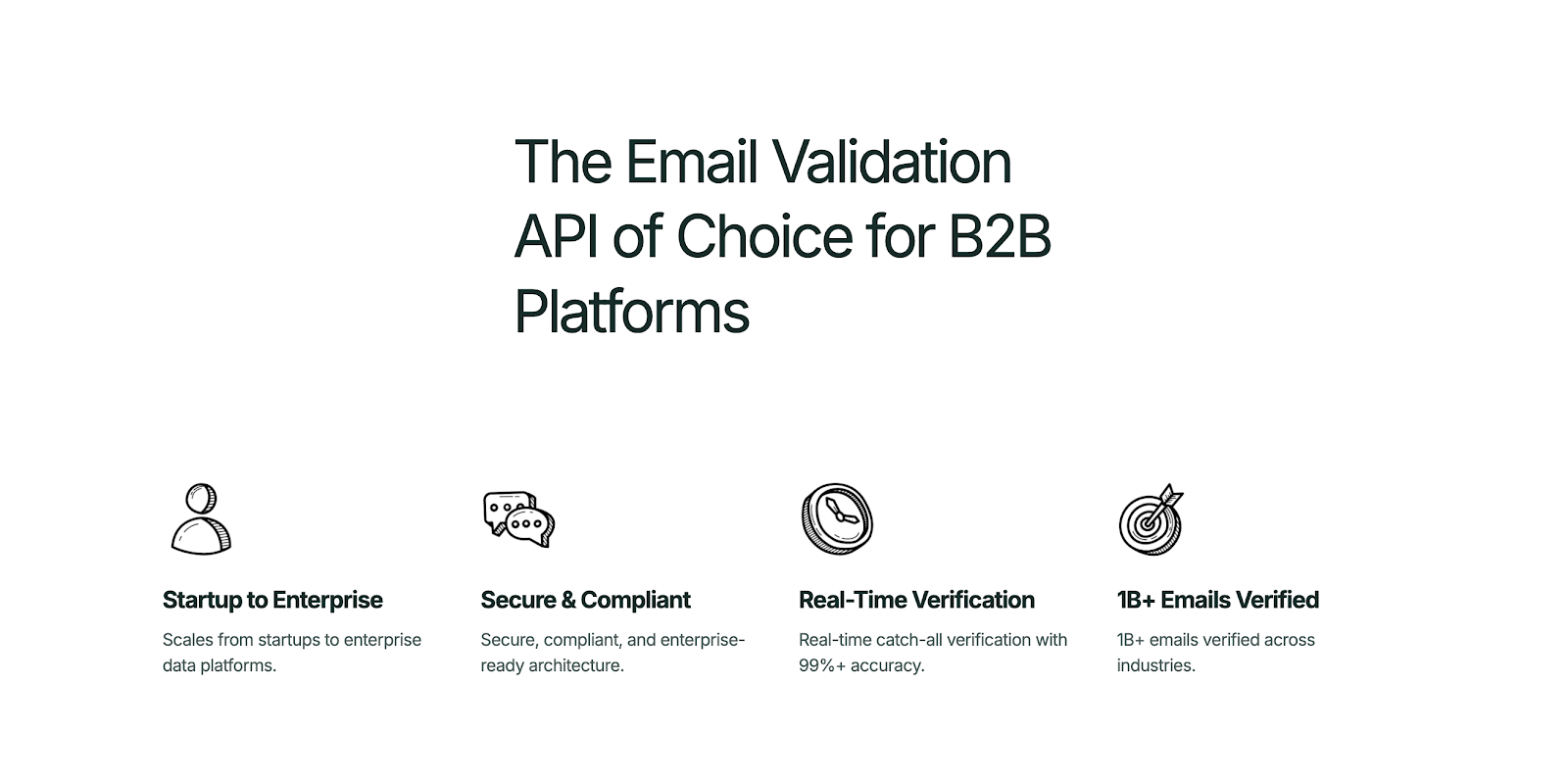
Performance at scale is another area where Listmint stands out. With 1B+ emails verified and 99%+ accuracy in both SMTP and catch-all categories, the platform consistently delivers clear results.
Teams gain confidence in working with verified contact details, which can improve deliverability, lower bounce rates, and recover up to 50% more usable leads from the lists they already paid for.
Flexibility makes Listmint relevant for different use cases. Business owners use the platform directly to clean data for campaigns, while SaaS platforms and agencies integrate the API to power verification within their own products.
In both cases, users get reliable outputs, secure handling of data, and reporting that keeps results transparent.
Listmint provides instant verification where other tools fall short. You can use it to improve email deliverability, reduce bounce rates, and maximize the value of every contact in your database.
Email verification has become a cornerstone of reliable marketing and sales operations.
The right email verification API makes the difference between sending with confidence and wasting resources on bad data.
Accuracy, speed, and security are important, but the real test is how a provider handles catch-all email addresses that make up a large share of modern lead lists.
Listmint is built to bridge that gap.
With real-time verification, 99%+ accuracy on both SMTP and catch-all validations, and scalability for both direct users and B2B platforms, it delivers the clarity businesses need to protect their reputation and make the most of their contacts.
If your team is ready to stop losing leads and start working with data you can trust, get started with Listmint today and experience real-time verification that keeps every campaign moving forward.
The best email API for verification provides accurate, real-time results, scales with your workload, and integrates easily into existing workflows. Many businesses choose Listmint because it instantly verifies both standard and catch-all email addresses, making it one of the leading email verification APIs.
Yes. A reliable email verification API can verify email addresses from free email providers and business domains. It checks syntax, performs MX record detection, and may communicate with SMTP servers to assess whether a mailbox exists or appears able to receive email when the receiving server provides enough information.
Many email verification providers include a free trial or free tier to help you evaluate the service before purchasing. Since paid plans start at different usage levels, review pricing, verification limits, and included features before choosing a plan.
Compare verification accuracy, response speed, documentation, API requests, result categories, and support for bulk verification. It is also worth comparing monthly subscriptions, integration options, and how several tools classify catch-all, disposable, and role-based email addresses.
Email verification APIs use MX record detection to confirm that a domain is configured to receive email. They may also communicate with SMTP servers to gather mailbox-level signals and assess whether an email address appears able to receive messages without sending a test email.