Email verification has become a standard part of protecting sender reputation, data security, and keeping marketing campaigns effective.
A campaign cannot produce results when messages go to invalid addresses or fail to reach the intended inbox. For marketing and sales teams, list quality can directly affect email deliverability and long-term engagement.
ZeroBounce is well known in the email verification market, but businesses may compare different tools when pricing, real-time performance, or catch-all verification does not fit their needs.
This guide breaks down the best ZeroBounce alternatives for 2026, helping businesses choose the right solution to keep their data accurate and their campaigns effective.
These are the top six ZeroBounce alternatives to consider in 2026:
As businesses expand their email efforts, they may find that ZeroBounce no longer fits their verification volume, budget, or workflow.
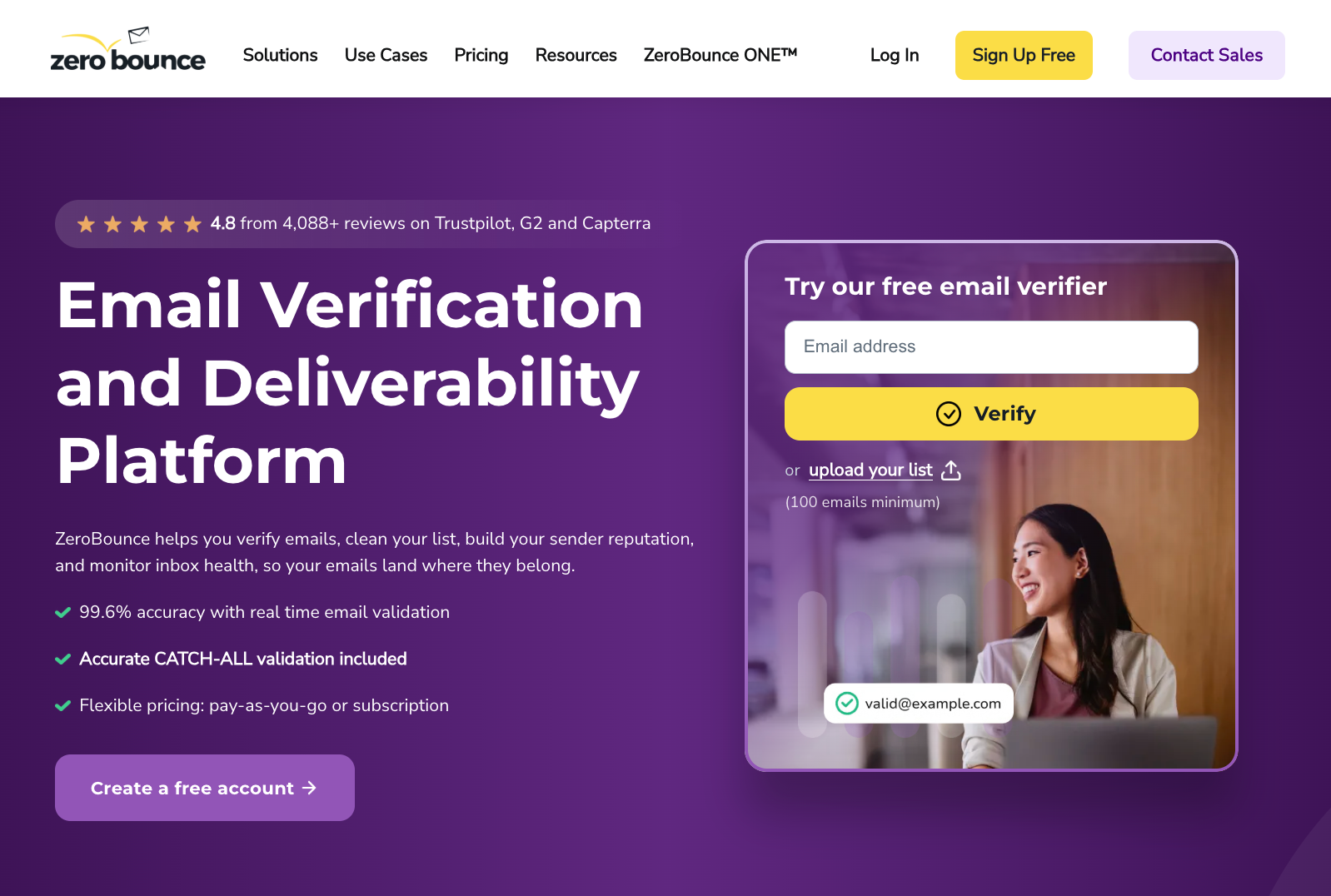
Pricing is often one reason to compare alternatives. Verification costs can add up as databases grow, especially when teams need more than small volumes of checks.
It is worth comparing transparent pricing, available free credits, and any free plan before committing. Teams should also check when credits expire and what could create additional or hidden costs.
Catch-all verification is another consideration. Some tools identify catch-all domains but cannot confirm the individual mailbox, leaving potentially useful contacts marked as risky.
Teams that regularly work with these addresses may want to compare how newer platforms and legacy verifiers handle them.
Integration can also affect the day-to-day workflow. Many teams use CRMs, email platforms, and automation software together, so API access and direct integrations can reduce manual work when contacts need to be verified before entering a campaign.
Processing speed and reliability become more important as verification volume grows. Businesses processing large lists need reliable bulk verification and consistent processing speeds so list cleaning does not hold up campaign preparation.
Businesses have more options than ever when it comes to finding the right email verification tool. Below are the top alternatives to consider in 2026:
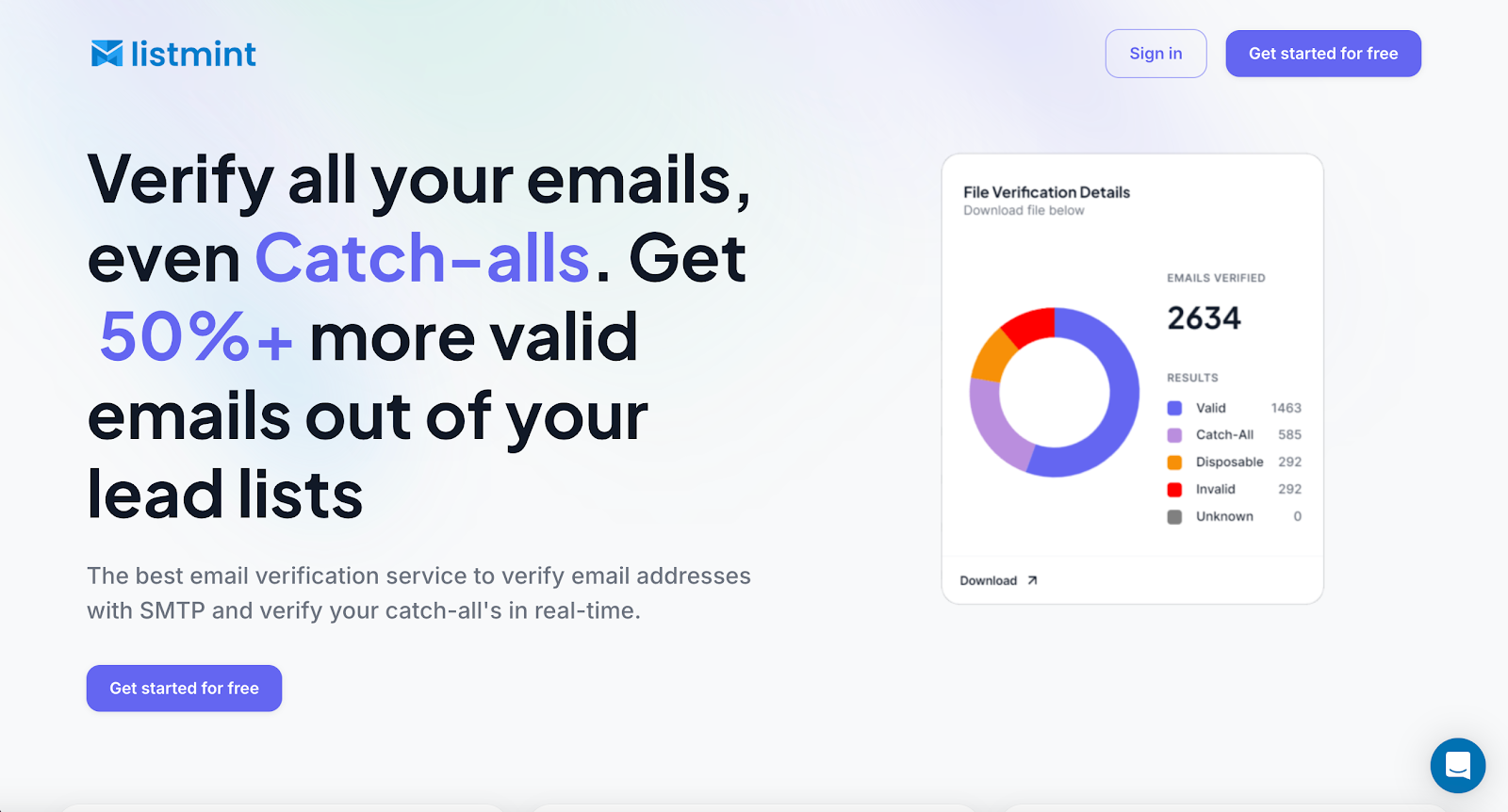
Listmint sets itself apart as the only email verification tool that can verify standard and catch-all email addresses in real time with 99%+ accuracy.
Where most providers label catch-alls as risky and unusable, Listmint conducts catch-all verification and gives you a clearer indication of which addresses are likely deliverable.
This means teams recover more than 50% additional valid emails from the lists they already paid for, turning wasted records into active opportunities.
For businesses and agencies running multiple campaigns, this capability is a game-changer. Instead of waiting 24–48 hours like with other verification tools, Listmint verifies both standard and catch-all emails in real time.
That speed and accuracy protect sender reputation, keep bounce rates low, and allow marketing teams to launch campaigns with confidence.
Listmint’s main difference vs. ZeroBounce is its focus on real-time verification for standard and catch-all addresses, while ZeroBounce combines verification with a broader set of deliverability and email finding features.
Listmint gives companies the ability to make better use of their data while saving time on manual checks. Whether for small teams managing campaigns or enterprises working with large lists, it delivers consistent accuracy and reliability.
Get started for free and see how Listmint verifies catch-all emails instantly with 99%+ accuracy.
Clearout combines email verification with email finding and prospecting tools, giving sales and marketing teams a way to find contacts and validate them before outreach.
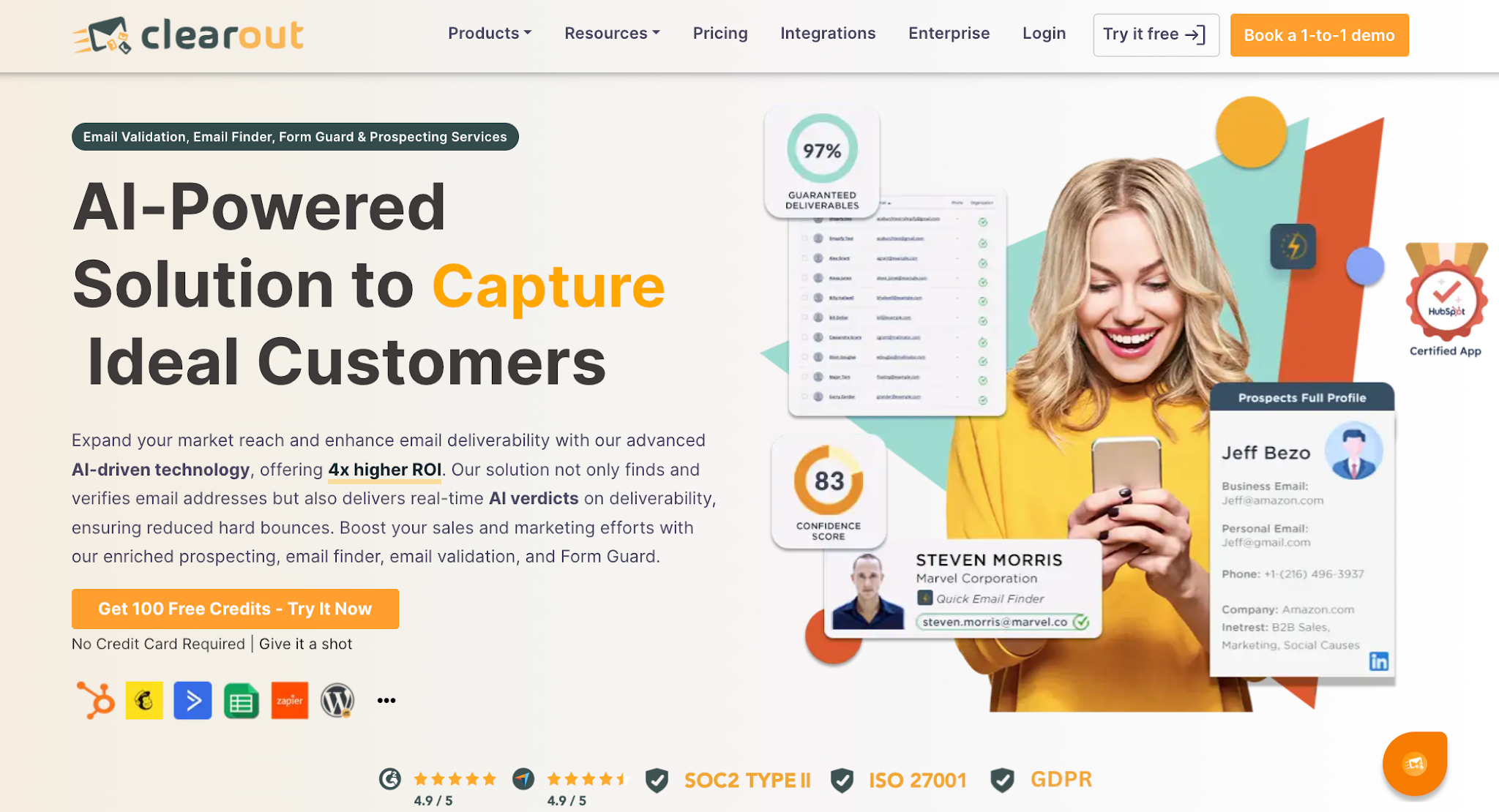
The platform supports bulk and real-time verification, with checks for catch-all addresses, disposable emails, spam traps, and role accounts such as sales@ or support@. It also checks mail servers from different email providers as part of the verification process.
Clearout connects with platforms such as HubSpot, Salesforce, ActiveCampaign, and Google Sheets, giving teams several ways to verify contacts without relying only on file uploads.
Compared with ZeroBounce, Clearout places more emphasis on combining email verification, email finding, and B2B prospecting within the same platform.
Clearout combines verification with email finding, prospecting, form validation, and enrichment. That broader product mix may be more than necessary when the main requirement is simply cleaning and verifying email lists.
Kickbox is an email verification platform built to help businesses protect sender reputation and improve email deliverability. It checks addresses before sending and separates deliverable, risky, and undeliverable addresses so teams can reduce avoidable bounces.
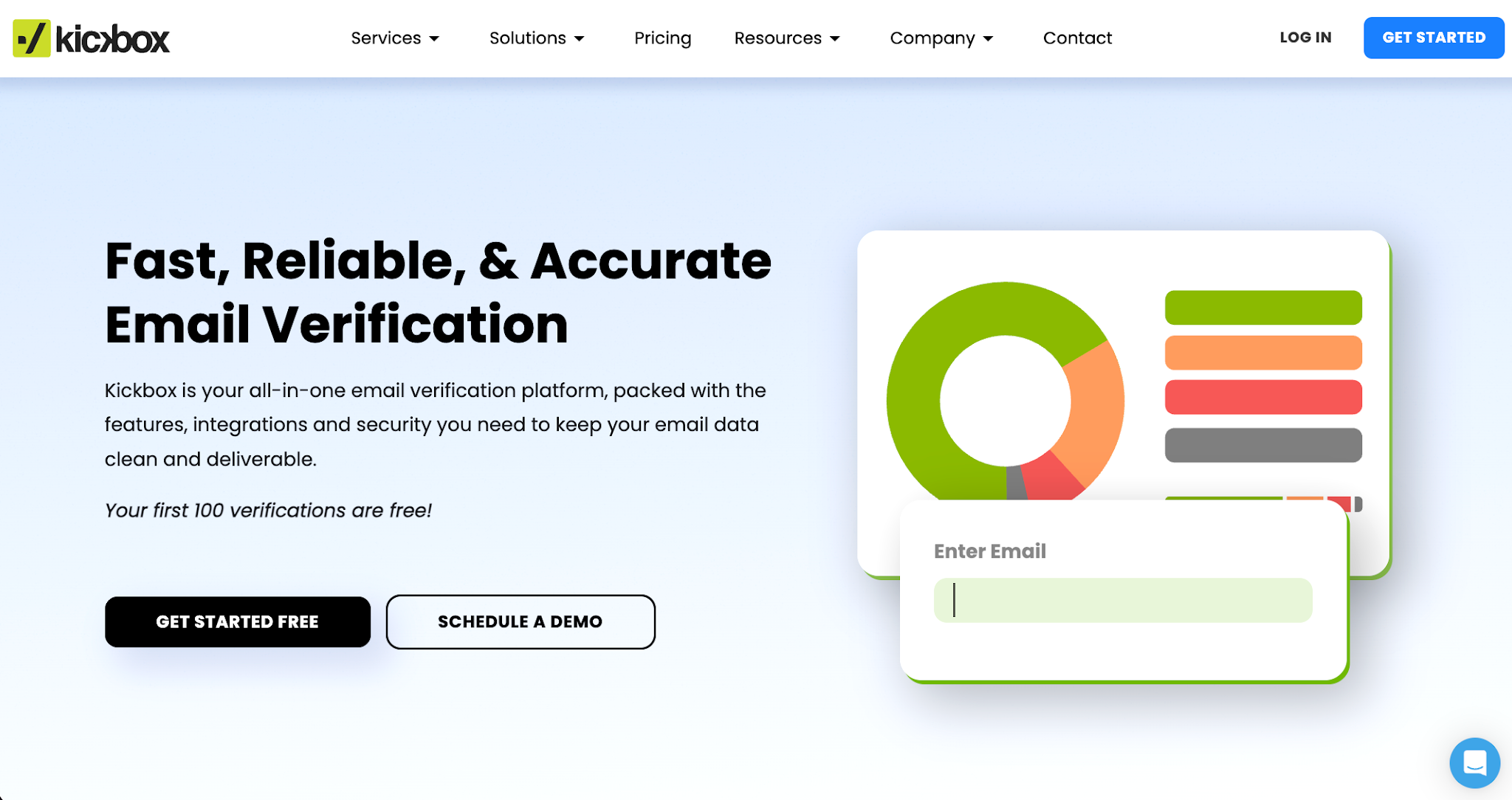
Teams can upload lists for bulk verification or use the API to catch invalid emails at signup forms, apps, and other capture points.
Results are grouped as deliverable, risky, or undeliverable, giving users a practical form of risk detection for disposable addresses, role-based emails, accept-all domains, syntax errors, and fake accounts.
Kickbox also connects with CRM and marketing tools, so verification can fit into existing workflows used for newsletters, re-engagement, and lead generation.
Compared with ZeroBounce’s broader set of email finding, scoring, and inbox placement tools, Kickbox stays more focused on verification and deliverability services.
Kickbox stays relatively focused on verification and deliverability. Contact discovery and broader prospecting are outside that core focus, so those parts of the workflow may require other tools.
Instantly includes email verification inside its broader sales and outreach software, making it a practical go-to tool for teams that want list cleaning close to their sending workflow.
Its built-in verification can clean uploaded lists, check addresses before campaigns, and verify catch-all emails. Instantly also offers API access for teams that want verification connected to forms, lead capture, or other systems.
Because verification sits alongside outreach, CRM, lead data, and deliverability tools, it can also support automated list hygiene as contacts move through a sales workflow.
Instantly differs from ZeroBounce by placing built-in verification directly within a sales outreach platform rather than positioning it mainly as a separate verification and deliverability service.
Email verification is one part of Instantly’s larger sales and outreach offering. For a team that does not plan to use its sending, CRM, lead data, or automation tools, a standalone verifier may be a closer fit.
FullEnrich combines B2B contact enrichment with email and phone discovery. Its platform excels at waterfall enrichment, where contact data is checked through multiple providers to find and validate information for prospects.
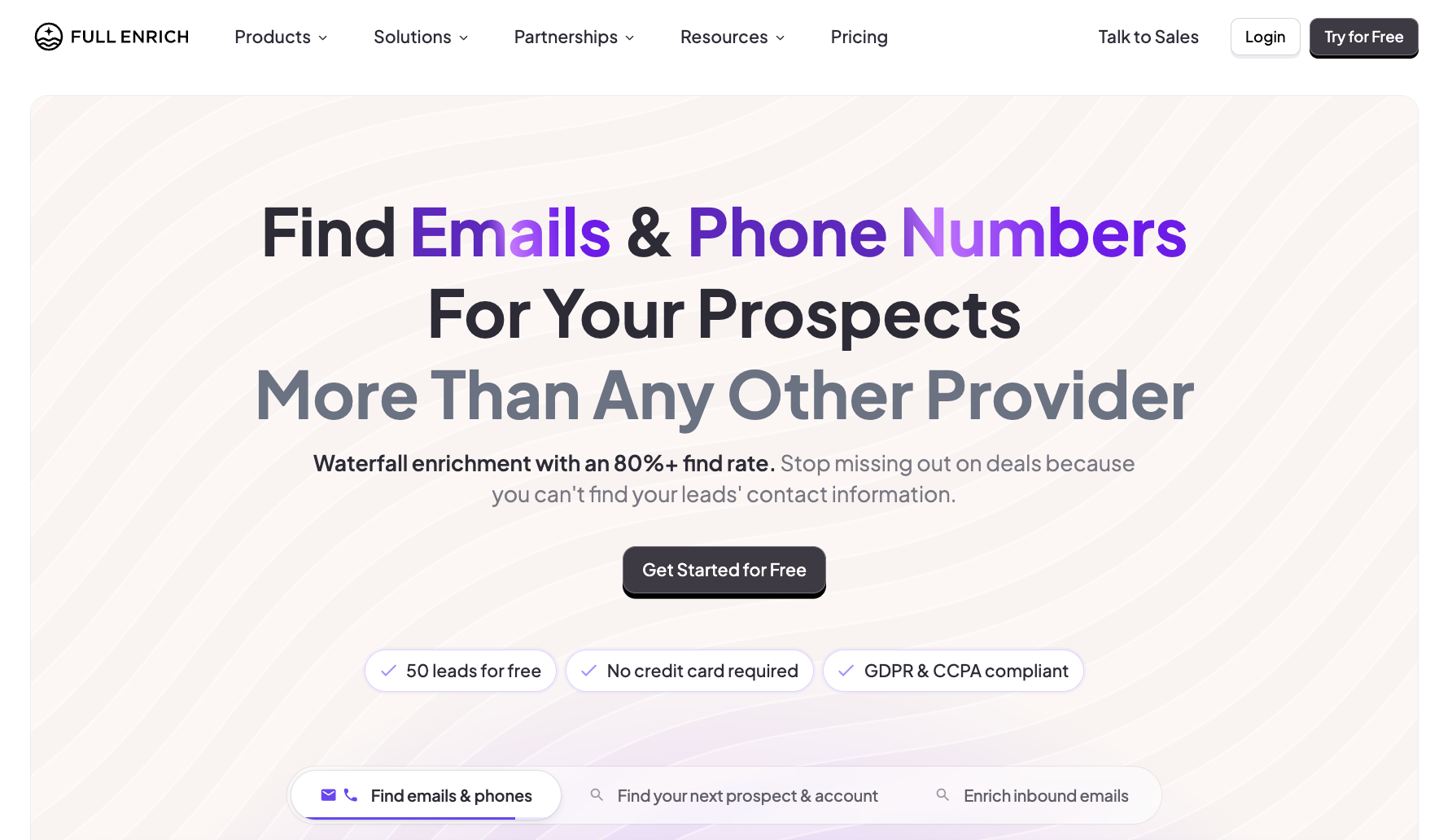
For email verification, FullEnrich uses three independent verification engines and removes an email when the engines disagree. This approach adds another check before contact data reaches the user and can help limit false positives. FullEnrich also resolves catch-all addresses and provides a bounce probability for delivered emails.
Verification is part of a broader enrichment workflow that can also find work emails and mobile numbers from multiple data sources.
Compared with ZeroBounce, FullEnrich focuses more heavily on B2B contact data, waterfall enrichment, and verification from multiple providers.
FullEnrich approaches verification as part of B2B contact enrichment. That makes it more relevant to teams searching for contact data, but less focused on straightforward list cleaning as a standalone task.
MillionVerifier focuses on email verification and bulk list cleaning, with options for uploaded lists, individual email checks, and real-time verification.
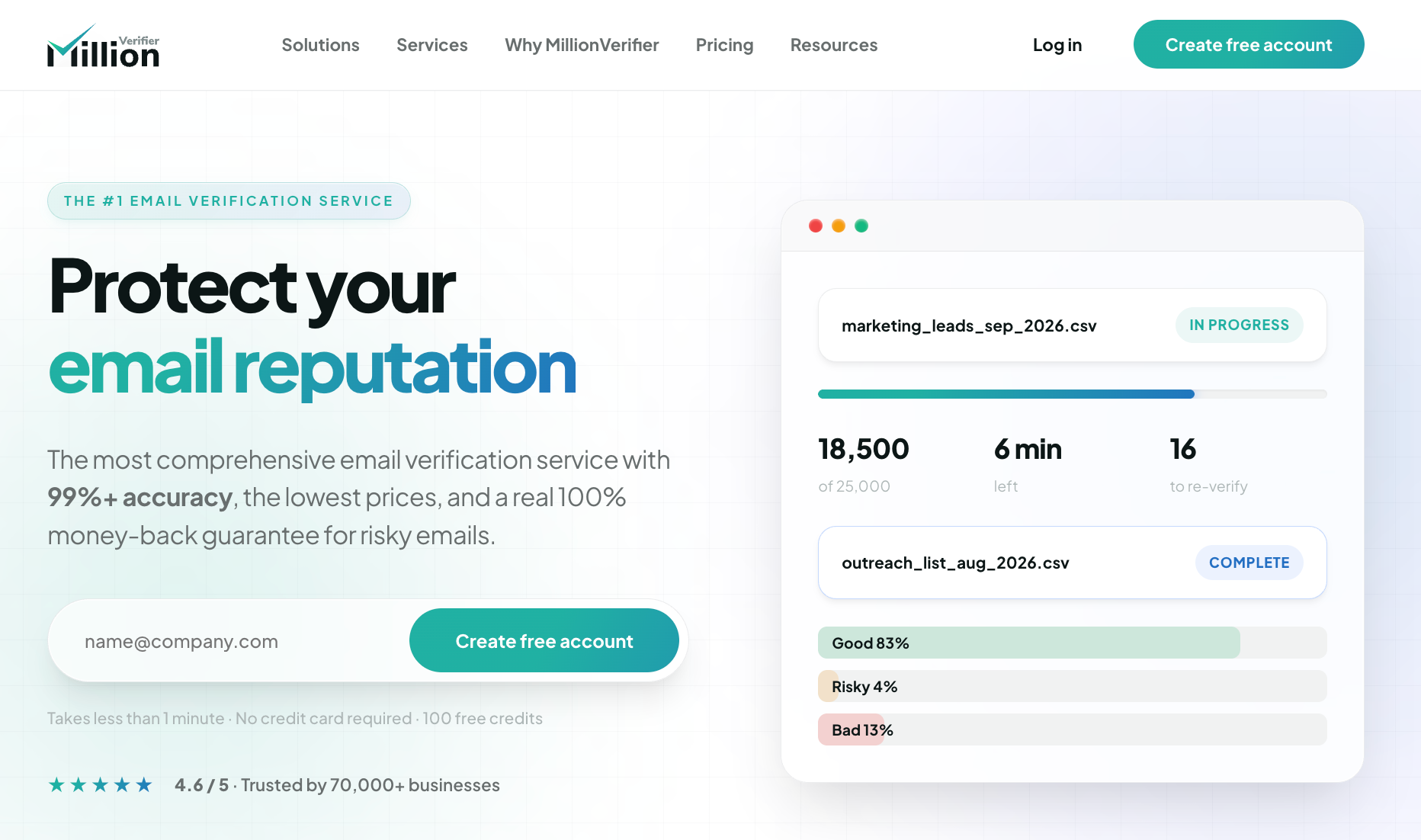
Teams can use it to clean contacts before newsletters or outreach campaigns, helping reduce invalid addresses that could affect domain reputation. It also offers catch-all verification and an API for checking new addresses as they are collected.
For ongoing list maintenance, MillionVerifier connects with email marketing and CRM tools through native integrations. Its pay-as-you-go credits do not expire, which can provide more predictable pricing for teams that prefer a low-cost verification model.
MillionVerifier focuses primarily on bulk verification and ongoing list maintenance, while ZeroBounce also provides email finding, scoring, inbox placement testing, and other deliverability features.
MillionVerifier concentrates primarily on email verification and ongoing list maintenance. Teams looking for broader premium features related to prospecting or contact enrichment would need to cover those needs with other tools.
Finding the right email verification tool comes down to matching its capabilities with your business needs. When comparing an alternative vs. ZeroBounce, consider your list size, workflow, and the types of addresses you regularly verify.
Match these factors to your email strategy before choosing a tool:
Listmint is the only email verification platform that confirms both standard and catch-all addresses in real time. Competing tools often label catch-alls as risky or take up to 48 hours to process them.
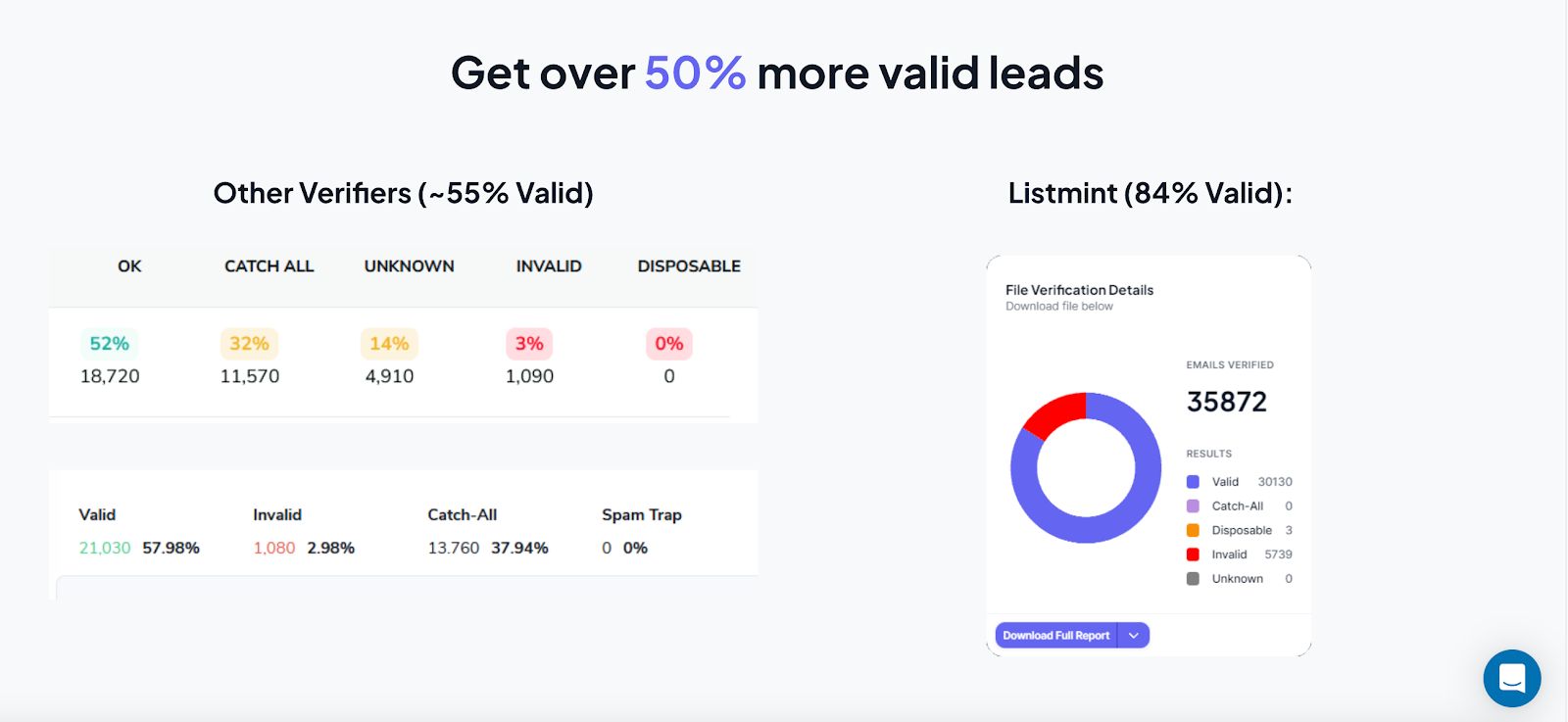
With Listmint, results are delivered immediately, protecting sender reputation and giving businesses more valid data to work with.
This difference helps companies recover 50%+ more usable emails from their existing lists, cut bounce rates to under 1%, and launch campaigns with confidence.
Beyond the platform itself, Listmint also offers an email validation API, making it easy for teams and resellers to integrate real-time verification into their own workflows.
If you want accurate results, less wasted data, and faster list cleaning, Listmint stands out as the clear alternative to other providers.
Get started today and see how Listmint verifies catch-all emails instantly!
ZeroBounce and NeverBounce are both email verification services, but the better fit depends on your verification volume, integrations, pricing needs, and the results you need from your lists. Compare their current features and pricing before choosing between them.
Yes. ZeroBounce is an established email verification company that lists SOC 2 Type 2 and ISO 27001 certifications among its security credentials. Businesses with stricter security requirements should still review its current policies, data handling practices, and available audit trails before using the service.
Several find tools offer limited free usage, including ZeroBounce Email Finder. ZeroBounce currently provides free accounts with a small number of monthly Email Finder queries and also offers an integration for finding email addresses from exported LinkedIn profiles. Some contact-finding services may also provide mobile numbers, so compare the type of data included before choosing a tool.
ZeroBounce offers limited free usage through its free account, which currently includes monthly email verification credits. Using its email validation API consumes verification credits, so higher-volume API use requires additional credits or a paid plan.