
SendGrid helps businesses send transactional, marketing, and API-based email communications. If you've started comparing SendGrid alternatives, you're probably looking for a platform that better fits your current workflow, technical requirements, or sending volume.
This guide compares eight SendGrid alternatives, explains what each platform offers, and highlights the situations where each one is a good fit.
These are the best SendGrid alternatives in 2026:
Businesses usually start looking for a new email delivery service when their current setup no longer fits how they send email day to day.
For many teams, the first reason is cost. Paid plans can become harder to manage when list size, sending volume, or campaign frequency increases. Companies may also want transparent pricing so they can plan costs without watching usage too closely.
Another reason is performance. Deliverability issues, rising bounce rates, or changes in sender reputation can leave businesses questioning if their current platform still meets their needs. That's often when they begin comparing other options.
Workflow can also shape the type of platform a business needs. Sending transactional emails often requires reliable API functionality, whereas email marketing campaigns rely more on templates and reporting.
Organizations that manage transactional and marketing emails may prefer a solution that brings both together.
Support also plays a bigger role than many businesses expect. Technical users don't want to spend hours searching through documentation when something isn't working. Marketing teams feel the same way when campaigns are delayed.
After enough slow response times, it's natural to start looking at other providers.
Not every email platform is built for the same use case. Below are eight SendGrid alternatives, along with what each one offers, who it's best suited for, and why businesses may consider it.
Mailgun is an email delivery platform built primarily for developers and businesses that send large volumes of transactional email.
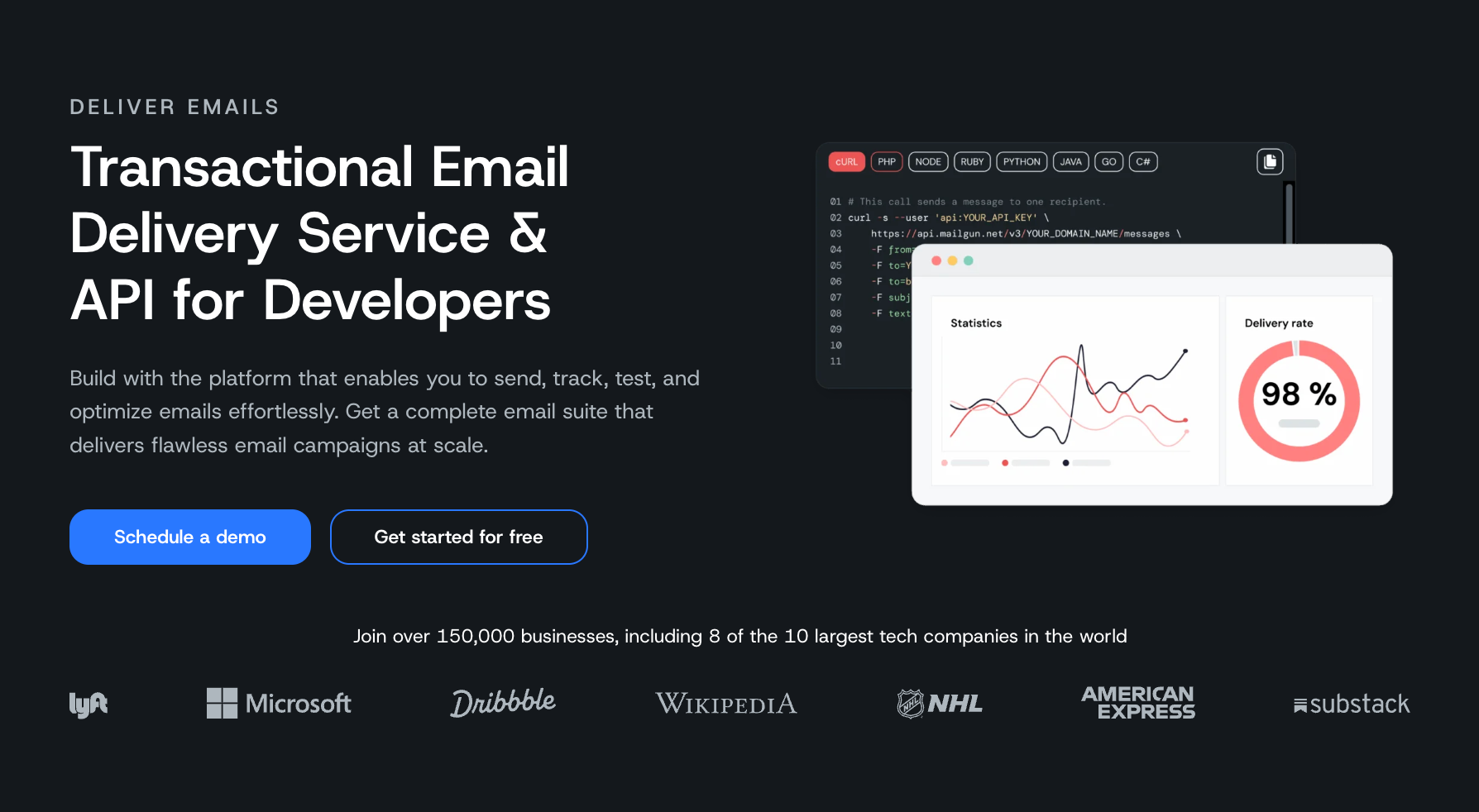
Developers can send email through SMTP or APIs while also managing email validation, tracking, analytics, and message testing from the same platform.
The platform is commonly used by SaaS companies, product teams, and businesses that want more control over their email infrastructure.
Mailgun is often chosen by teams that rely on a reliable email API for application-generated emails and custom integrations.
It also provides dedicated IP addresses for higher-volume sending, detailed email logs for monitoring delivery activity, and dedicated IP pools for businesses with more advanced sending requirements.
Postmark is an email platform that focuses on transactional email delivery for applications and websites.

It is commonly used for transactional messages, such as password resets, order confirmations, account notifications, and other system-generated emails, via its email API and SMTP service.
Postmark is designed for businesses that prioritize application-generated email over marketing campaigns.
Postmark may be worth considering if your business mainly sends application-generated emails and wants a service designed around transactional sending.
One of its distinguishing features is its separate infrastructure for promotional and transactional email streams, helping keep marketing traffic separate from time-sensitive messages. It also includes email templates, analytics, inbound email processing, and detailed delivery activity.
Amazon SES (Simple Email Service) is an email sending service within Amazon Web Services that supports both transactional and marketing emails for applications, websites, and software platforms.
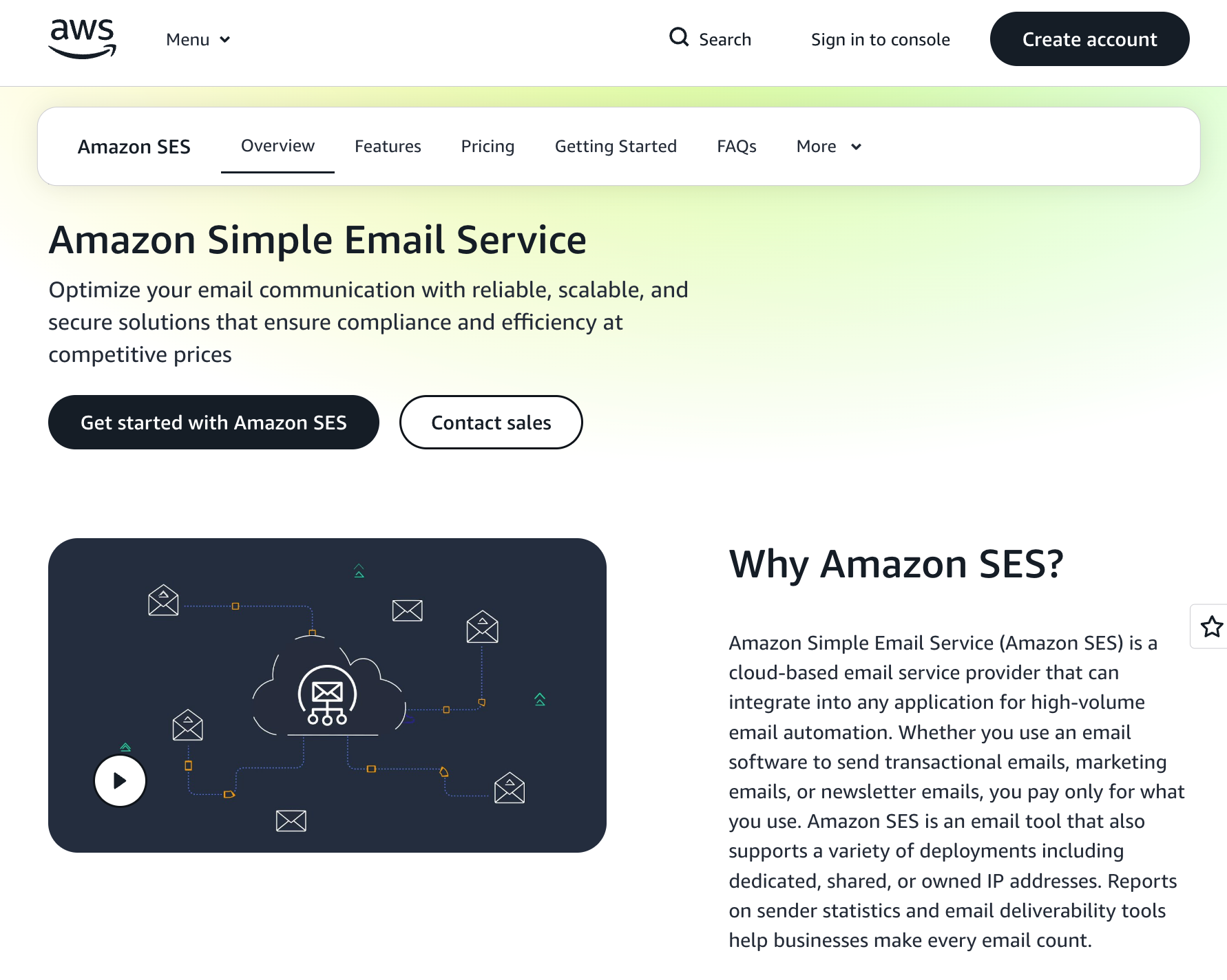
Businesses can connect Amazon SES through its email API or SMTP relay to send email within the AWS ecosystem. It is commonly used by organizations already running workloads on AWS or those looking for usage-based pricing.
Amazon SES may suit businesses that prefer pay-as-you-go pricing over fixed monthly subscriptions. It supports configurable IP addresses, provides SMTP credentials for application integration, and requires DNS settings.
Businesses can also continue using providers like Google Workspace for inboxes while sending application emails through Amazon SES.
Brevo is a customer communication platform that helps businesses manage email marketing, transactional messages, SMS, and customer relationships from one place.

It is commonly used by small and mid-sized businesses that want to manage marketing email campaigns and customer communication from a single application.
Brevo combines marketing and transactional communication on a single platform, making it suitable for businesses that prefer to manage both from the same account. It includes SMS marketing, landing pages, automation workflows, and templates for welcome emails and other campaigns.
Businesses that regularly send campaigns may also prefer to have marketing and transactional email capabilities in a single platform.
SparkPost is an email delivery platform for businesses that send large volumes of transactional and marketing email.
SparkPost is now part of Bird (formerly MessageBird), and its product information and services are available through Bird's website.

The platform includes an email API, analytics, and deliverability features for application-generated email, marketing campaigns, and customer communications.
Businesses that send large email volumes may choose SparkPost for its deliverability tools, delivery analytics, and support for inbox placement monitoring.
The platform also includes searchable email logs, managed dedicated IPs, and features designed to help maintain a trusted sender reputation. Organizations with higher sending requirements can access an enterprise plan, priority support, and ticket support through Bird.
Mailchimp Transactional (formerly Mandrill) is Mailchimp's transactional email service for developers and businesses that need to send application-generated emails.
It works alongside Mailchimp's email marketing platform, allowing businesses to send automated emails such as password resets, order notifications, and account alerts from the same account.
Mailchimp Transactional may suit businesses that want to manage marketing and transactional email in one ecosystem.
Developers can send emails through the API, while marketing teams continue using Mailchimp's custom templates and campaign tools. It also helps existing Mailchimp users avoid having to manage a separate transactional email provider.
Mailjet is an email platform that combines email marketing and transactional email in a single service for developers, marketers, and collaborative teams.

It includes an email API, SMTP relay, shared workspaces, and real-time collaboration tools, allowing teams to create, send, and manage emails from one dashboard.
Mailjet may be a suitable option for businesses that want developers and marketers working from the same platform.
It includes shared templates, approval workflows, and collaboration features for teams, along with custom domain tracking, email analytics, and user reports. Businesses that need additional assistance can also choose plans that include phone support.
MailerSend is a transactional email platform designed for developers and businesses that need to send application-generated emails through an email API or SMTP relay.
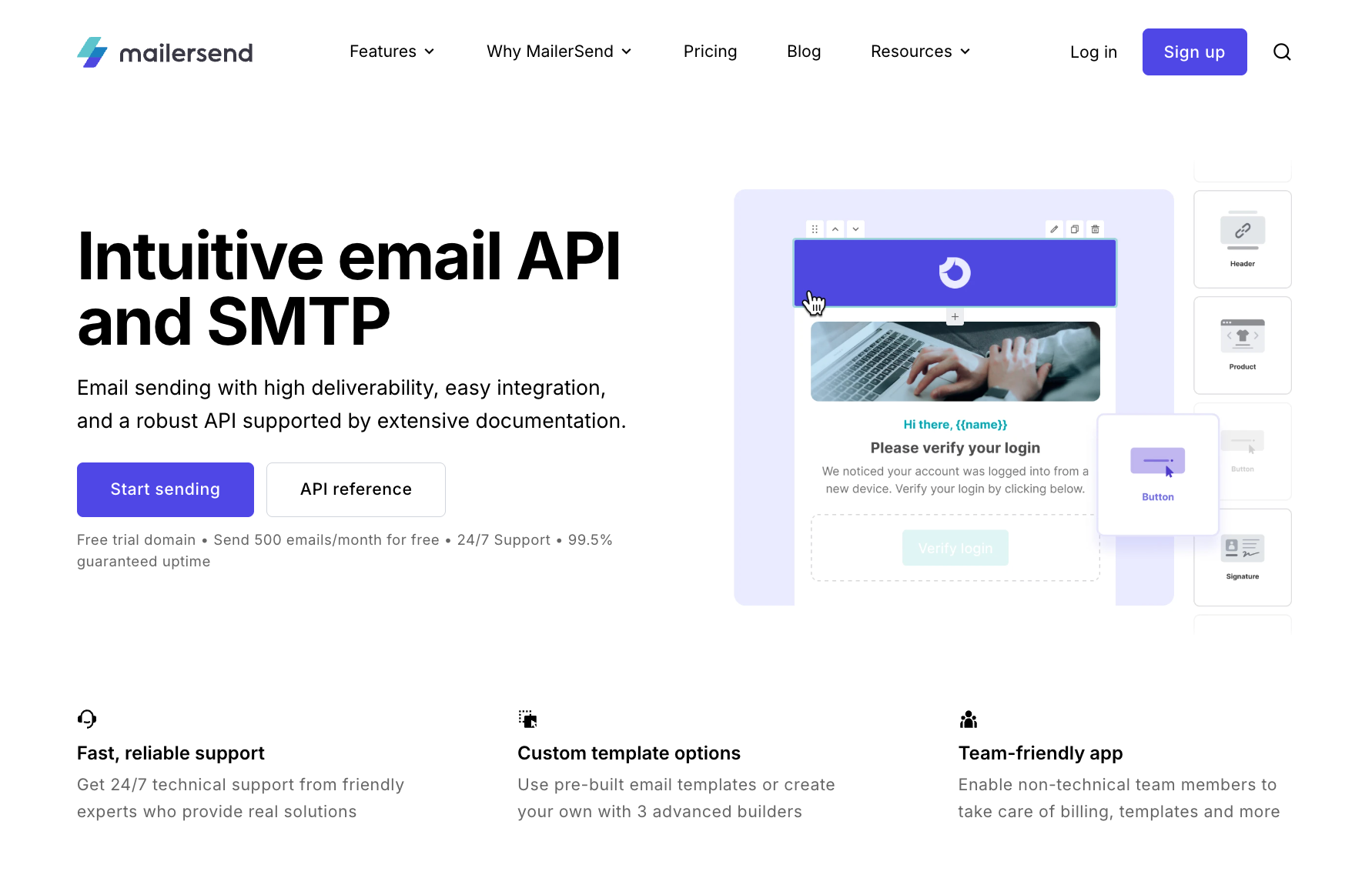
It supports common use cases such as invoices, password resets, delivery updates, and account notifications, and provides detailed documentation and multiple SDKs to enable faster integration.
MailerSend may be a good fit for businesses seeking straightforward API access and tools specifically built for sending transactional emails.
It includes an email API, an SMTP relay, multiple sending domains, and template management on a single platform. It can also suit SaaS platforms and e-commerce businesses that need a developer-focused transactional email service provider.
The best SendGrid alternative depends on how your business sends email, your technical requirements, and your long-term growth plans.
Before making a decision, consider which capabilities will have the greatest impact on your team's workflow, customer experience, and overall email performance.
Start by identifying the type of email your business sends most often. Some organizations focus primarily on transactional emails such as password resets, receipts, and account notifications, while others regularly send newsletters and marketing campaigns.
If you manage both transactional and bulk emails, choose a platform that supports both workflows without requiring separate tools.
If your team builds applications or automates workflows, evaluate how easy the platform is to integrate. Well-documented APIs, SDKs, webhooks, and SMTP support can simplify implementation and ongoing maintenance.
Also consider the quality of the documentation and developer resources, since they can reduce setup time and make future updates easier.
Choose a platform that can handle your current email volume while supporting future growth. As sending volumes increase, you may also want features such as dedicated infrastructure, dedicated IPs, or higher sending limits without migrating to another provider.
Planning for future growth now can help avoid switching platforms again as your business expands.
Reliable email delivery depends on more than simply sending messages. Review the platform's approach to inbox placement, sender authentication, monitoring, and reputation management.
Features that support deliverability can help maintain consistent sending performance as your email volume grows.
Review the service charges for email volume, additional features, and optional services. Understanding the pricing structure in advance helps keep costs predictable as your sending requirements change.
If your sending volume varies throughout the year, check whether the provider offers flexible pricing or usage-based plans that fit your business.
Look for reporting tools that provide visibility into delivery status, engagement, bounce rates, and other performance metrics. These insights can help identify issues and improve future email campaigns.
The right reporting tools also make it easier to monitor long-term email performance and spot trends over time.
If your business depends on email, review the level of documentation, onboarding resources, and technical support available. Responsive support can help resolve issues more quickly and reduce downtime when sending problems occur.
Consider whether the available support channels and response times match the level of assistance your team may need.
Switching to a new email platform can improve your sending infrastructure, but it won't automatically fix problems caused by poor-quality contact data. Many businesses assume their email provider is responsible for low deliverability when the real issue starts with the email list itself.
Common problems include invalid email addresses, catch-all addresses, disposable email addresses, typographical errors, and inactive contacts. These records can increase bounce rates and reduce the effectiveness of your email campaigns over time.
Even the best SendGrid alternative can't fix a list filled with invalid or outdated contacts. That's why email verification should be part of your migration process, regardless of which email delivery platform you choose.
Listmint is an email verification platform designed to improve email quality before messages are sent.

Rather than replacing your email delivery service, it works alongside your existing provider to help you send to cleaner, more reliable email lists.
Unlike many verification tools that simply label catch-all addresses as "risky," Listmint fully verifies them in real time and classifies them as catch_all_valid or catch_all_invalid.
The verification process does not send emails to the address being checked, allowing businesses to verify catch-all emails instantly instead of waiting hours or days for results.
With Listmint, you can:
Since launch, Listmint has verified 250M+ emails, delivering 99%+ SMTP and catch-all verification accuracy.
Get started with Listmint for free and verify your email lists before your next campaign!
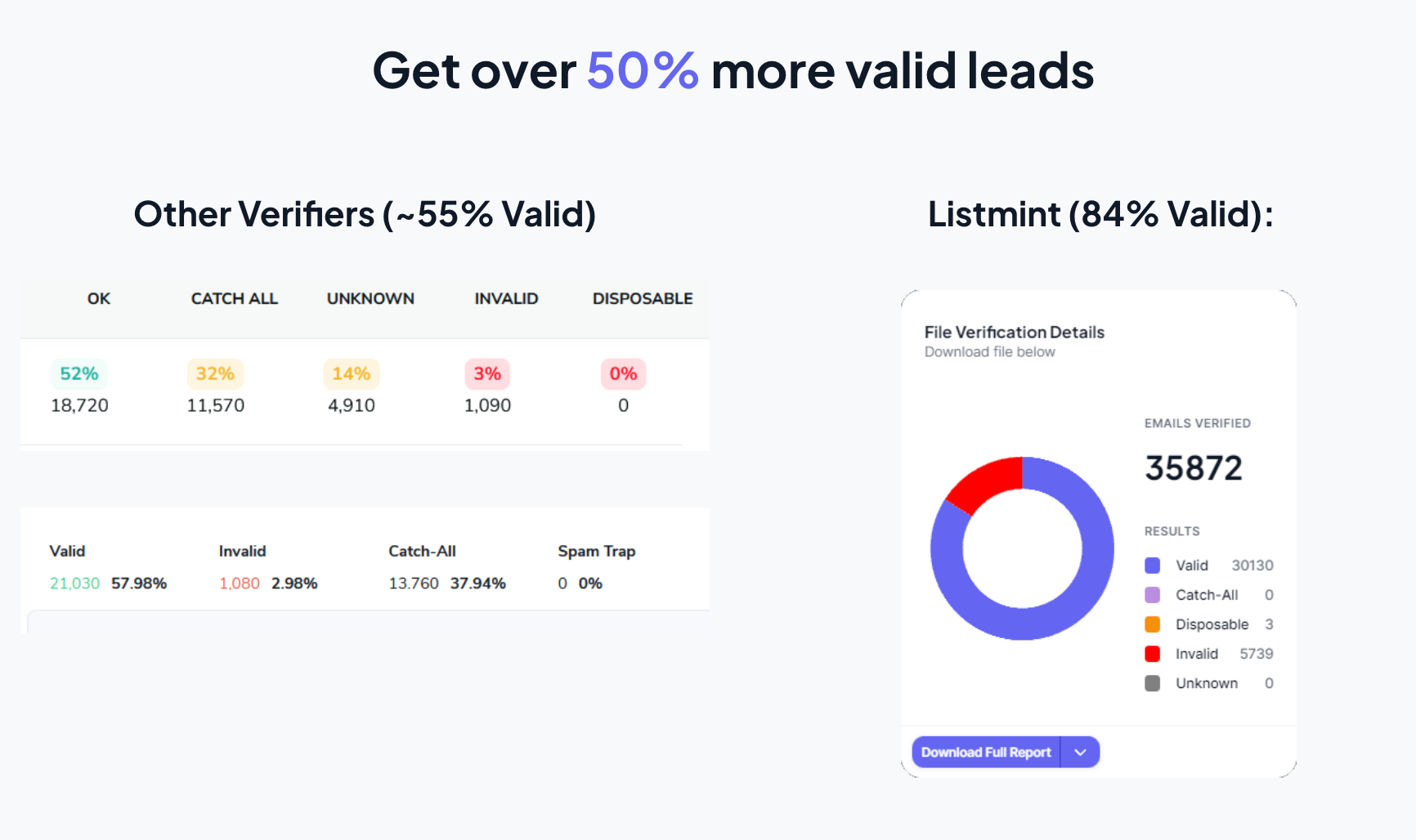
There isn't a single best SendGrid alternative for every business. The right choice depends on why you're switching and which capabilities are most important to your team.
Some businesses prioritize lower costs, while others focus on deliverability, flexible APIs, email marketing features, or a platform that can scale as email volume grows. Taking the time to evaluate your current and future requirements will help you choose a provider that fits your workflow.
Whichever platform you choose, pairing it with Listmint can help improve email list quality, reduce bounce rates, and strengthen email deliverability before your messages are sent.
Yes. In most cases, you can continue using your existing sending domain. You'll typically need to update your DNS records, including SPF, DKIM, and other authentication settings, with your new email provider before sending email.
Not always. A different email platform may offer features that support deliverability, but poor-quality email lists, authentication issues, and sending practices can still affect results. Verifying your email list before sending can help reduce bounce rates and improve overall performance.
Yes. Invalid, disposable, inactive, and catch-all email addresses can contribute to delivery problems regardless of which email platform you use. Verifying your list before migrating helps improve list quality and reduces unnecessary bounces.
It depends on the provider. Some email platforms support both marketing and transactional email, while others focus primarily on transactional sending. Before switching, confirm that the platform supports the types of email your business sends most often, whether you're on a basic plan or a more advanced subscription.
That depends on how your business sends email. SMTP works well for many standard email workflows, while an email API typically offers greater flexibility for applications, automation, and custom integrations. Depending on the provider, a generous free plan may include basic API access, while more advanced capabilities are often available through a professional plan.