Choosing between Apollo.io vs Findymail can be tricky because both platforms help sales teams discover prospects, access contact details, enrich CRM records, and connect contact data with existing workflows.
The main difference becomes easier to see once you look at how much of the sales process each platform covers.
Apollo.io supports a broader workflow, from identifying target accounts and building contact lists to running outreach, managing conversations, and progressing deals. Findymail takes a more focused approach to finding, verifying, enriching, and maintaining B2B contact data.
In this comparison, we’ll look at how both tools handle prospect discovery, verification, enrichment, engagement, integrations, and sales workflows so you can see which one fits your current setup.
Apollo.io is a unified sales platform that combines B2B prospect data, sales engagement, inbound lead management, data enrichment, and deal execution in one system.
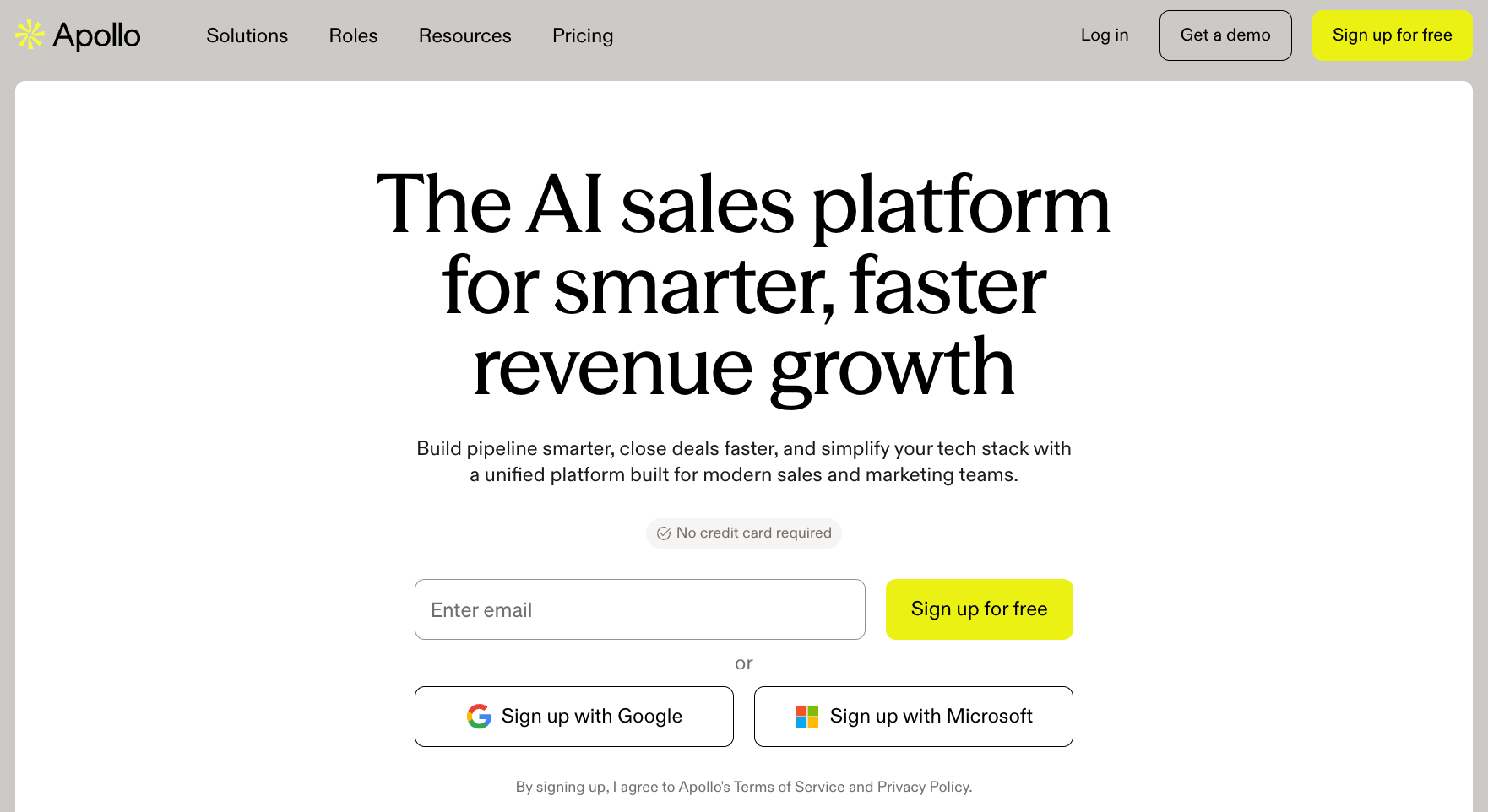
It is designed for businesses that want to find prospects, connect with buyers, and manage more of the sales process without relying on several separate tools.
At the center of the platform is Apollo.io's database, which includes more than 240 million contacts and 30 million companies.
Users can search for prospects, access available verified business emails and phone numbers, apply advanced filters, and use built-in AI tools to research accounts and prioritize contacts.
The platform also supports natural-language search, lead scoring, workflow automation, and CRM enrichment to help keep prospect records up to date.
Apollo.io extends beyond prospect discovery by supporting multichannel outbound campaigns, automated email sequences, calling, prioritized sales tasks, and email deliverability controls.
It also includes inbound lead routing, website visitor identification, meeting preparation, conversation intelligence, pipeline boards, deal alerts, and AI-generated call summaries.
These capabilities help businesses manage personalized outreach and continue using the platform as their sales activity begins to scale.
Apollo.io is built for teams that want prospect data, engagement, inbound workflows, and deal execution inside one connected platform.
Findymail is a B2B contact data platform that helps businesses discover, verify, enrich, and maintain prospect information throughout the sales process.
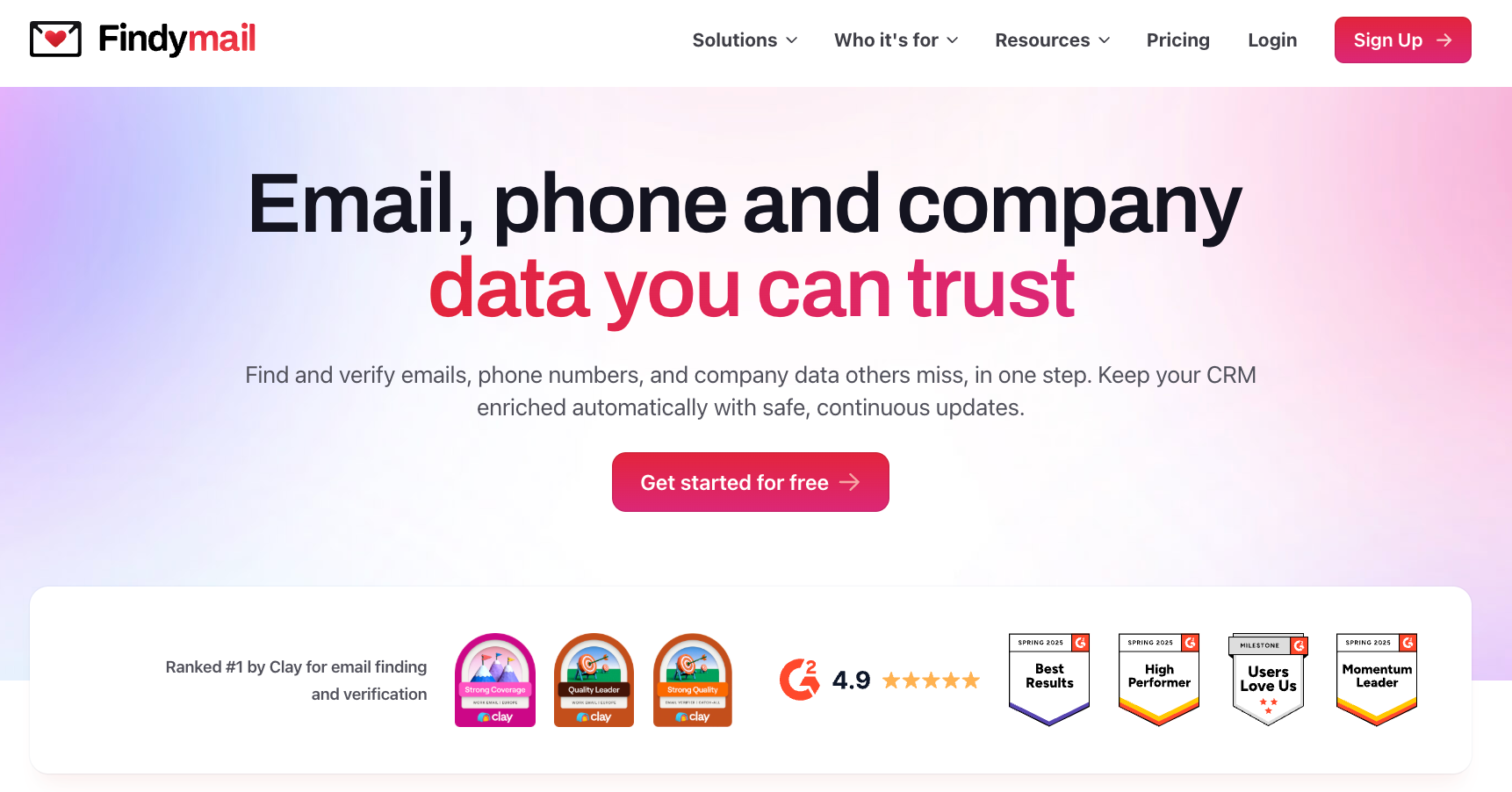
Its products help sales and marketing teams find contacts, verify emails in real time, and keep CRM records up to date without replacing the tools they already use.
The platform supports focused email finding through its Email Finder, Phone Finder, and Intellimatch AI Lead Finder.
Users can search for verified business contacts, verify existing lists with bulk CSV uploads, Google Sheets, or the API, and work with catch-all email validation before launching email campaigns.
Beyond contact discovery, Findymail includes Intent Signals for identifying potential buying activity and Datacare for ongoing CRM enrichment.
It also supports duplicate management, job-change monitoring, Chrome extension prospecting, workflow automation, and integrations with CRM systems and popular email sequencers. These capabilities help businesses maintain reliable data as prospect records change over time.
Findymail is built for teams that need verified contact data and ongoing CRM enrichment without replacing their existing outreach and sales tools.
Before diving into each area in more detail, here's a quick side-by-side comparison of Apollo.io and Findymail. The table highlights how each platform fits into the sales process and where their primary focus differs.
Apollo.io and Findymail overlap in prospecting and contact data, but they support different parts of the sales workflow.
The sections below compare where each platform fits, from finding contacts and checking email addresses to maintaining CRM records and running outreach.
A typical sales process moves through several stages:
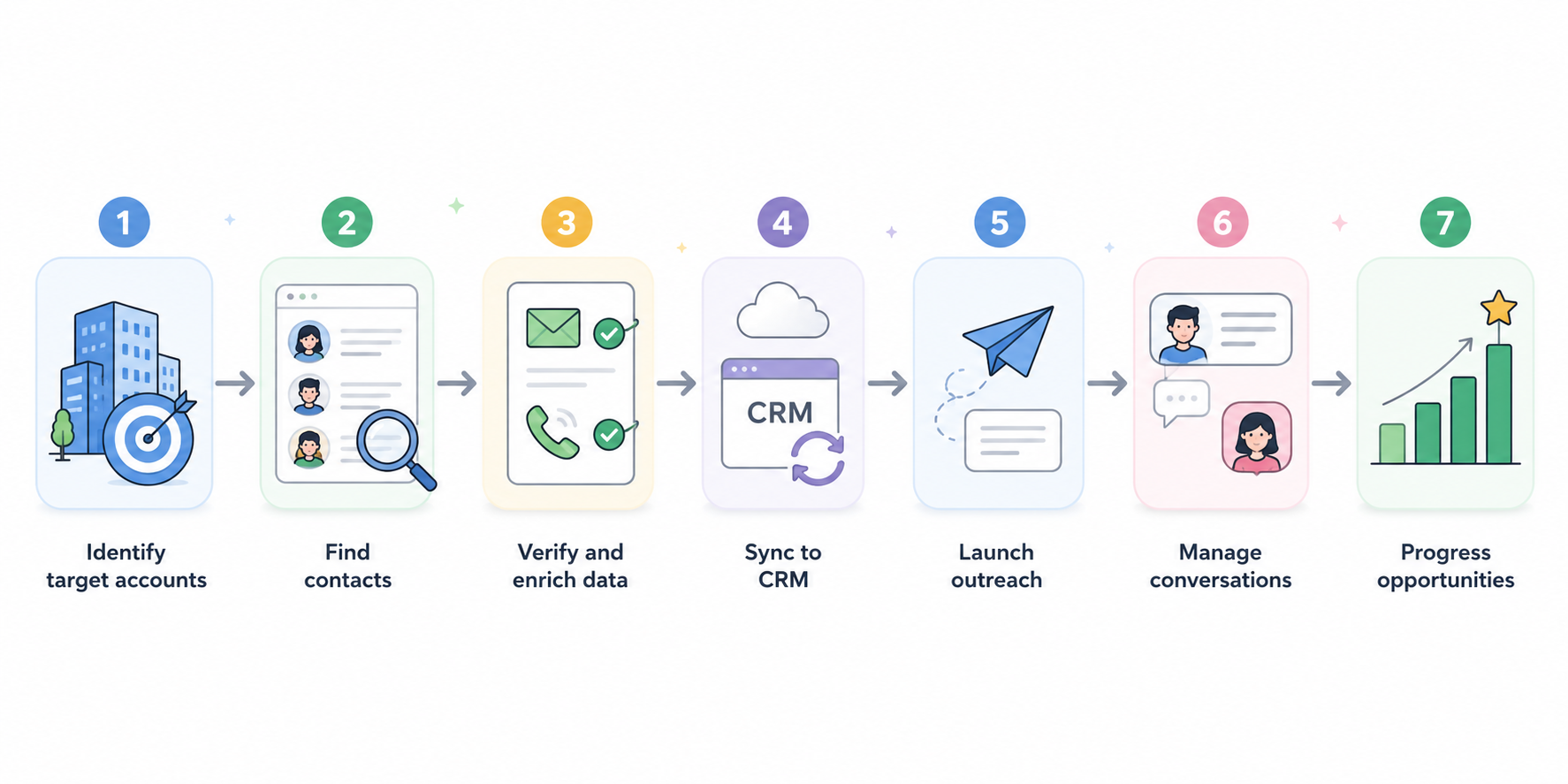
Apollo.io can support most of this process. It combines account discovery, contact research, enrichment, outbound engagement, inbound lead routing, and deal activity. This broader coverage may help a business reduce the number of products in its tech stack.
Findymail focuses on the earlier stages of data management. It helps users discover contact information, verify email addresses, enrich records, maintain CRM data, and transfer contacts into other platforms.
The main distinction is the role each platform plays. Apollo.io aims to bring prospecting and sales execution into one system.
Findymail works as a separate tool that prepares and maintains contact data for an existing CRM or outreach platform. They compete in contact discovery and data enrichment, but Apollo.io covers more of the engagement and deal workflow.
Apollo.io gives users a searchable database of more than 240 million contacts from over 30 million companies. Its contact profiles may include business emails, phone numbers, job details, company information, and prospecting signals.
Users can narrow results with more than 65 search attributes, build account lists, score contacts, and export selected records to a CRM.
This database-led approach suits companies that want to browse a large market and identify prospects using filters or natural-language search.
Findymail begins with more targeted inputs. Users can find contact information by a person's name, company domain, social profile, uploaded list, or LinkedIn URL via supported prospecting workflows.
The Chrome extension, spreadsheets, API, and Intellimatch AI Lead Finder offer several ways to find email addresses, phone numbers, and company information.
Apollo.io is better suited to searching a large native database. Findymail is better suited to targeted contact discovery, verification-first workflows, and filling gaps in existing prospect data.
Both platforms provide verified business emails, but verification plays a different role in each product.
Apollo.io verifies addresses within its contact data and enrichment system. The company describes a seven-step verification process and reports 98% email accuracy, though this remains a vendor-reported figure.
Verification connects directly with Apollo.io's prospecting records and wider sales workflows.
Findymail combines email discovery and verification in one process. It can also check an existing list through CSV, XLS, Google Sheets, or its API. Its verifier checks syntax, SMTP responses, spam-trap indicators, and catch-all domains.
Findymail also advertises a bounce rate below 5% for the emails it finds and states that it may refund credits for eligible campaigns that exceed this threshold, subject to its stated terms.
These automated checks reduce the need for manual verification and help users review bounce risk before sending. Fewer invalid contacts may support better deliverability and protect sender reputation, though verification cannot guarantee inbox placement or campaign results.
Apollo.io uses enrichment to complete contact and company records, support lead targeting, personalize messages, and route prospects into sales workflows.
Users can enrich records in bulk and connect the updated information with prospecting, inbound qualification, and engagement activity.
Findymail places more emphasis on maintaining the CRM itself. Datacare fills in missing fields, updates email addresses and job titles, corrects profile information, detects duplicates, and tracks contacts who move to another company.
Live enrichment handles newly created or edited records, and monthly scans review the wider database.
Configured rules can also stop selected fields from being replaced. This is useful when a company has custom information that should remain unchanged.
Both platforms can work with systems such as Salesforce, HubSpot, Pipedrive, and Zoho CRM. Apollo.io connects enrichment to the broader revenue process. Findymail is more focused on helping CRM managers maintain reliable data and improve data accuracy as contact records change.
Apollo.io uses buying research, engagement activity, prospect scores, and company signals to help users decide which accounts deserve attention. Its buying-intent tools can filter companies by selected topics and display intent scores within prospecting searches.
Findymail Signals monitors the web for buying events connected to selected businesses. These events can give outbound teams another reason to contact an account at a particular time.
The value of intent data depends on where signals come from, how frequently they update, which filters are available, and how alerts fit into the team's process. Plan access and usage limits should also be reviewed before relying on either product for lead prioritization.
Apollo.io continues beyond data preparation. It supports multichannel campaigns, email sequences, automated follow-ups, calling, prioritized tasks, meeting scheduling, and email deliverability controls.
Its inbound tools can identify website visitors, enrich form submissions, qualify leads, and route them to the correct rep.
Later in the process, teams can use meeting insights, call summaries, follow-up tasks, pipeline boards, deal alerts, and conversation intelligence. This allows reps to manage personalized outreach and sales activity without immediately moving every task into another platform.
Findymail prepares contact records and sends them to an external CRM, sequencer, or automation system. It does not present itself as a full platform for campaigns, calling, inbound qualification, pipeline management, or deal execution.
That difference is important because many teams already have tools for sending and managing opportunities. Findymail can support that setup with contact data. Apollo.io is the more direct fit when the business wants to run outreach and manage sales activity in the same platform.
Apollo.io supports CRM integrations, a Chrome extension, workflow automation, native engagement features, and an API.
Users can search and enrich data, manage records, add contacts, work with sequences, and build custom integrations. API access requires an API key, and availability can depend on the selected Apollo.io plan.
Apollo.io also offers an MCP server and first-party AI connectors that let compatible AI tools search prospects, enrich records, and perform supported Apollo.io workflows through natural-language interactions.
Findymail connects with CRMs and email sequencers, including HubSpot, Salesforce, Pipedrive, Instantly, Smartlead, Lemlist, and Woodpecker. Users can also work through Zapier, Make, Google Sheets, CSV files, the Chrome extension, or Findymail's API.
Apollo.io uses integrations to extend a platform that already includes prospecting and engagement. Findymail is designed mainly to feed verified records into tools the business already uses.
Before connecting either product, review permissions, authentication, data access, and internal security requirements. These checks are particularly important when the platform can update CRM fields or move personal data between systems.
Apollo.io contains more modules, settings, and workflows because it covers more of the sales process. Users may need time to decide how prospecting, sequences, inbound routing, enrichment, meetings, and deal activity should work together.
Findymail offers a more concentrated experience centered on contact discovery, verification, CRM upkeep, and transferring data into other platforms. The setup can still vary based on the number of integrations, automation rules, and data sources involved.
The right tool depends on the workflow the business wants. Apollo.io may suit a company that prefers more functionality inside one system. Findymail may fit an established sales setup that needs an additional contact-data layer.
Apollo.io and Findymail price their products differently because they cover different parts of the sales process.
Apollo.io combines prospecting, engagement, enrichment, and deal management in user-based subscriptions. Findymail uses a volume-based pricing model, with costs based mainly on contact discovery, verification, phone lookups, and CRM enrichment.
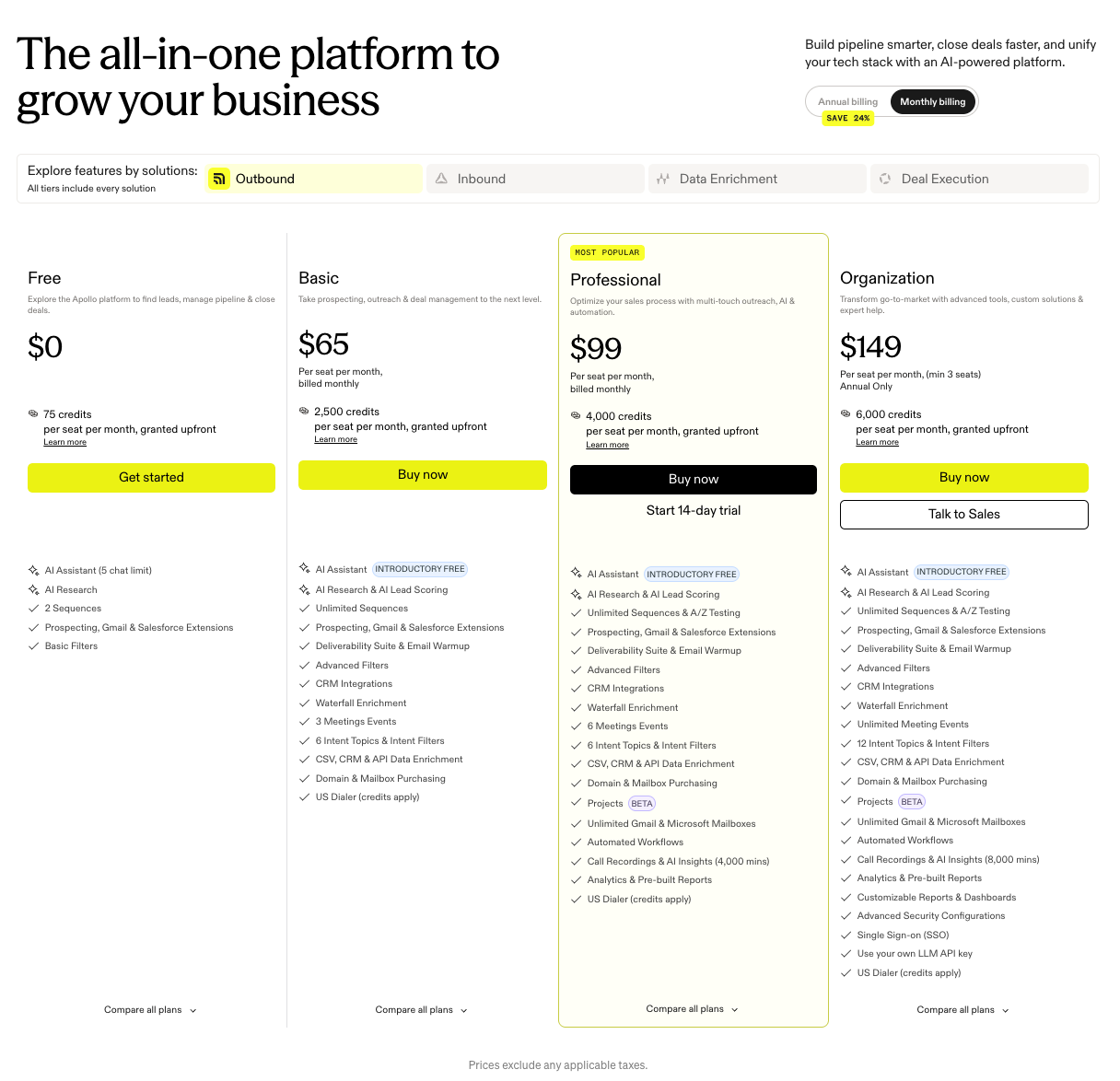
Apollo.io offers a free plan and three paid plans. The prices below reflect the monthly billing shown on Apollo.io’s current pricing page.
Apollo.io also offers paid add-ons, including Inbound and Advanced Dialer. Each is currently listed at $149 per team per month, billed monthly.
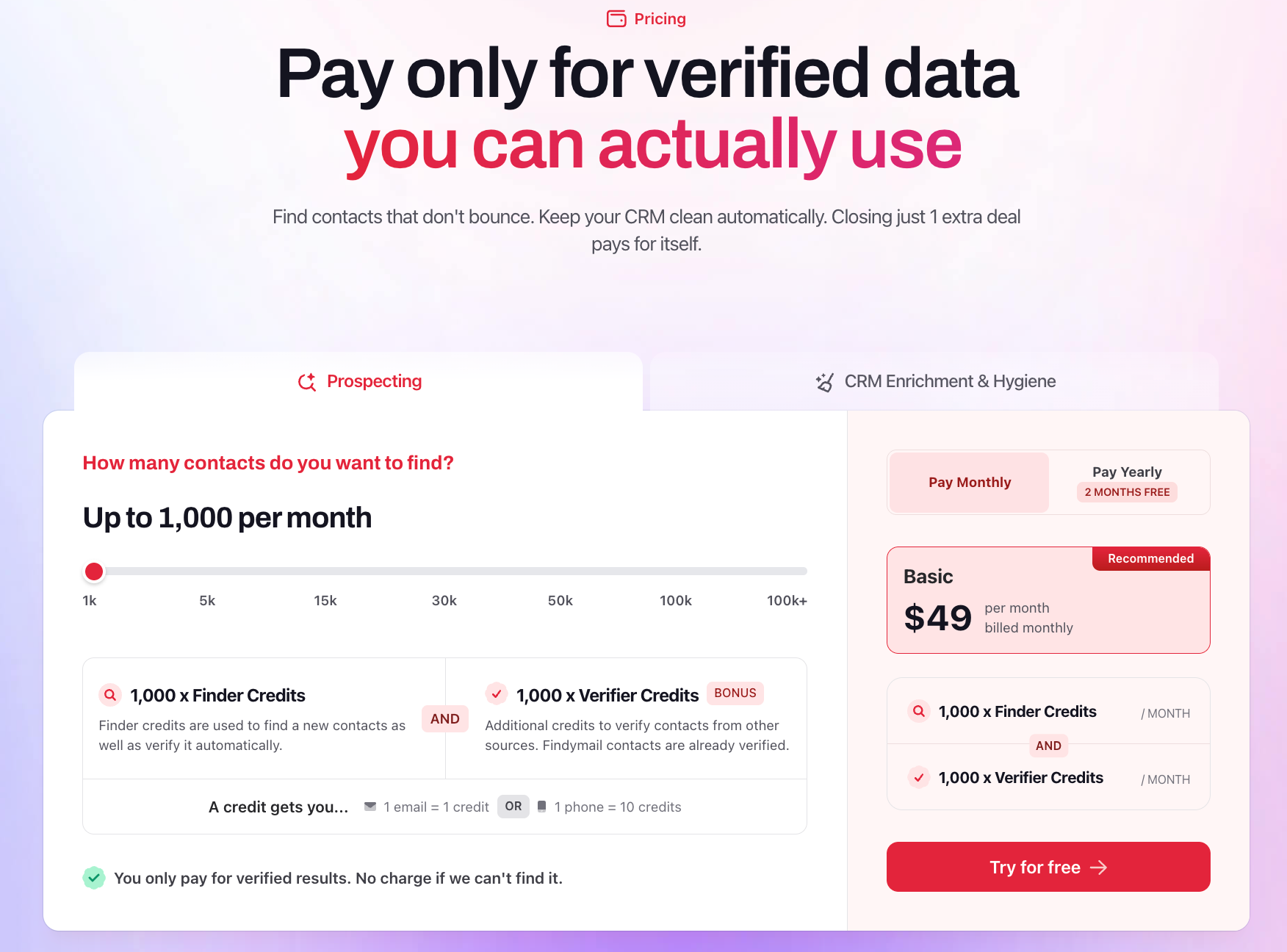
Findymail uses Finder Credits to discover and automatically verify new contacts. It also includes bonus Verifier Credits for checking email addresses collected from other sources.
One verified email uses one Finder Credit, while one phone number uses ten Finder Credits. Findymail states that it charges credits only when it successfully returns a verified result. Unused credits can roll over up to twice the selected monthly plan allowance.
The better fit depends on how much of the sales process your team wants one platform to handle. Apollo.io is built for broader sales execution, while Findymail is more focused on contact discovery, verification, and CRM upkeep.
You may want to pick Apollo.io if your team prefers to manage prospecting and sales activity in one system.
Apollo.io is for you when you:
It is suited to companies that want their prospect data, engagement tools, and deal workflows connected in one place.
Findymail may be a better fit when your current CRM and outreach tools already handle campaign execution, but your contact data needs more support.
It suits teams that:
Findymail works well as a data layer within an existing sales setup. It helps prepare and maintain prospect records without asking the business to replace the tools it already uses.
Yes. Some businesses choose to use both platforms because they support different parts of the sales process.
Apollo.io can manage account discovery, prospect engagement, and ongoing sales activity. Findymail can be added as a separate tool for additional contact discovery, email verification, or continuous CRM maintenance.
Outreach can then continue through Apollo.io or another email sequencer already used by the business.
This approach can work well for organizations that want additional contact data or ongoing CRM upkeep without changing the rest of their sales process.
However, using both platforms also introduces a few trade-offs.
Businesses should consider:
Not every business needs both platforms. The right setup depends on the current sales workflow, the tools already in use, and where additional support is needed.
Apollo.io and Findymail help businesses discover and manage prospect data, but many teams already have email addresses before they begin outreach.
Those contacts often come from older CRM records, website forms, customer and trial databases, webinars, partner lists, purchased data, or spreadsheet imports.
That's where Listmint fits.
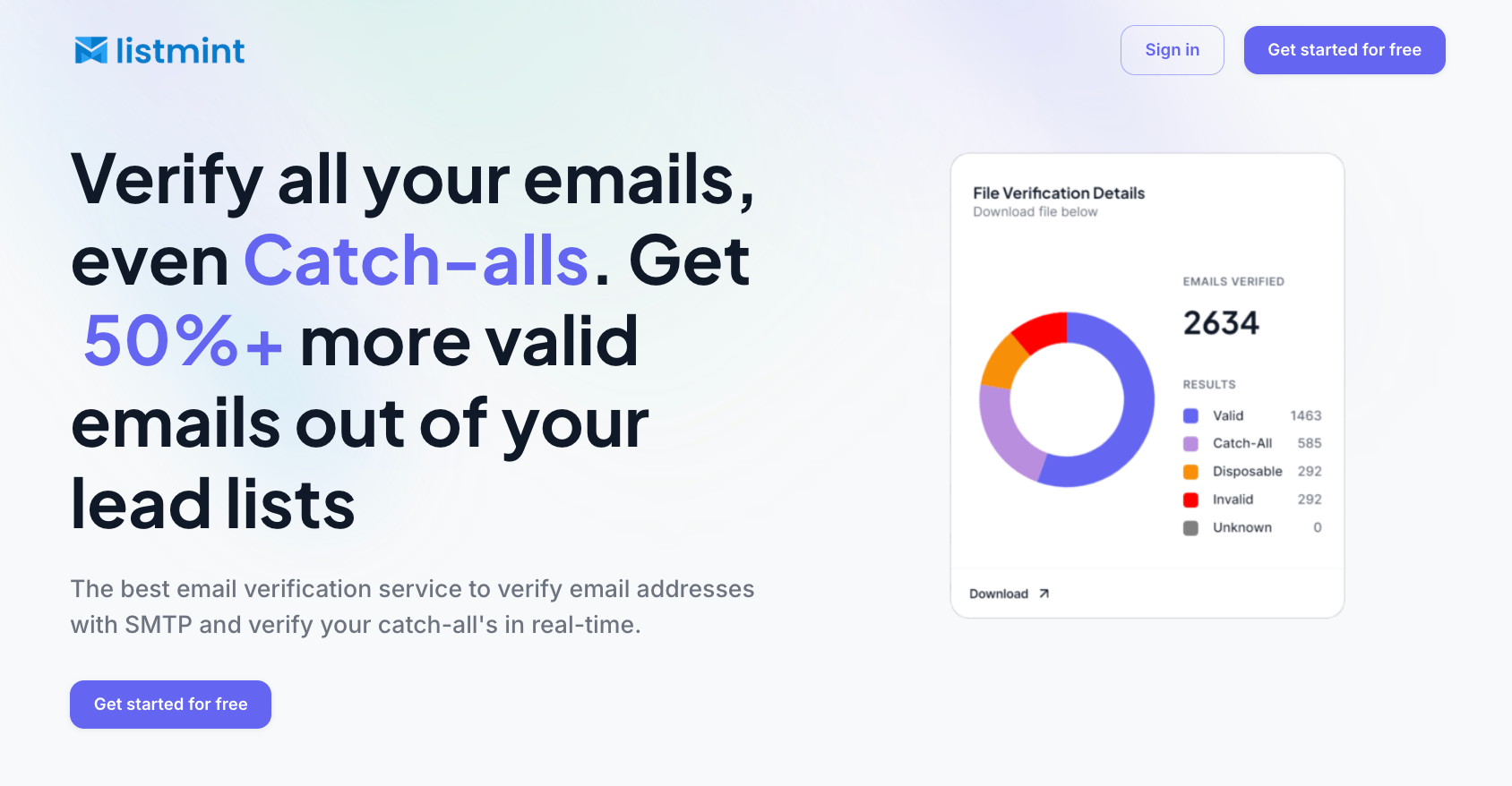
It focuses on verifying the email addresses your business already has before outreach begins, helping teams clean existing data without replacing their prospecting or sales platform.
Listmint supports both bulk and real-time verification, making it easy to verify email addresses at different stages of the lead collection process.
Teams can clean large contact lists before outreach, verify new submissions through lead capture forms, or automate verification through the email API before records reach a CRM or sales workflow.
This helps businesses remove invalid email addresses, identify valid emails before outreach, and automate verification as new contacts enter sales and marketing workflows.
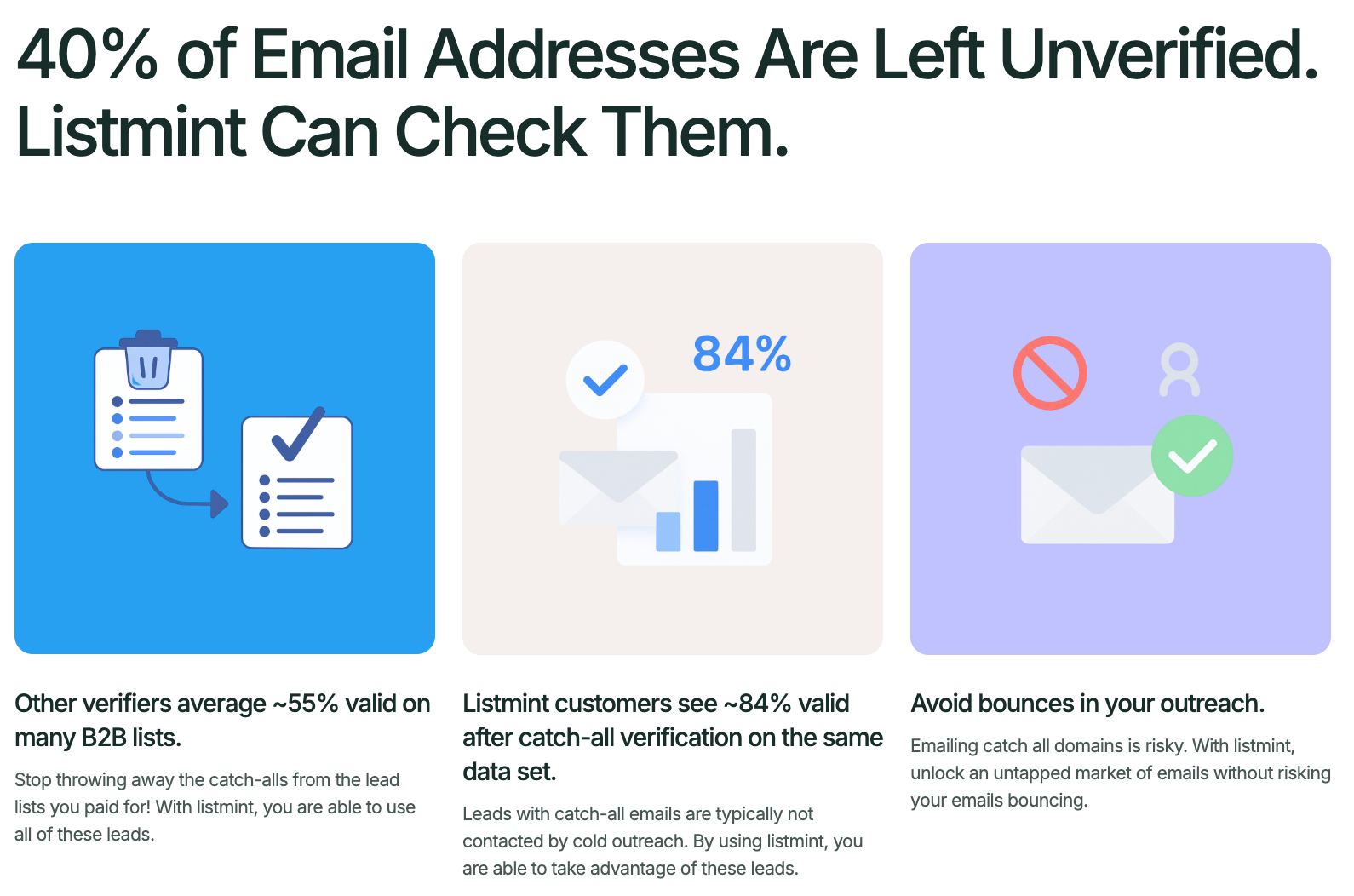
Many email verification tools identify catch-all addresses but leave them marked as risky or unknown. Listmint goes a step further with dedicated catch-all verification, providing real-time verification without sending emails to the recipient.
Verified catch-all addresses receive clear catch_all_valid or catch_all_invalid results, allowing teams to review them like any other verified contact before outreach.
Listmint has verified more than 1 billion email addresses and reports 99%+ SMTP verification accuracy together with 99%+ catch-all verification accuracy.
Listmint works alongside the tools your business already uses. Verified email addresses can flow into CRM systems, lead capture forms, internal applications, marketing databases, and outbound sales workflows through bulk uploads or API integrations.
Because it focuses on verification, businesses can continue using Apollo.io, Findymail, or other sales platforms without changing the rest of their workflow.
Listmint is a great fit for businesses that already have email addresses and need dedicated verification before outreach.
It supports bulk, real-time, SMTP, API, and advanced catch-all verification without requiring another prospect database or sales engagement platform. That makes it a practical addition for teams that want cleaner email data while keeping their existing sales workflow.
Apollo.io, Findymail, and Listmint each serve a different purpose, so the right choice depends on where your business needs the most support.
If your team wants a single platform to manage prospecting, outreach, automation, and sales activities, Apollo.io offers the broadest workflow. If your priority is finding verified B2B contacts, enriching CRM records, and maintaining contact data, Findymail provides a more specialized solution.
Businesses that already have email addresses don't necessarily need another prospect database or sales platform.
When the goal is to verify existing contact data before outreach, Listmint complements your current workflow with dedicated bulk, real-time, SMTP, and advanced catch-all verification.
The decision ultimately comes down to workflow breadth versus data specialization. Choose the platform that best fits your sales process and the work your team needs to accomplish.
Apollo.io competes with sales intelligence and engagement platforms such as ZoomInfo, Cognism, Outreach, and SalesLoft. Findymail overlaps with Apollo.io in contact discovery, verification, and enrichment but does not offer the same breadth of sales engagement and deal tools.
Yes. Apollo.io continues to operate as a sales intelligence and engagement platform that helps businesses find prospects, build contact lists, manage outreach, and track sales activity. Its features and network of integrations continue to evolve, so businesses should review the latest capabilities and pricing before choosing a plan.
No platform is universally better than Apollo.io. The right choice depends on your workflow. Businesses that want one platform for prospecting and sales execution may prefer Apollo.io, while others may choose multiple point solutions that specialize in contact discovery, CRM enrichment, email verification, or sales engagement.
Apollo.io's LinkedIn presence was removed after LinkedIn enforced its platform policies related to data collection and third-party tools. Industry reporting widely attributed the action to LinkedIn's efforts to limit unauthorized data scraping and automated collection of profile information.
Apollo.io later returned to LinkedIn after working with the platform and continues to offer supported integrations, including its Chrome extension and LinkedIn Sales Navigator workflows.
Yes. Both Apollo.io and Findymail publish transparent pricing for their standard plans, including plan features, monthly pricing, and usage allowances. Enterprise pricing, add-ons, API access, and certain usage limits may vary depending on the selected plan or business requirements.