Not every email that passes a basic check belongs to a working mailbox. Real-time email verification checks addresses as they come in, helping you identify invalid, disposable, risky, and other email types before they reach your contact list.
Real-time email verification tools handle this problem in different ways. Some return a catch-all status, and some perform another check before giving you a result.
In this article, we’ll review the six best real-time verification tools in 2026.
These are the six best real-time email verification tools in 2026:
Real-time verification checks one email at a time as soon as a person enters it, whereas bulk verification checks a large list you already have.
When someone types the wrong address into your signup form and clicks submit, the verification service checks it before your site accepts the entry. Depending on the provider, the verification process may review the format, domain, MX records, and mailbox response.
Your form can then ask the person to fix a bad address. Catching invalid addresses at this point can protect email deliverability by keeping unusable contacts out of your list.
With bulk list cleaning, you upload a CSV or spreadsheet that contains saved contacts. The software checks each address and returns the results, which helps you remove old or dead accounts before a campaign.
Regular cleanup can reduce bounce rates as your database ages. Using these two methods together helps you validate emails when they enter your system and check them again later.
These are the top email verification tools in 2026:
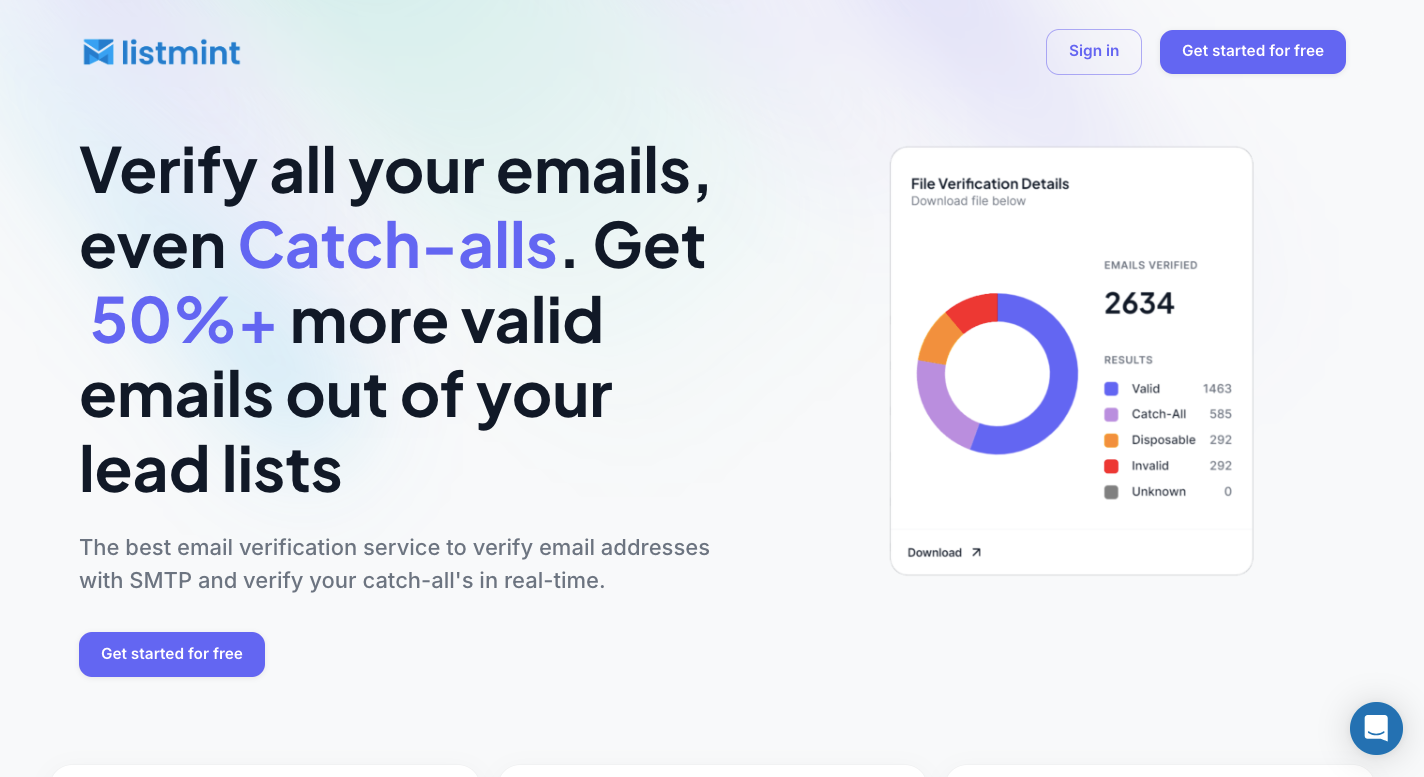
Listmint offers standard SMTP, real-time, bulk, and API-based email verification, with additional checks for catch-all addresses that standard verification may leave uncertain.
You can use it to verify individual addresses as they enter your system, clean existing lead lists in bulk, or connect verification directly to your software through the API.
For standard email verification, Listmint checks syntax, MX records, SMTP responses, DNS, role-based addresses, disposable emails, and other signals before returning a result. Bulk verification then lets you upload an existing lead list and check many contacts in one job.
Standard SMTP verification can tell you that a domain accepts all mail, yet that response doesn’t confirm whether the exact mailbox exists. Many other email verification tools leave those contacts marked as catch-all, risky, or unknown.
Listmint takes the next step in real time. After standard verification finds a catch-all address, its seven-step process checks that email further and returns “catch_all_valid” or “catch_all_invalid.”
You don’t have to wait up to 48 hours for results, send a verification email to the recipient, or move uncertain contacts to another service.
Real-time catch-all verification works through Listmint’s direct platform and API. You can check your own lead lists, and software companies can add regular plus catch-all verification to products they resell.
ZeroBounce is an email validation service that checks email lists and new addresses as people submit them. With its real-time API, you can connect it to signup forms, registration pages, checkout screens, or other places where users enter an email.
Once someone submits an address, ZeroBounce checks details such as its format, domain, and mailbox status without sending a real message. It then returns a result your site can use before adding the contact to your database.
Beyond basic verification, ZeroBounce can find disposable accounts, run spam trap detection, flag abuse emails, and score risky email addresses. Its data enrichment feature can add available details to verified contacts.
Teams with saved lists can set up automatic monthly re-verification.
NeverBounce is an email list cleaner and real-time verification service for companies that need to check large amounts of data. Its email verification process reviews syntax, domain details, MX records, and mail server responses before it returns a result.
For real-time checks, NeverBounce uses an API or JavaScript widget that connects to your website. A submitted email can return as valid, invalid, disposable, catch-all, or unknown.
Large databases can go through bulk checks when teams upload CSV files. NeverBounce Sync supports automated verification by connecting with supported CRM and email platforms, then cleaning selected lists on a schedule.

Hunter combines B2B lead search with a reliable email verification service. Sales teams, recruiters, and marketers can use its email finding feature to search for professional addresses by a person’s name and company domain, then check each result before reaching out.
It looks for syntax errors and flags disposable addresses that may stop working soon. Its email verifier can return a status and confidence score to help you judge harder cases such as catch-all emails.
Hunter can show public web sources where it found an address, including dates when available. You don’t need an API for every task either. Its Chrome extension helps find contacts from company websites, and the Google Sheets add-on lets you work with leads from a spreadsheet.
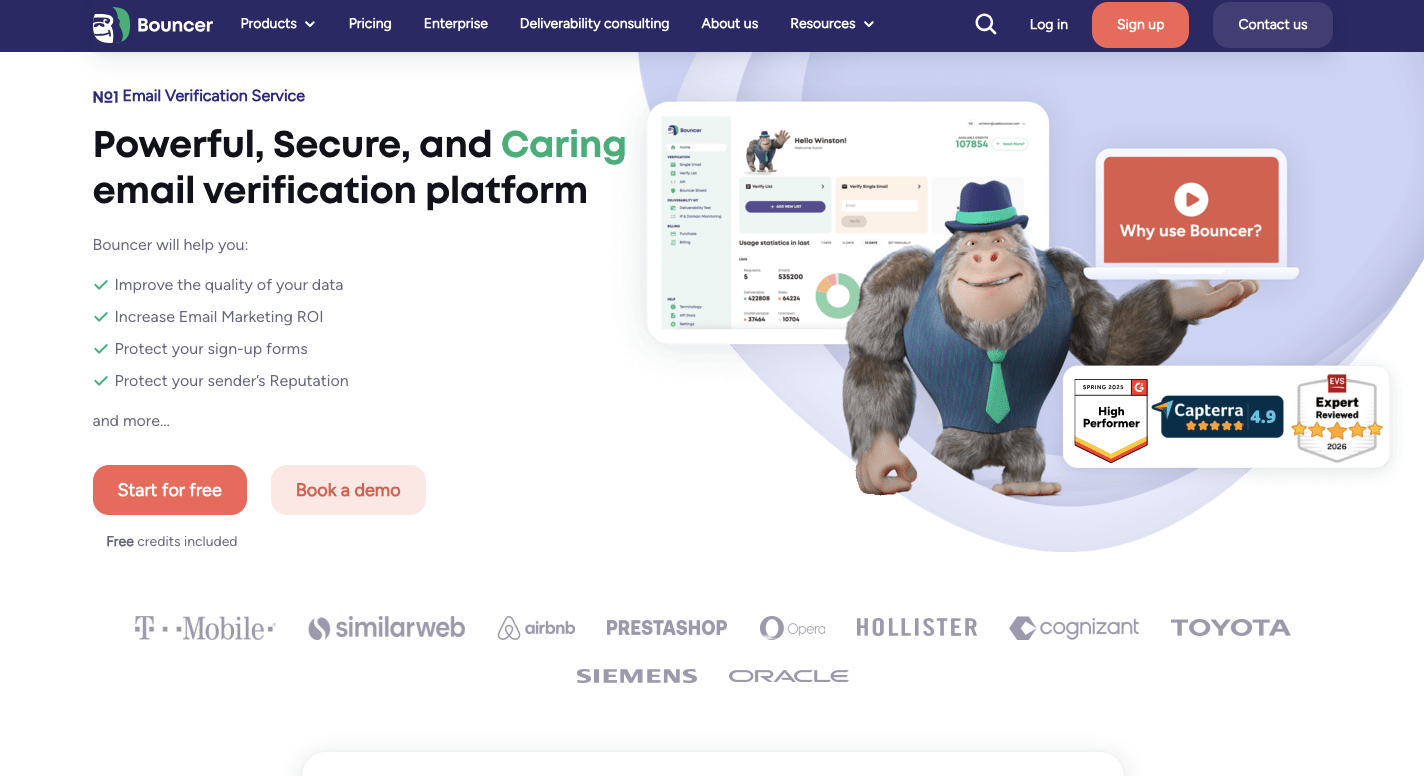
Bouncer is an email verification and deliverability platform that gives developers several ways to validate email addresses. Its API can connect directly to registration forms, apps, or CRM systems and check each address before your software saves it.
During a check, Bouncer reviews syntax, domain data, MX records, and signals from the recipient’s mail server. You can choose real-time synchronous checks for single emails, asynchronous batch requests for larger jobs, or a hybrid endpoint.
Greylisting can cause some servers to delay a response. Bouncer provides retry details for these cases, so it can handle results that can cause problems for other verification tools. Its setup can suit teams that want custom API control or connections to a CRM or sales automation platform.
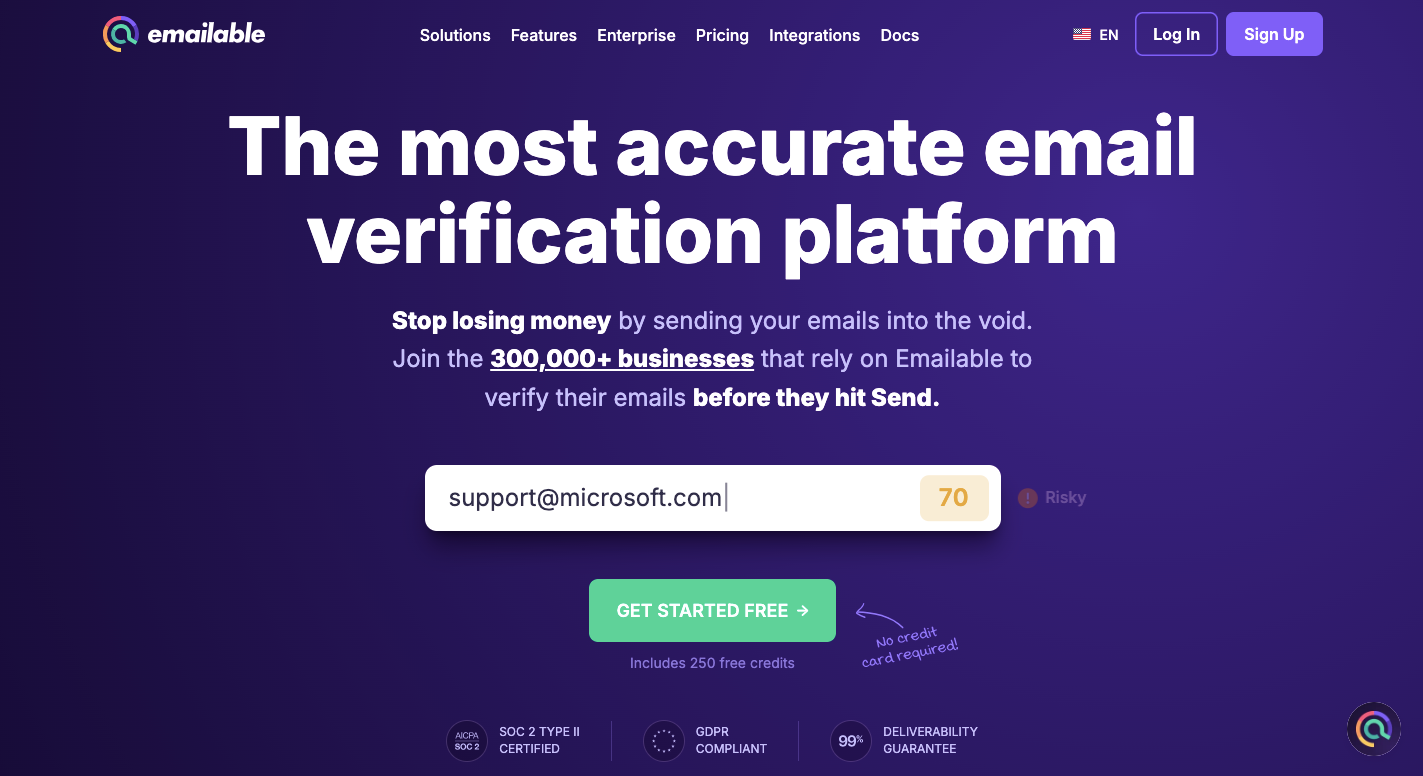
Emailable is an email verification platform for those who want to add real-time validation to their own software. Your team adds an API key to a signup form, checkout page, app, or another system where users enter email addresses.
When someone submits an address, Emailable checks its format, domain, MX records, and mail server signals before sending the result back to your code. Your application can then use that response to accept the email, flag it for review, or ask the person to fix a typo.
Developers can create separate Live Mode and Test Mode API keys, use SDKs, or receive results through webhooks. Emailable connects with email marketing platforms and provides a form widget for teams that don’t want to build everything from scratch.
Choosing the best email verification services means comparing real-time results, catch-all handling, API features, standard checks, and bulk cleaning options.
A simple invalid label isn’t enough. Your verification status should explain why an address failed, such as bad syntax or a dead domain. Helpful risk tags include:
Some providers add confidence scores for uncertain results. Detailed reports help you review findings, and connections with marketing platforms make results easier to use.
Filtering risky contacts may reduce spam complaints.
A catch-all domain accepts mail for many usernames without confirming that each mailbox exists. For example, it might accept “xyz123@firm.com” even when that inbox can’t be confirmed.
That behavior makes catch-all domains harder to check. Some services leave catch-all addresses marked as risky, while others score or verify them further.
The best email verification tools clearly explain whether they only detect a catch-all server or attempt to confirm the individual mailbox.
A real-time API connects your form, app, CRM, or email outreach platform directly to a verifier. Look for JSON responses, test keys, webhooks, error handling, and SDKs for:
Your developers should know what happens during each request. Depending on the provider, the API may check MX records and use SMTP verification when supported.
For catch-all results, find out whether it only detects the domain or checks the individual address further.
Standard verification should verify email addresses through several checks. A provider may inspect syntax, confirm the domain and mail records, then test the mailbox when the receiving server allows it.
These steps help find invalid email addresses before you save them. Disposable email detection can flag temporary accounts by comparing entries with known disposable email addresses.
Clear reasons for each result help your system decide whether to accept, reject, or review an address. That clarity can help you choose the right email verification tool.
Bulk verification lets you verify emails already stored in your database before email marketing campaigns. Look for CSV uploads, duplicate handling, useful exports, and connections to your email marketing tool or email service provider.
Some suites add inbox placement testing and DMARC monitoring. A platform that includes inbox placement testing can run test sends to see where messages land.
Removing dead contacts can also support better inbox placement, though verification alone can’t guarantee that every message reaches the inbox.
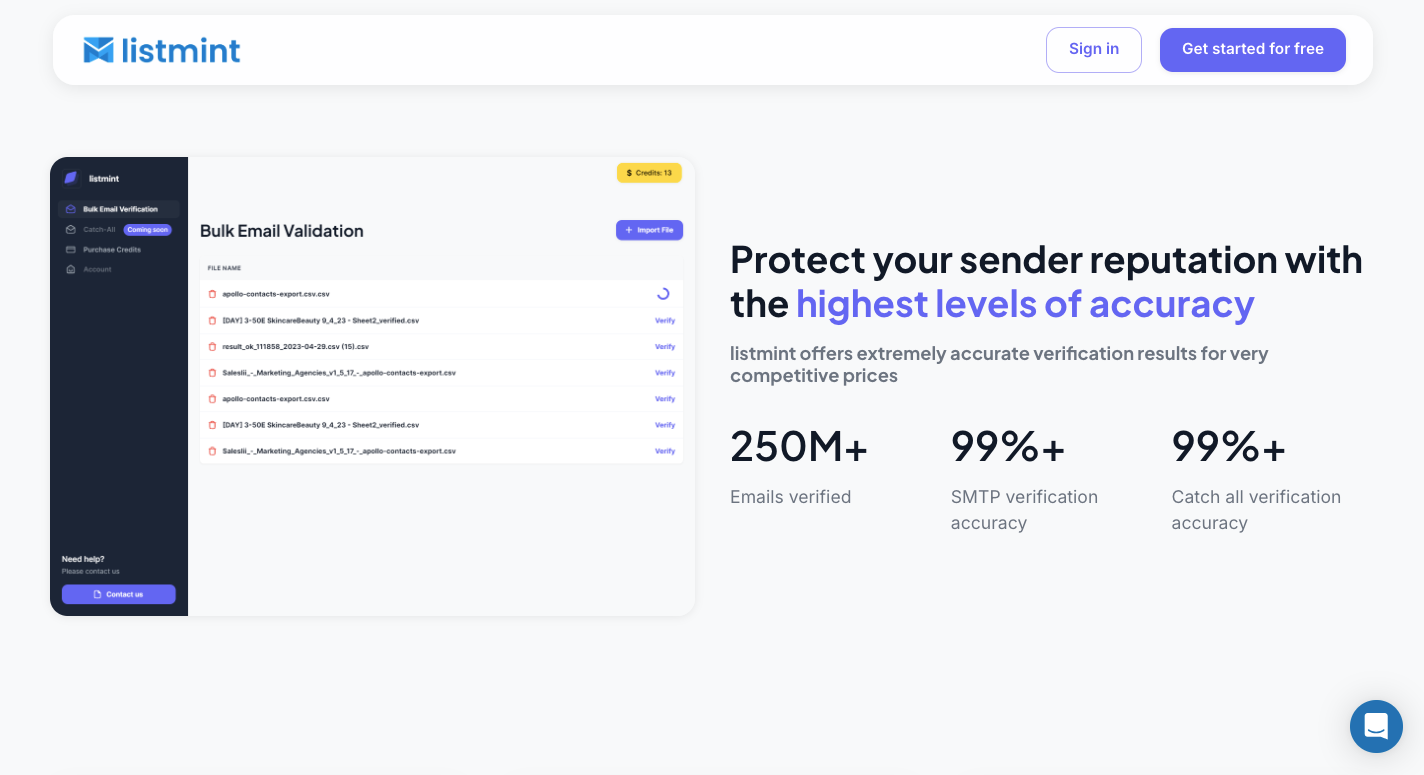
Listmint combines standard SMTP checks with real-time catch-all verification, so B2B teams can check regular and uncertain addresses before starting outreach.
Many verifiers identify a catch-all domain but can’t confirm whether “john@company.com” is a real mailbox. Listmint takes that result through a separate seven-step process and returns “catch_all_valid” or “catch_all_invalid” in real time.
Unlike slower methods from other tools, Listmint doesn’t send a verification email to the recipient or require a 24- to 48-hour wait.
You can drag and drop lead lists into the platform for bulk checks. Software companies can use the API to resell standard and catch-all verification through their own products.
The Starter plan costs $99 per month with 20,000 standard credits, 5,000 catch-all credits, and 24/7 support. The Agency plan costs $187 per month with 50,000 standard credits and 10,000 catch-all credits.
Listmint is a strong choice for B2B email verification because it combines standard SMTP checks with real-time catch-all verification and returns “catch_all_valid” or “catch_all_invalid” results.
There’s no reliable evidence that one provider is definitively the “most hacked email provider.” Large services such as Gmail and Outlook are frequent phishing targets because they have many users.
Some of the best email verification apps include Listmint, ZeroBounce, NeverBounce, Hunter, Bouncer, and Emailable, with each offering different strengths in real-time, bulk, API, or catch-all verification.