Choosing between Emailable vs ZeroBounce comes down to what you need beyond basic email verification.
Both platforms help businesses verify contact data before email marketing campaigns. They also offer deliverability features alongside list verification.
You can verify email lists in bulk, check addresses in real time through APIs, connect with other business tools, and perform additional analysis for accept-all or catch-all addresses.
The differences become more noticeable when you compare how each platform classifies verification results, handles catch-all addresses, bundles deliverability tools, and structures pricing.
If you're comparing more than one email verification service, Listmint is another option worth considering. It combines standard SMTP verification with a dedicated catch-all verification process designed to return completed results for addresses that standard verification may leave unresolved.
In this guide, we'll compare Emailable, ZeroBounce, and Listmint side by side. You'll see how they differ in verification features, catch-all handling, deliverability tools, APIs, pricing, and the types of businesses each platform is designed to support.
Emailable is an email validation service that helps businesses verify email addresses before campaigns. It supports single and bulk verification, an email verification API, and a real-time validation widget for web forms.
The platform also offers data enrichment, email quality scores, inbox placement reports, blacklist monitoring, authentication analysis, email deliverability testing, and detailed reporting.
Emailable can evaluate catch-all (or “accept-all") addresses beyond the initial detection stage, although some unresolved addresses may still remain as Risky. It also states that verification does not require sending an email to the recipient.
Businesses can use Emailable with addresses hosted by major email providers as well as custom business domains.
ZeroBounce is an email validation and deliverability platform that helps businesses clean contact data, monitor inbox health, and manage sender performance.
You can verify individual addresses, process bulk lists, or validate new contacts through its API and integrations.
ZeroBounce also includes various tools such as:
These features help businesses review deliverability metrics and monitor performance beyond list verification. ZeroBounce supports addresses from major email providers and custom business domains.
Verify+ provides additional analysis for catch-all addresses. ZeroBounce also emphasizes enterprise-grade security and compliance, citing SOC 2 Type II, ISO 27001, GDPR, HIPAA, and CCPA.
Listmint is an email verifier built for businesses that need both standard SMTP and catch-all verification.
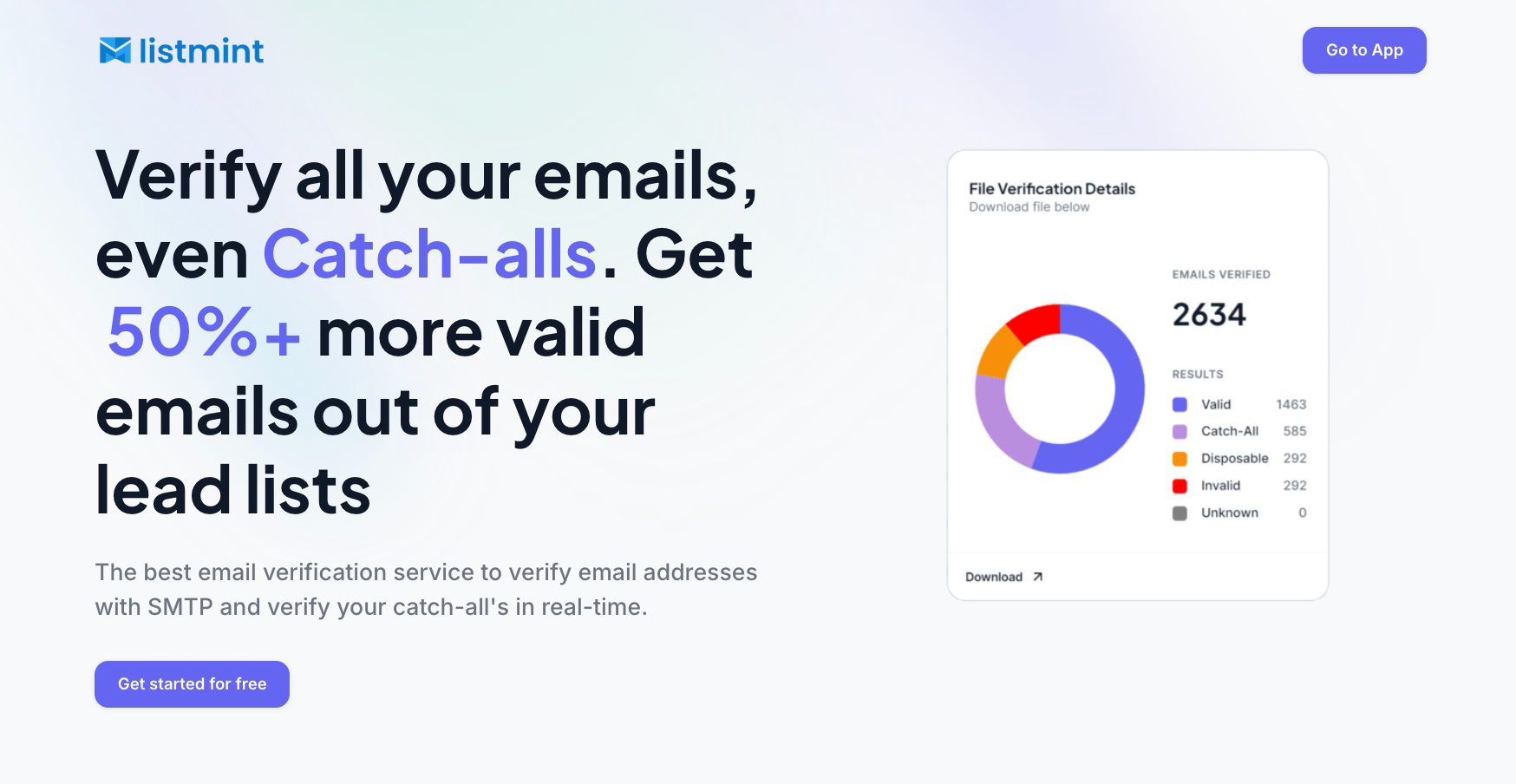
Sales teams, marketers, agencies, and software providers can upload lists for bulk verification or connect Listmint to their products via the Standard Verification API and Catch-All API.
When standard verification identifies a catch-all address, Listmint can apply advanced checks instead of leaving it in an unresolved category.
The platform is designed to return completed catch-all outcomes and supports real-time API workflows without requiring customers to send verification emails to recipients.
Listmint also uses separate Standard and Catch-All Credits because the two verification types follow different processes.
All three platforms verify email addresses, but they don't stop at the same point in the workflow.
Emailable and ZeroBounce combine verification with deliverability features, while Listmint focuses on email verification only.
This side-by-side comparison highlights where each platform overlaps and where their focus starts to differ.
Although the platforms share several core verification capabilities, their differences become more noticeable once you look at how they classify catch-all addresses, what deliverability features they include, and how they fit into different verification workflows.
The following sections examine those differences in more detail.
Emailable, ZeroBounce, and Listmint are all email validation tools, but they differ in how they verify addresses, classify results, and handle records that standard checks cannot fully resolve.
Looking at their core verification workflows makes those differences easier to understand.
Each platform uses several checks to determine whether an email address appears valid and can receive email.
Emailable reviews the following:
It also assigns an email quality score to each result.
ZeroBounce checks the following:
Its validation process returns a primary status along with more detailed sub-status information.
Listmint uses verification components that include:
These checks help identify invalid and risky addresses before they reach a sending list. They also provide more context to the results, making it easier to evaluate data quality.
Claims of high accuracy should be viewed in context because providers use different verification methods, classifications, and approaches for unresolved addresses.
Bulk verification is useful when you need to verify email addresses that already exist in a spreadsheet, CRM export, or older email database.
Emailable lets users upload contact lists, run bulk verification, customize exports, and download completed results.
Each verification normally uses one credit, while Unknown results and duplicate addresses are refunded. Emailable also promotes fast processing for bulk lists, with verification time varying based on list size and composition.
ZeroBounce supports bulk list uploads and returns detailed validation statuses for each record. Catch-all addresses may move to an additional Verify+ stage once the uploaded list meets the requirements.
Listmint verifies standard addresses first. If an address is identified as a catch-all, it can continue through an additional verification step.
Bulk verification helps remove invalid contacts while preserving more usable records before outreach.
Real-time verification checks new contacts as they enter a signup form, CRM, lead capture form, or another data source.
Emailable supports real-time verification through its API and real-time validation widget. The widget can be added to online forms, making it a practical option for non-technical users who do not want to build a custom integration.
ZeroBounce offers a real-time validation API that returns verification status, domain details, MX information, and other available data as soon as an address is submitted.
Listmint provides separate email verification APIs for standard and catch-all verification, allowing businesses and software providers to receive verification results directly inside their own applications.
A simple API can fit into an existing workflow for CRM entry, lead capture, or account creation. It can also support automated workflows that determine what happens after an address is verified.
Catch-all domains are more difficult to verify because the mail server is configured to accept messages sent to any address under that domain. A successful SMTP response does not always confirm that a specific mailbox exists.
Emailable identifies these as Accept-All addresses. Additional analysis can classify some addresses as Deliverable or Undeliverable. Addresses that cannot be resolved remain Risky with an Accept-All attribute.
Verify+ adds another layer to catch-all verification. According to ZeroBounce, eligible bulk lists may go through a second verification stage that attempts to classify some catch-all addresses as Valid or Invalid.
Addresses it cannot resolve are labeled as Catch-All. ZeroBounce states that this additional stage may take up to 12 hours.
Listmint offers catch-all that labels all addresses as catch_all_valid or catch_all_invalid. Catch_all_valid addresses can be treated like other valid email addresses, while catch_all_invalid addresses can be removed before outreach.
That distinction can be valuable for cold email workflows, where business domains can produce catch-all addresses and require more consistent catch-all handling.
It is also difficult to compare accuracy using headline percentages alone because each platform handles unresolved catch-all addresses differently. Looking at the final verification result, the time required to reach it, and how the result can be used provides a more meaningful comparison.
For businesses working to reduce bounce rates, the way a platform verifies catch-all addresses can be just as important as its standard verification checks.
Verification is useful when the result tells you what to do with each contact next. Emailable, ZeroBounce, and Listmint all return verification statuses, but they organize those results differently.
Emailable classifies addresses as Deliverable, Undeliverable, Risky, Unknown, or Duplicate. Its Email Quality Score adds another reference point, while supporting attributes can explain conditions such as Accept-All or lower deliverability confidence.
These results help businesses keep usable contacts, remove invalid emails, and review records that need more attention before sending.
ZeroBounce returns a main validation status plus detailed sub-status codes. Primary results include Valid, Invalid, Catch-All, Spamtrap, Abuse, Do Not Mail, and Unknown. Downloaded files can also include MX information, SMTP provider data, domain details, and other fields that help explain each result.
That extra detail can help businesses identify bad data and maintain better list hygiene before campaigns begin.
Listmint returns Valid, Invalid, Catch_all_valid, or Catch_all_invalid results.
That gives businesses a direct next step. Valid contacts can stay in the list, while invalid results can be removed before outreach.
Emailable, ZeroBounce, and Listmint price verification differently.
Emailable offers both pay-as-you-go and monthly subscription pricing. New accounts receive 250 free credits, allowing businesses to try the platform before purchasing verification credits.
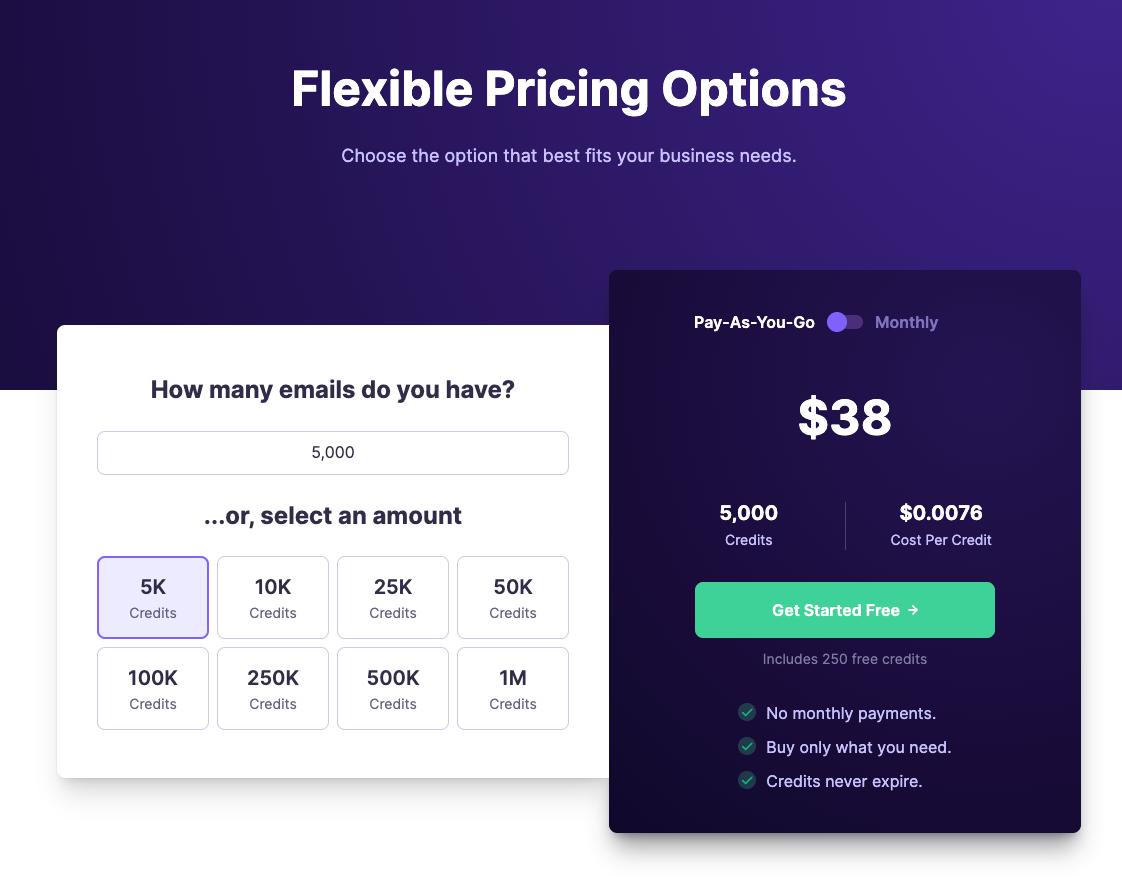
Current pricing includes:
Purchased credits do not expire. Monthly subscriptions provide a 15% discount, can be canceled at any time, and unused credits roll over.
Verification pricing is straightforward. Bulk Verification, Verifier, API, and Widget each consume one credit per verification. Deliverability tools use separate credits, while Inbox Reports use 100 credits per report, and Blacklist Monitoring uses 5 credits per check.
Emailable also refunds credits for Unknown results and duplicate addresses. Combined with its pricing calculator and flexible billing options, the platform offers relatively transparent pricing for businesses with different verification volumes.
ZeroBounce offers three pricing options, which gives businesses the flexibility to purchase verification credits as needed or subscribe to a broader deliverability platform.
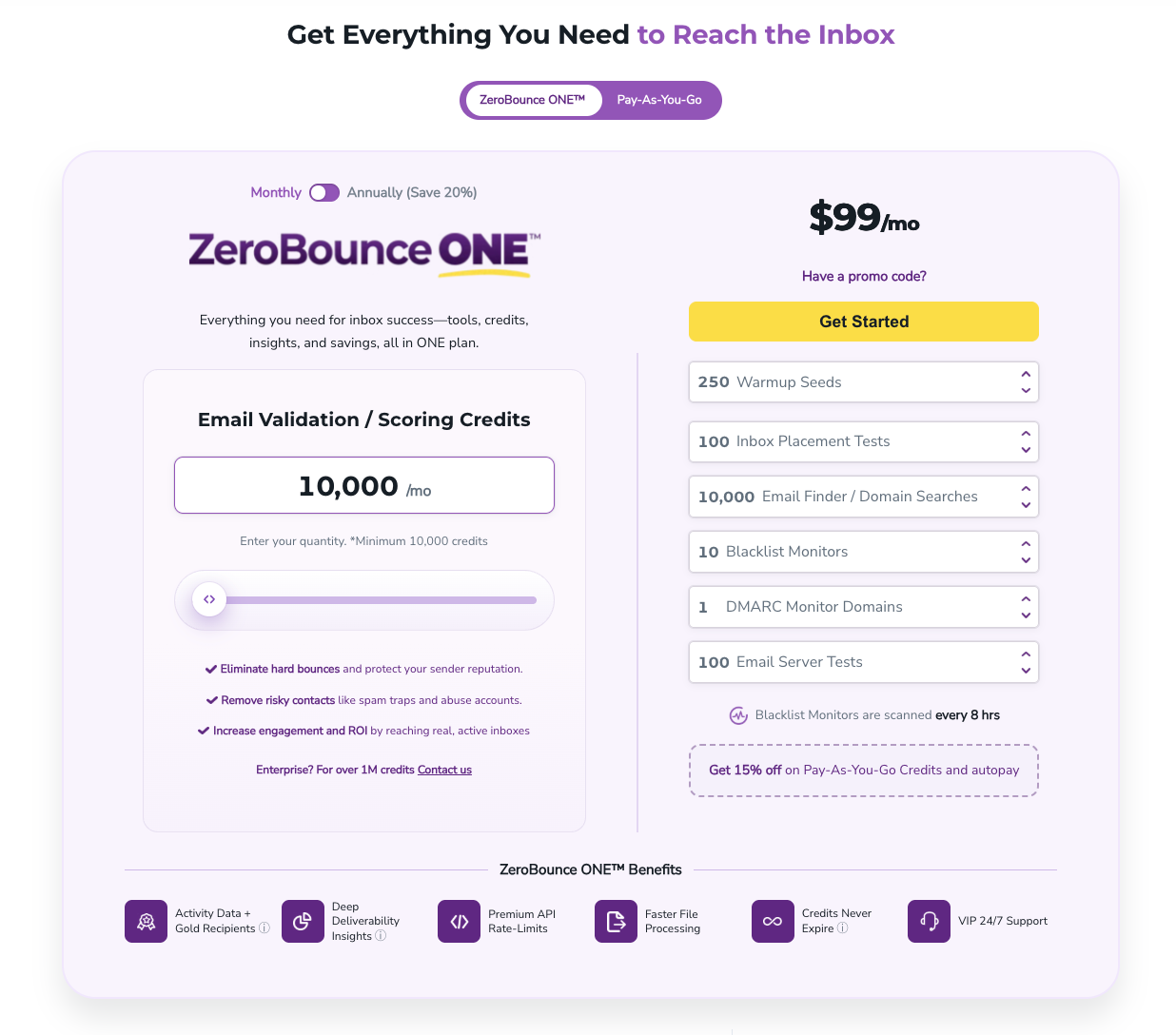
Current pricing includes:
Credits remain available while you have an active ZeroBounce ONE subscription. Without an active subscription, credit expiration depends on when the account was created or when the credits were purchased, granted, or received through a promotional offer.
ZeroBounce ONE bundles email verification with inbox placement testing, blacklist and DMARC monitoring, and email warmup.
Businesses that only need email verification may find pay-as-you-go credits sufficient, while teams that want a complete deliverability platform may find the subscription provides more predictable pricing.
Listmint offers monthly subscription plans with separate Standard and Catch-All Credits because the two verification types use different verification processes.
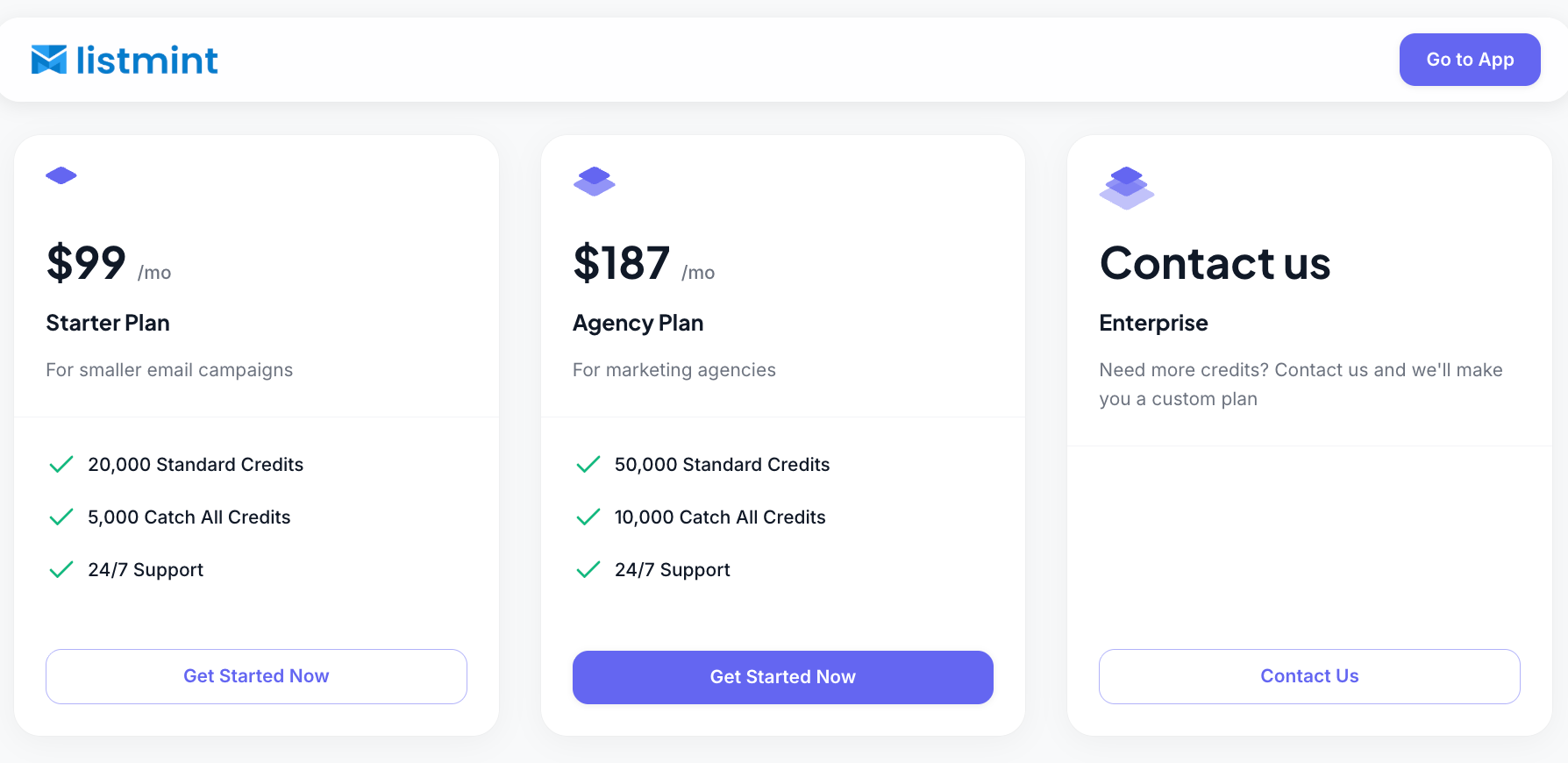
Current plans include:
Standard email verification consumes Standard Credits, while addresses identified as catch-all domains consume Catch-All Credits.
The right platform depends on your business needs, verification workflow, the types of email addresses you process, and whether you also need deliverability or other tools beyond email verification.
Emailable may be a good fit if you:
ZeroBounce may be the better choice if you:
Listmint may be the better fit if you:
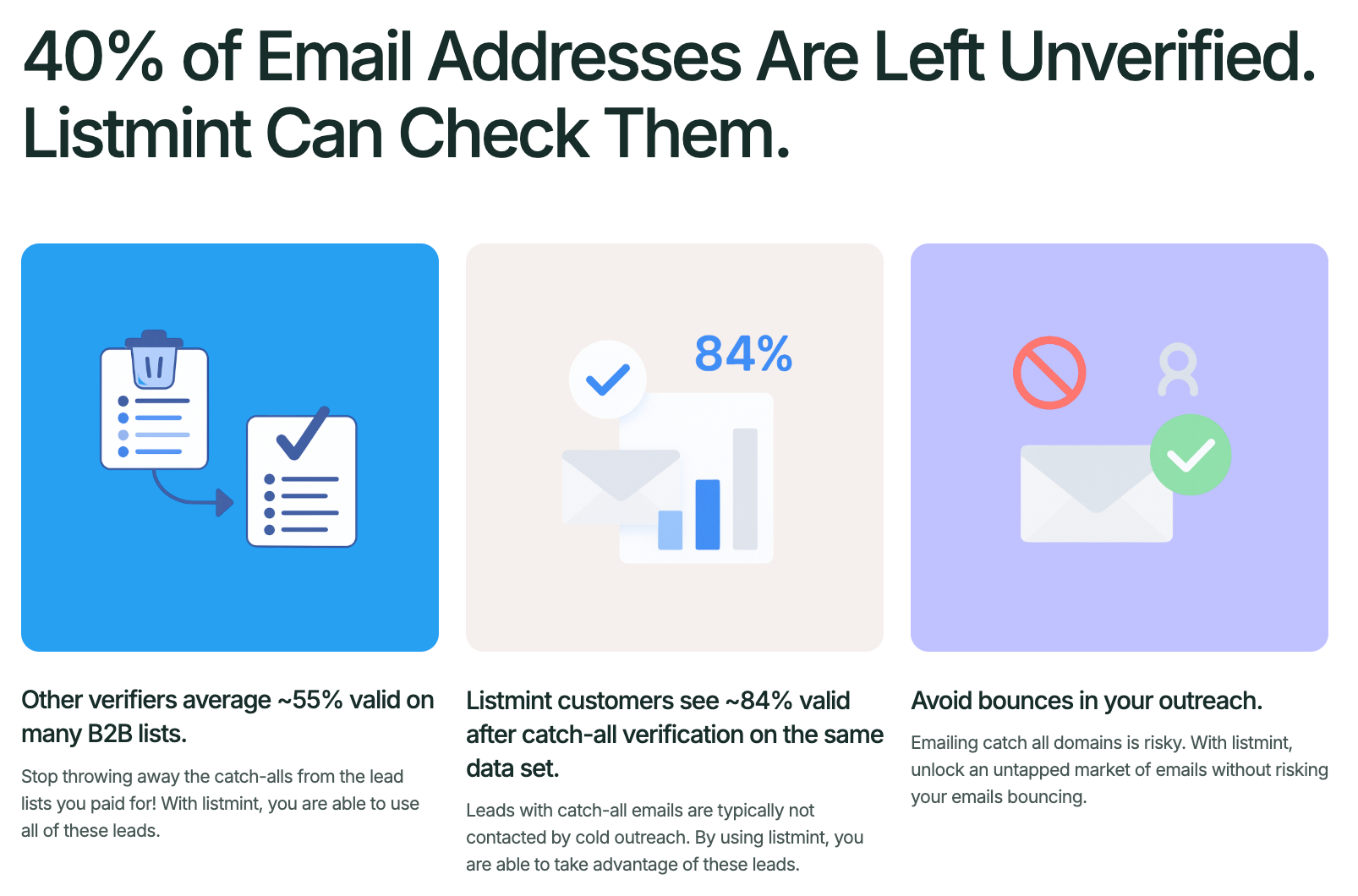
The right choice depends on what happens after your initial verification result. If catch-all addresses regularly appear in your B2B lead data, Listmint gives you a way to continue checking those records and return more completed verification results before outreach.
Standard and catch-all verification stay within the same workflow, so teams can make decisions without leaving a large catch-all segment unresolved.
Yes. ZeroBounce is a well-established email verification and deliverability platform used by businesses worldwide. It offers email validation, inbox placement testing, blacklist monitoring, and other deliverability features for organizations with different business needs.
The best email verification tool depends on your workflow. Emailable and ZeroBounce combine verification with deliverability features, while Listmint focuses on standard SMTP verification and dedicated catch-all verification.
If catch-all email addresses are a significant part of your B2B data, Listmint may be a better fit because it provides additional verification for records that standard checks may leave unresolved.
ZeroBounce and NeverBounce both provide email verification, but they differ in their feature sets and pricing. If your workflow also requires additional verification for catch-all addresses, Listmint is another option to consider.
The best mail tester depends on what you want to measure. If you need to verify email addresses, platforms such as Emailable, ZeroBounce, and Listmint focus on email verification. If you need inbox placement or authentication testing, deliverability tools may be more appropriate. Some providers also offer free trials or free credits so you can evaluate their features before purchasing.
Email verification helps reduce sends to invalid or risky addresses, which can lower bounce risk and support a better sender reputation over time. Emailable, ZeroBounce, and Listmint all verify contact data before campaigns, while Emailable and ZeroBounce also provide deliverability tools for inbox placement, blacklist monitoring, and other sender-related checks.