Every email campaign depends on one thing: getting emails delivered to the recipient’s inbox.
That's why when email bounce rates start rising, campaigns become less effective. Even worse, when left unchecked, those bounced emails can hurt your sender reputation and make future emails harder to deliver.
The good news is that most bounce issues are preventable.
In this article, we’ll explain how to reduce email bounce rate and what causes it in the first place.
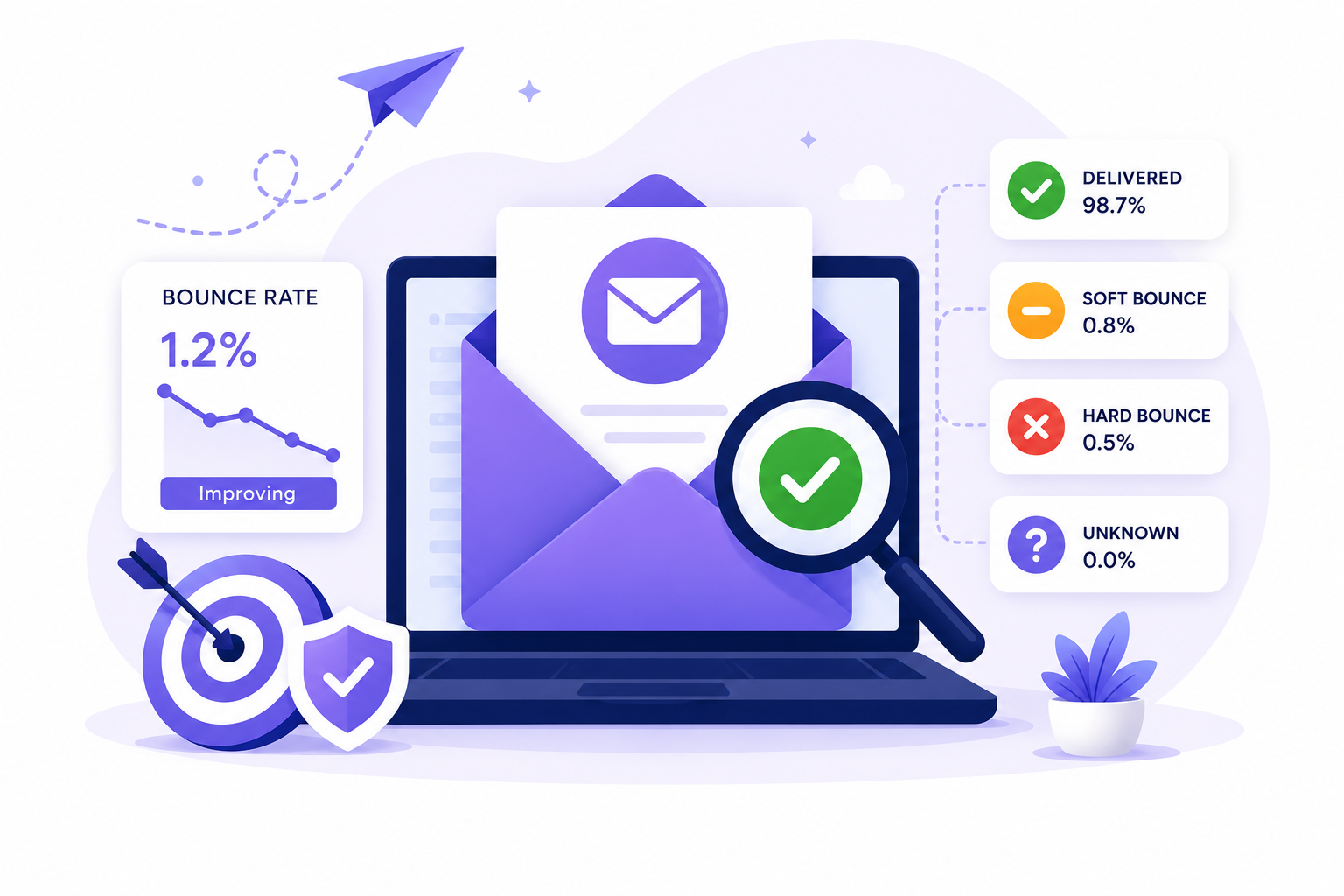
Email bounce rate is the percentage of emails that do not reach the recipient’s inbox. These failed emails are called bounced emails. They happen when an email cannot be delivered to the address you sent it to.
The basic formula is: Email bounce rate = bounced emails ÷ total sent emails × 100
So, if you send 1,000 emails and 30 of them bounce, your email bounce rate is 3%. Email bounce rate is one of the key metrics email marketers watch because it gives a quick signal of list quality and email deliverability.
A bounce rate is a straightforward number, but it can tell you a lot about the health of your email list. To understand what it means, you first need to know the difference between hard and soft bounces.
A hard bounce occurs when an email cannot be delivered and won't be delivered even if you try sending it again.
This is considered a permanent delivery failure because there is a problem with the email address or destination that prevents the message from ever reaching the recipient.
Hard bounces commonly happen when:
Since hard bounces are permanent failures, they should be removed from your mailing list as soon as possible.
A soft bounce happens when an email cannot be delivered temporarily.
Unlike hard bounces, a soft bounce does not necessarily mean there is a problem with the email address itself. It could be caused by a full inbox or another temporary issue, and the message may still be delivered later once the issue is resolved.
Soft bounces commonly happen when:
Soft bounces are usually less concerning than hard bounces. However, if the same addresses continue to generate soft bounces over a long period, they should be reviewed as part of your regular list-cleaning process.
Not every email bounce is a cause for concern. Even healthy email campaigns experience some bounced emails from time to time.
An average bounce rate below 2% is generally considered healthy. A bounce rate between 2% and 5% is worth monitoring, while anything above 5% may indicate list quality or deliverability issues.
Use the table below as a general benchmark:
A high email bounce rate does not automatically mean something is seriously wrong. However, it can be an early warning sign that invalid email addresses, inactive subscribers, poor list hygiene, or technical issues are affecting your campaigns.
The sooner you identify the cause, the easier it becomes to improve sender score and prevent bounce rates from rising further.
A high bounce rate not only affects the emails that fail to deliver, but also affects how email providers view your future campaigns.
When too many emails bounce, your sending activity can start to look less trustworthy. Over time, that makes it harder for your messages to reach the people who are supposed to receive them.
The first thing high bounce rates can affect is your sender reputation.
Email providers pay attention to how your emails perform. When a large number of messages bounce, it can signal that your email list contains outdated, invalid, or low-quality addresses.
Sender reputation is how email providers judge whether you look like a legitimate sender.
If your campaigns keep sending to invalid, inactive, or fake addresses, email providers treat that as a sign of poor list quality, making your sender reputation weaker over time.
That's why it's important to protect sender reputation before bounce rates rise too far. Once trust starts to decline, future emails may become harder to deliver.
A weaker sender reputation, affected by high bounce rates, can also lead to problems with your email deliverability.
Email deliverability is the ability of your emails to reach the recipient’s inbox. When bounce rates stay high, email service providers become more cautious with your messages.
Instead of placing them in the recipient’s inbox, they route more of your emails to the spam folder or block them before delivery.
This affects legitimate email campaigns, too. Even if your content avoids spammy phrases, poor list quality and repeated delivery failures make it harder to get inbox placement.
High bounce rates can also make email performance harder to measure.
If a large portion of your list never receives your emails, your open rates, reply rates, and conversion data become less reliable. Your team may think the offer, subject line, or landing pages are the problem when the real issue is that too many messages aren't being delivered.
This drains your email marketing spend and makes it harder to understand which efforts are actually working. Reducing bounce rates helps keep your email campaigns cleaner and more likely to reach your active subscribers.
The good news is that most bounce issues can be prevented. Here are the seven best practices on how to do that.
The easiest way to reduce email bounce rate is to verify email addresses before you send.
Email verification helps confirm whether an email address exists and whether it is safe to contact. This makes it easier to catch invalid, fake, risky, or spam trap addresses before they result in bounced emails.
This is especially important for teams using purchased lists or older contact databases. Even if a list looked clean when it was collected, email addresses can become inactive over time.
An email validation tool can help check addresses before they enter your campaign, customer relationship management (CRM) system, or signup forms.
You should remove hard bounces from your mailing list as soon as they are detected.
Sending to the same hard-bounced addresses again does not improve your chances of reaching those contacts. It only adds more failed delivery attempts to your campaign history.
Removing hard bounces keeps your list cleaner and prevents your team from repeatedly wasting effort on sending to addresses that cannot receive your emails.
Double opt-in helps reduce invalid email addresses before they enter your list.
With double opt-in, a person submits their email address via a form and then receives a confirmation email. They only become part of your subscriber list after they complete the second opt-in step.
This extra step helps confirm that the email address exists. It also helps reduce fake sign-ups, typo-based addresses, and unwanted email complaints.
Email lists do not stay clean forever.
People switch jobs, stop using old email accounts, lose interest, or provide addresses they no longer monitor. If these inactive addresses stay in your list for too long, bounce rates can rise, and email performance can become harder to trust.
Regular list cleaning means reviewing your subscriber list and removing addresses that should no longer receive campaigns.
This can include hard bounces, inactive subscribers, invalid addresses, and contacts that have not engaged after a re-engagement campaign.
With a cleaner mailing list, it's easier to keep your marketing efforts focused only on active and engaged subscribers.
List quality is important, but your technical setup also affects deliverability.
This is especially important if you are still using free sender domains, since they give you less control over sender identity and authentication.
Together, SPF, DKIM, and DMARC help show that your emails are coming from a legitimate sender. These help reduce the risk of spam filtering, supporting a better inbox placement.
Reducing bounce rate is easier when you catch problems early.
Bounce tracking helps you see when bounce rates rise, which campaigns are affected, and whether certain email providers are rejecting more messages than usual.
You can also monitor key metrics like delivery rate, spam complaints, inbox placement, and domain reputation. Tools like Google Postmaster can help high-volume senders understand how major providers like Gmail view their sending activity.
Automated alerts can also help your team respond quickly when bounce issues appear.
Bounce rate is mostly tied to delivery failures, but engagement still matters for long-term email health.
If people stop opening your emails, ignore your campaigns, or mark your messages as unwanted email, email providers may become more cautious with your future campaigns.
Sending relevant content to the right audience helps keep your list engaged. This means segmenting your audience, matching your message to why people subscribed in the first place, and avoiding sudden changes in send frequency.
Personalized content and targeted content can also reduce spam complaints because subscribers are more likely to receive messages that match their interests.
Regular list cleaning helps remove invalid and outdated email addresses. But some emails are harder to judge, especially catch-all addresses.
A catch-all domain is set up to accept emails sent to many different addresses at the same domain. But this doesn't always mean each of these email addresses belongs to a real person.
That is where the bounce risk comes from.
If a verification tool cannot confirm whether a catch-all address is real, it may label the address as catch-all, risky, or unknown. Your team is then left with an unclear choice.
If you send to catch-all addresses, some of them may bounce because the specific mailbox does not exist. If you remove all catch-all addresses, you may also lose valid leads that could have received your emails.
So the problem is not that every catch-all email address is bad. The problem is uncertainty.
When you're trying to reduce bounce rates, catch-all emails need special attention because they're not always clearly valid or invalid.
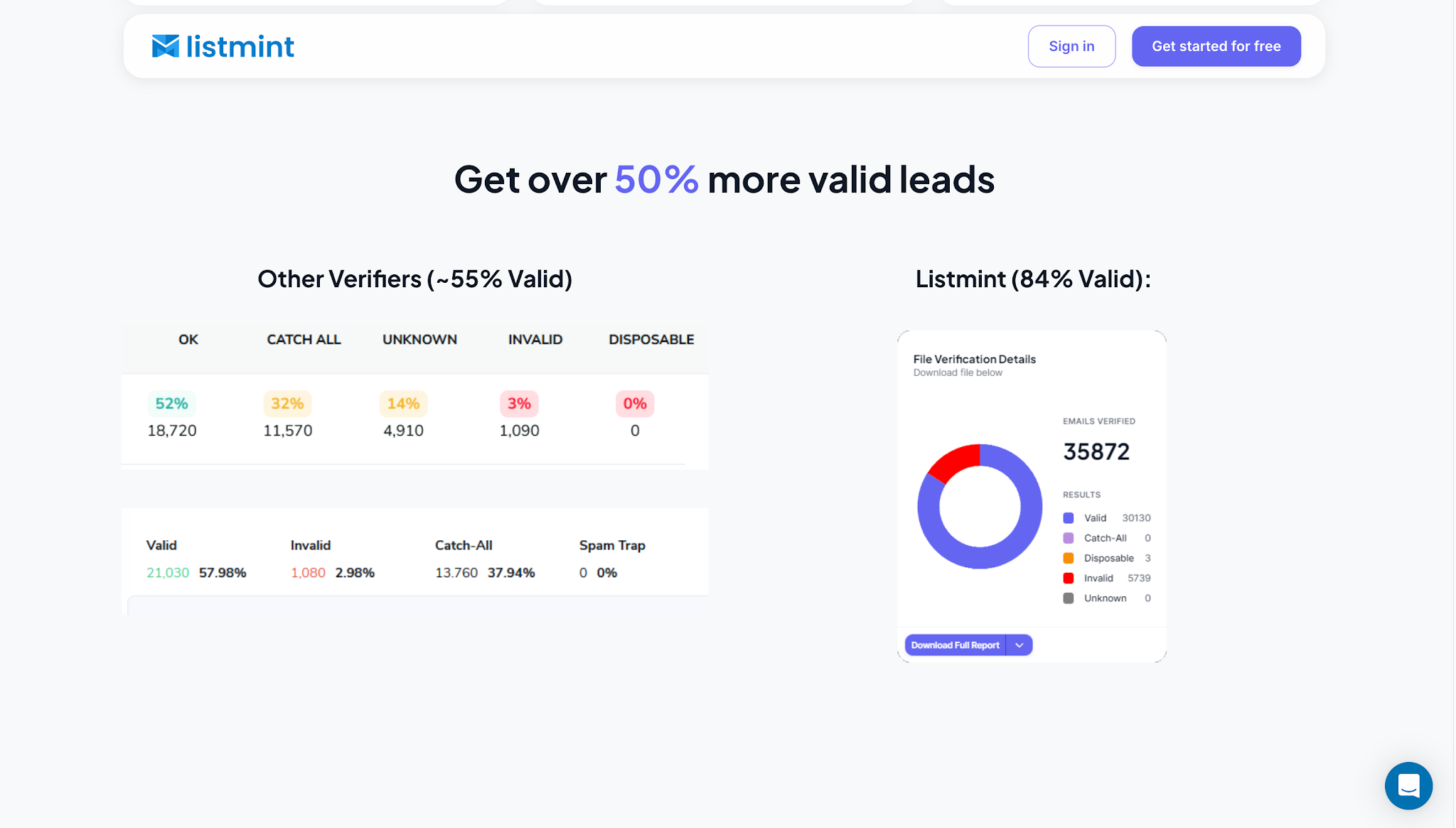
Maintaining a low bounce rate starts with knowing which email addresses deserve a place in your list and which ones do not.
Listmint helps remove much of the guesswork from that process.
Beyond verifying standard email addresses, Listmint can also verify catch-all emails and classify them as either catch_all_valid or catch_all_invalid in real time.
Instead of being left with an address marked as risky, unknown, or catch-all, you get a clearer understanding of which contacts are worth keeping and which ones may increase bounce risk.
That means less uncertainty when building email lists, running campaigns, and deciding which leads should remain in your database.
With a cleaner lead list, your team can send with more confidence and get more value from the contacts you already have.
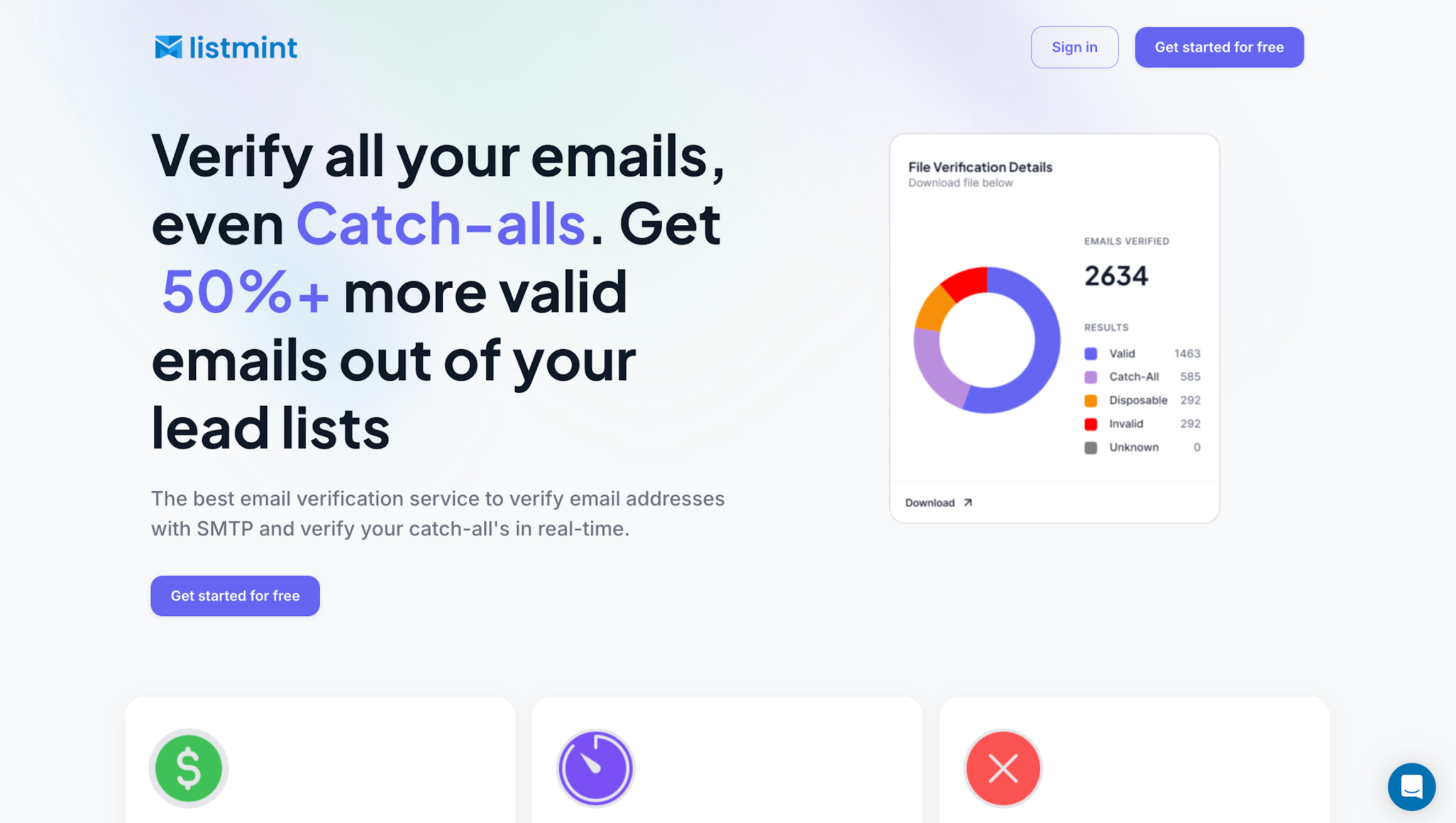
Start for free today and get 50%+ more valid emails out of your lead list!
An email campaign only works when it reaches the inbox of the right people.
That is why reducing your email bounce rate is important. It shows you that fewer bounces start before an email is ever sent.
It starts with the credibility you build, the settings you put in place, and keeping risky addresses out of your email list.
If your team still has to guess which emails are safe to keep, Listmint helps make that decision clearer.
Listmint verifies standard and catch-all emails in real time, so you can reduce unnecessary bounces, protect your reputation, and make every lead you collect count.
Get started for free today and see how Listmint helps you improve your email list faster!
The 30-30-50 rule is a cold email guideline that suggests focusing 30% on your target audience, 30% on your offer, and 50% on your follow-up strategy. The idea is that consistent follow-ups often generate more results than the initial email alone.
You can lower your bounce rate by verifying email addresses before sending, removing hard bounces, using double opt-in, and cleaning your email list regularly. You should also set up proper email authentication, such as SPF, DKIM, and DMARC.
Yes. A 40% bounce rate is extremely high and usually indicates serious issues with email list quality, email verification, or deliverability. Most email marketers aim to keep bounce rates below 2%, while anything above 5% should be investigated.
High email bounce rates are commonly caused by invalid email addresses, outdated contact data, poor list hygiene, and inactive email accounts. They can also result from catch-all emails and technical deliverability issues.
Re-engagement campaigns help identify inactive subscribers who no longer interact with your emails. If contacts do not respond after several re-engagement attempts, they can be removed from your list.
This helps keep your mailing list cleaner and reduces the chances of sending emails to inactive or abandoned accounts.