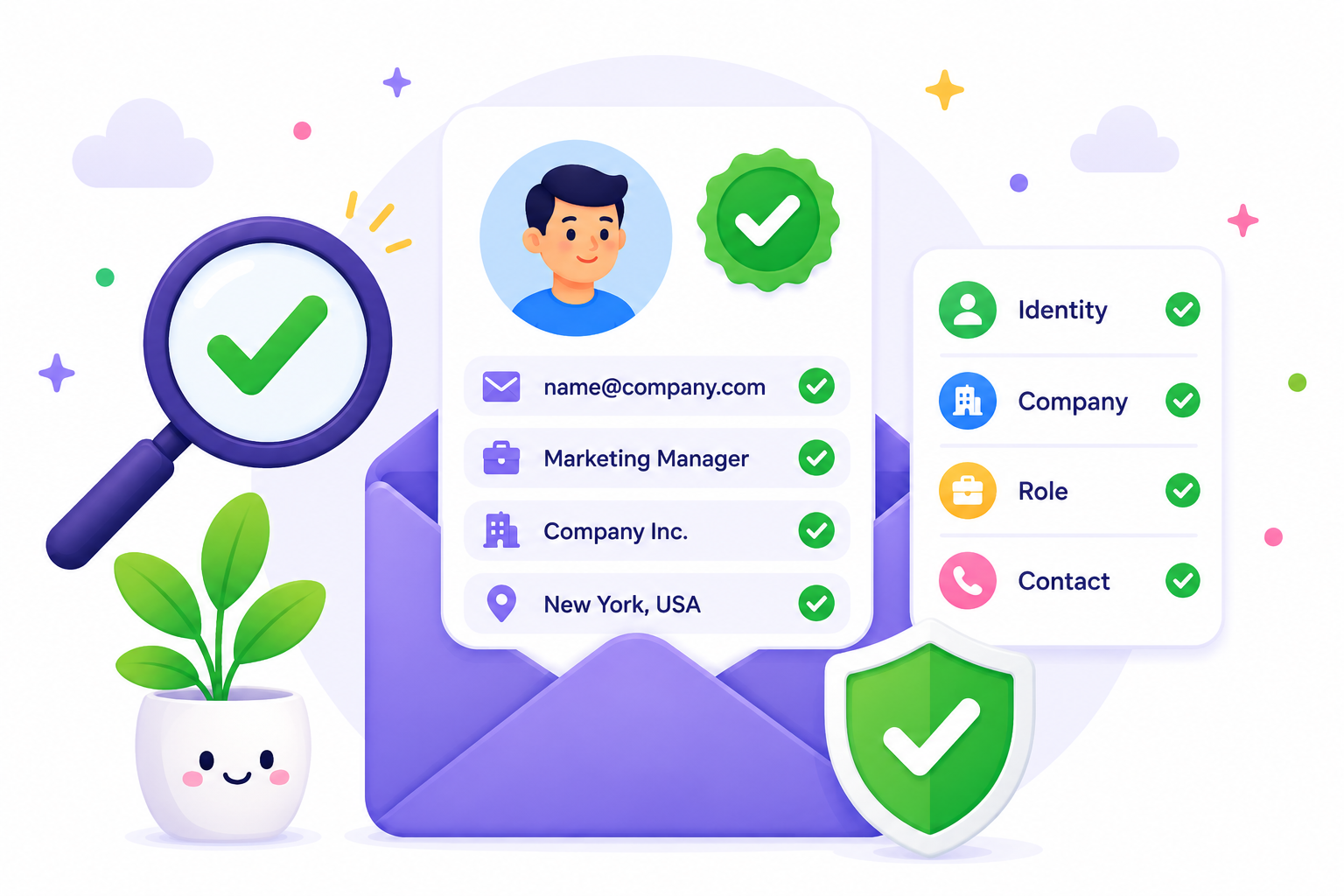
DeBounce is a popular email verification tool that helps businesses clean their email lists before sending campaigns.
While that works for some teams, others may need more advanced features as their workflows grow, such as real-time catch-all verification or integrations that better fit their processes.
In this article, we’ll look at the seven best DeBounce alternatives for email verification and what gives each one an edge.
Get started with Listmint for free and verify more usable emails before your next campaign!
These are the seven best DeBounce alternatives covered in this guide:
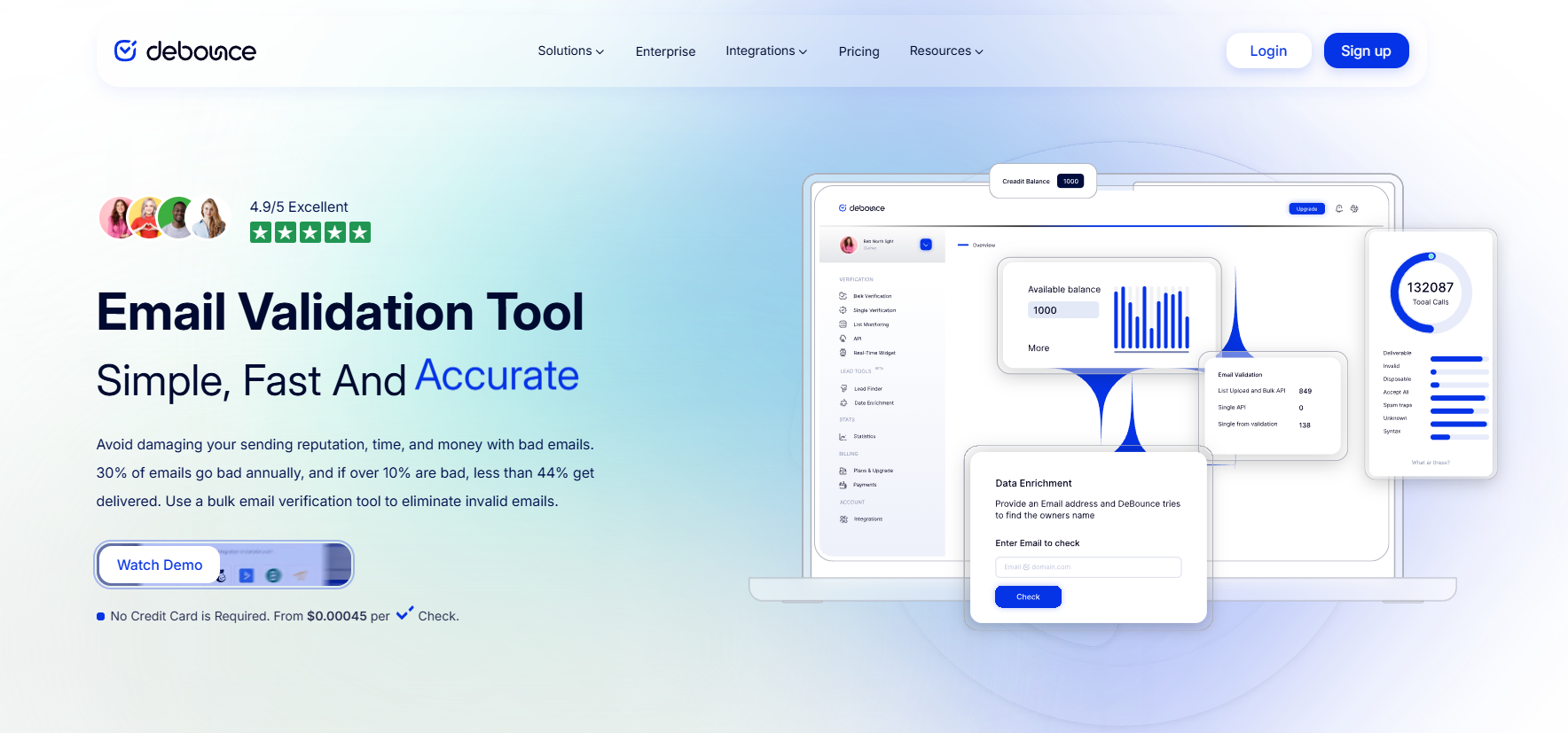
DeBounce is an email verification and validation platform that helps businesses clean email lists by identifying invalid and disposable addresses to improve deliverability and reduce bounce rates.
For teams that simply need to clean a list before starting an email marketing campaign, DeBounce can cover the basics. But teams dealing with more complex email risks will need a tool that goes beyond basic verification results.
They need one that can tell them whether an email is safe to use without adding extra work to the process, especially when emails become a bigger part of sales and marketing.
When emails keep coming back as risky or unknown, the tool doesn't make the workflow easier for your team. Instead, it adds more work by leaving you with another decision: whether to remove them or verify them one by one.
This is usually why teams look for DeBounce alternatives. They want an email verification tool that gives them more confidence without the extra work of doing it themselves.
The good news is that there are plenty of email verification tools available today, each built with different strengths in mind.
Below are seven of the best DeBounce alternatives to compare, along with what makes each one worth considering.
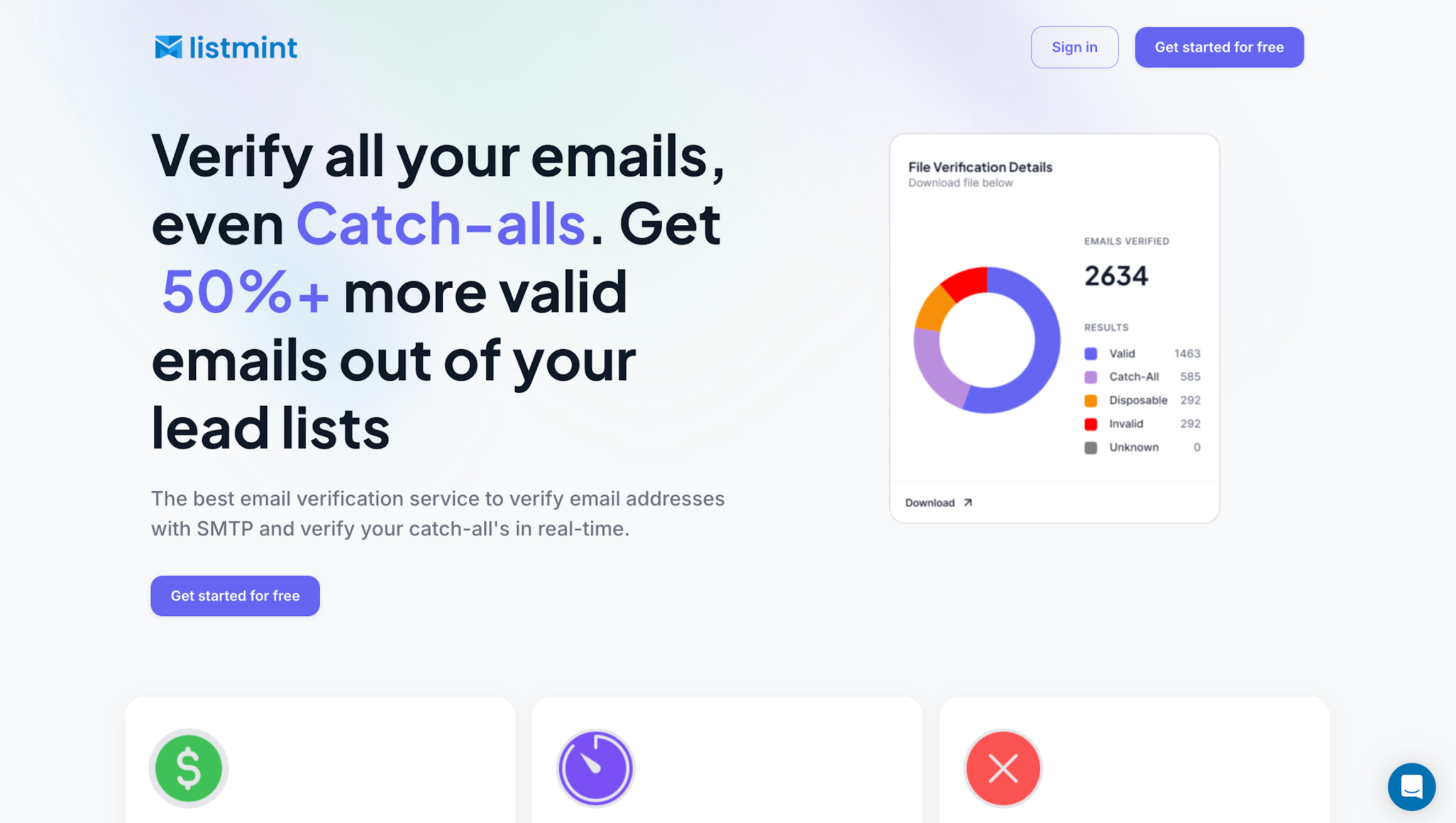
Listmint sets itself apart as one of the few email verification platforms that can verify both standard and catch-all email addresses in real time with 99%+ accuracy.
Most email verification tools can verify standard email addresses. But when they encounter catch-all domains, the results often come back as risky or unknown, leaving teams to decide whether those contacts are still worth using.
Listmint solves that by verifying catch-all emails in real time and classifying them as catch_all_valid or catch_all_invalid. This helps teams recover more usable contacts from the same lead list, rather than leaving potential opportunities behind.
Unlike DeBounce, teams do not need to send verification emails or wait long for results, as verification happens instantly. They can clean lists, launch campaigns, and move faster with greater confidence.
Start for free and get 50%+ more valid emails from your lead lists today!
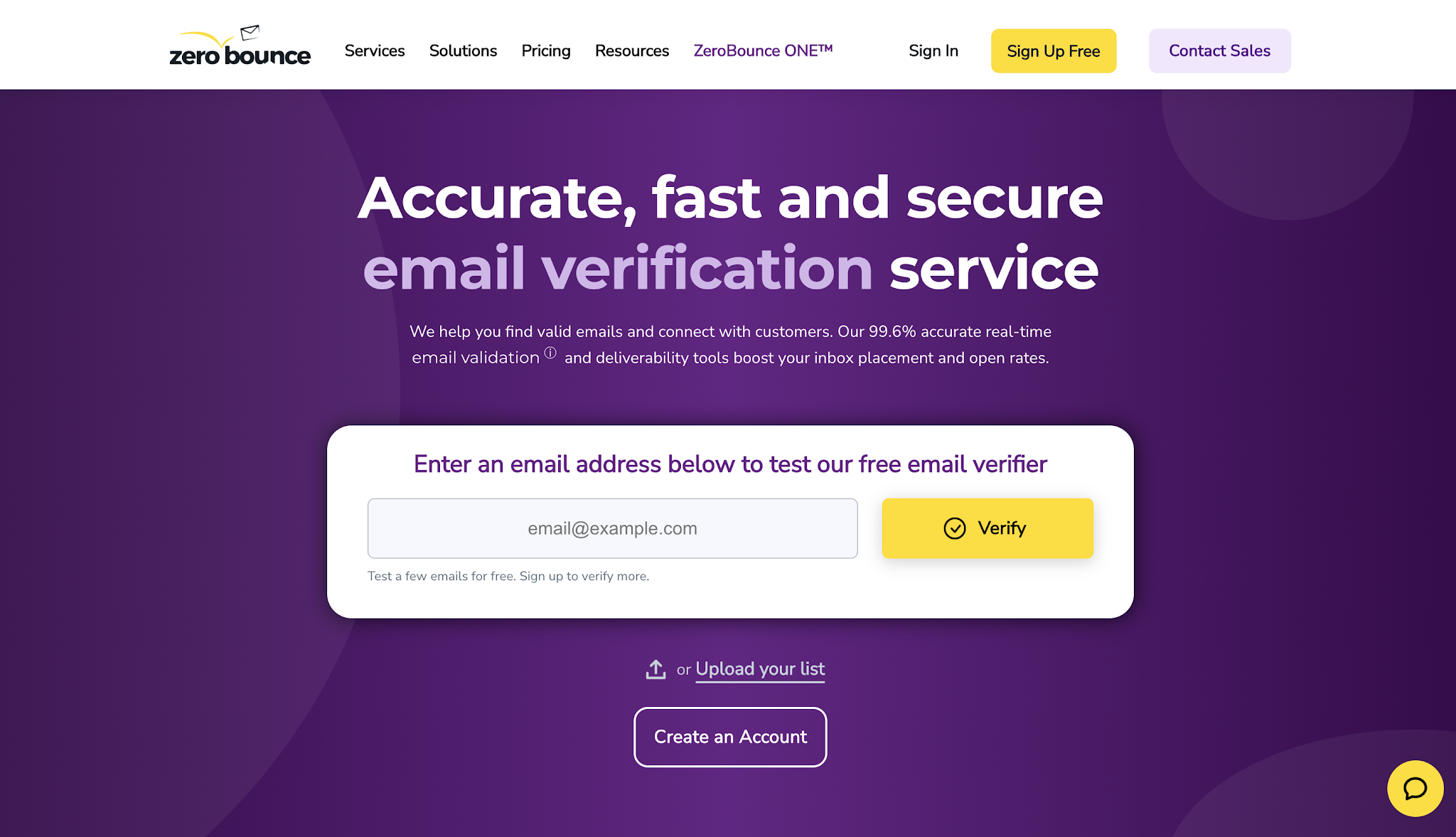
ZeroBounce is a good fit for teams that want email verification connected to deliverability.
It can clean bulk email lists, verify emails in real time, and connect with more than 60 third-party platforms.
They also offer tools that help teams check inbox placement, monitor blacklist status, and support email warmup before sending.
ZeroBounce is broad, which can be helpful for teams that need several deliverability tools in one place.
Because it includes more deliverability tools than DeBounce and starts at a higher price point, teams with high verification volume may end up paying more for features they do not need.
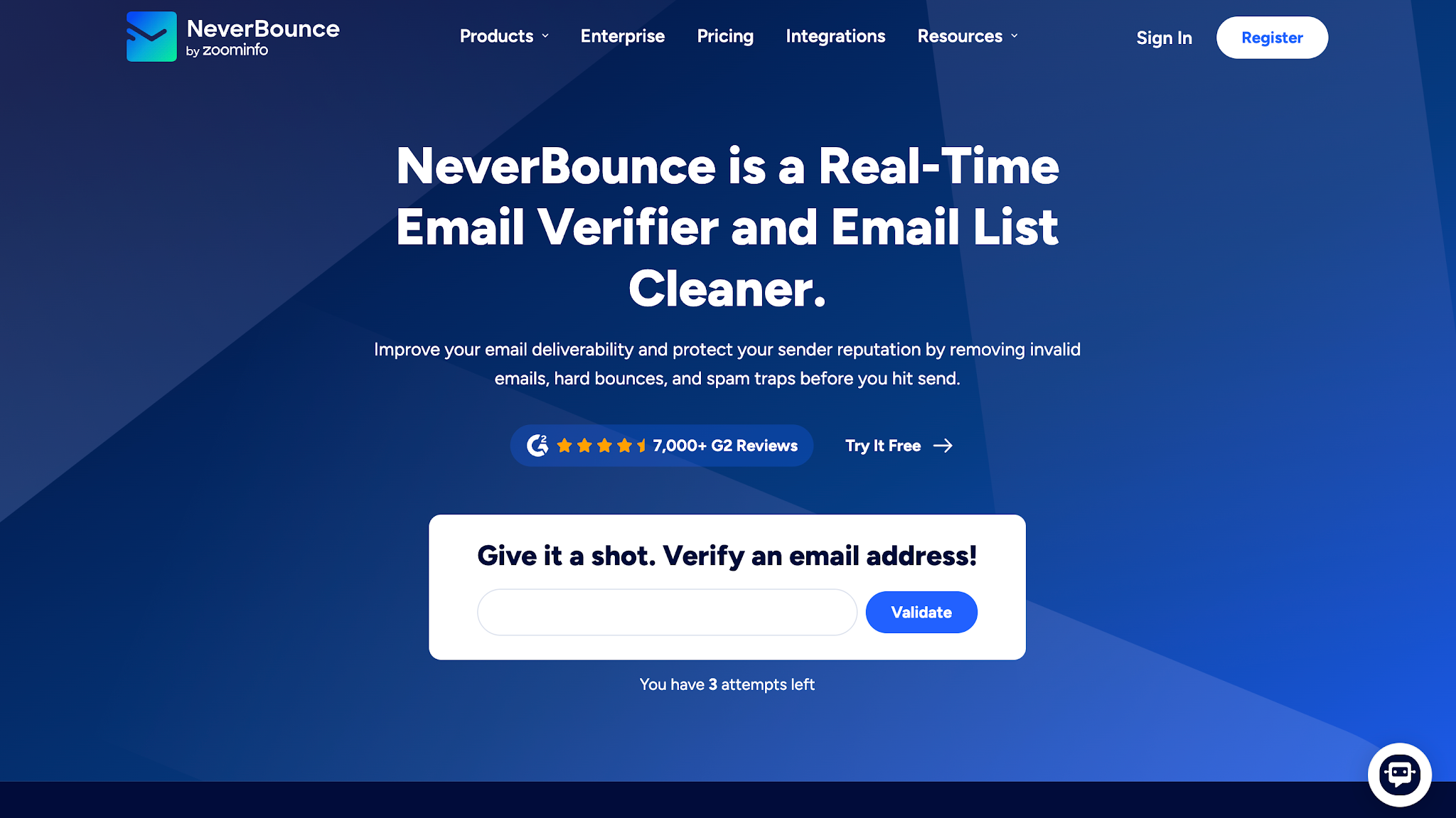
NeverBounce is built for teams that need large-scale list cleaning tools.
Its platform focuses on three core products: Clean, Verify, and Sync. Together, they help teams verify bulk email lists, check emails in real time, and refresh email data through regular updates from CRM and marketing platform integrations.
NeverBounce also connects with more than 80 third-party tools, making it easier to add email verification into existing workflows.
NeverBounce is easy to use, but it can feel expensive for teams that clean large lists regularly, especially as verification volume grows. Customer support can also be slower than expected, and credit-related issues may become frustrating if teams need more flexibility.
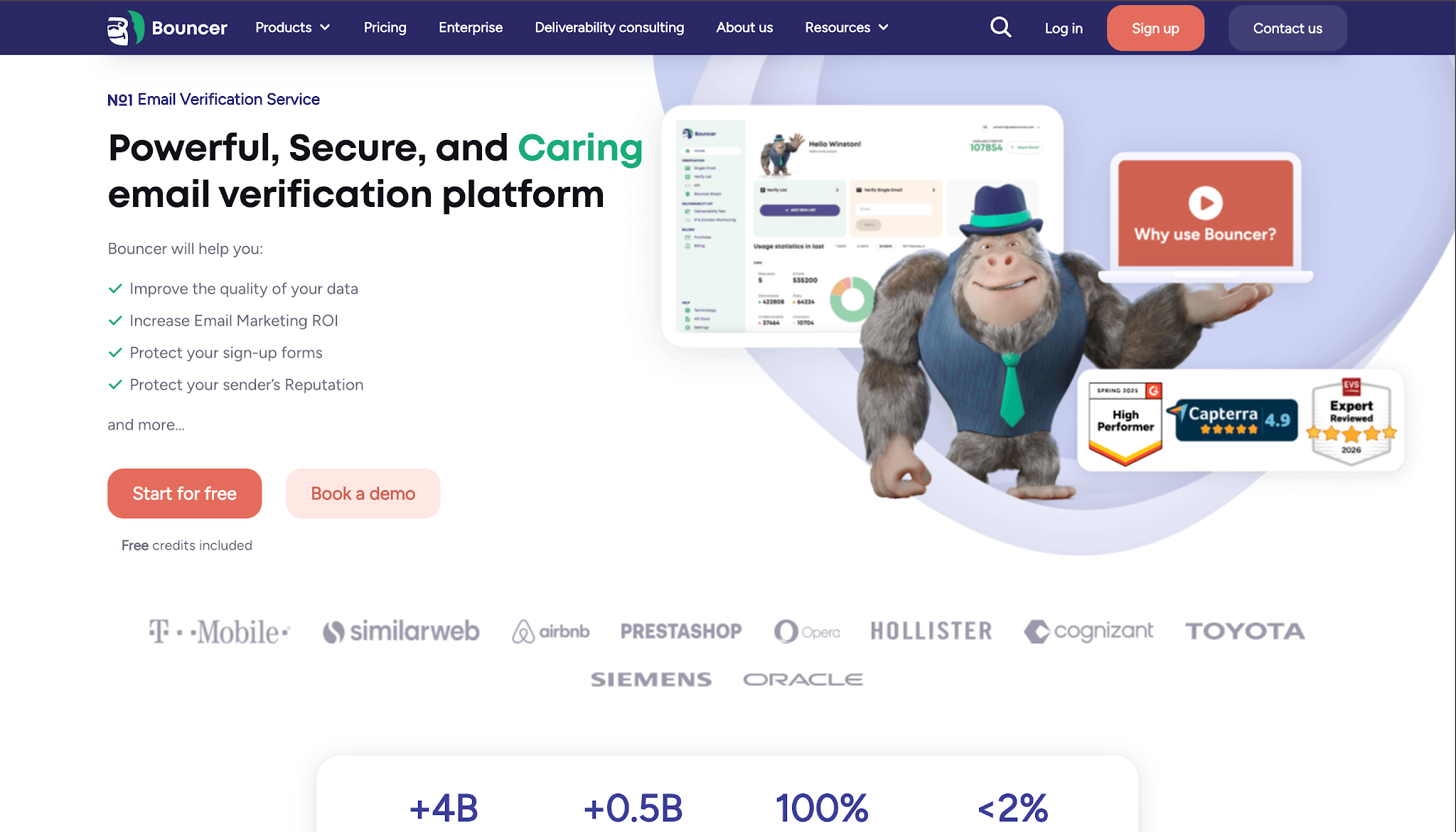
Bouncer is built for teams that prioritize verification accuracy.
Beyond bulk and real-time API verification, Bouncer offers tools such as Toxicity Check, Deliverability Kit, Bouncer Shield, and data enrichment. These help teams identify higher-risk email addresses and improve the quality of the data they collect.
Bouncer also works with many popular sales, marketing, and CRMs, making it easier for teams to fit email verification into their existing workflows.
Bouncer has slightly fewer listed integrations than DeBounce, so teams should check whether their CRM or outreach tool is supported before switching. Its pricing is also less cost-effective than DeBounce, especially for teams that regularly verify large lists.
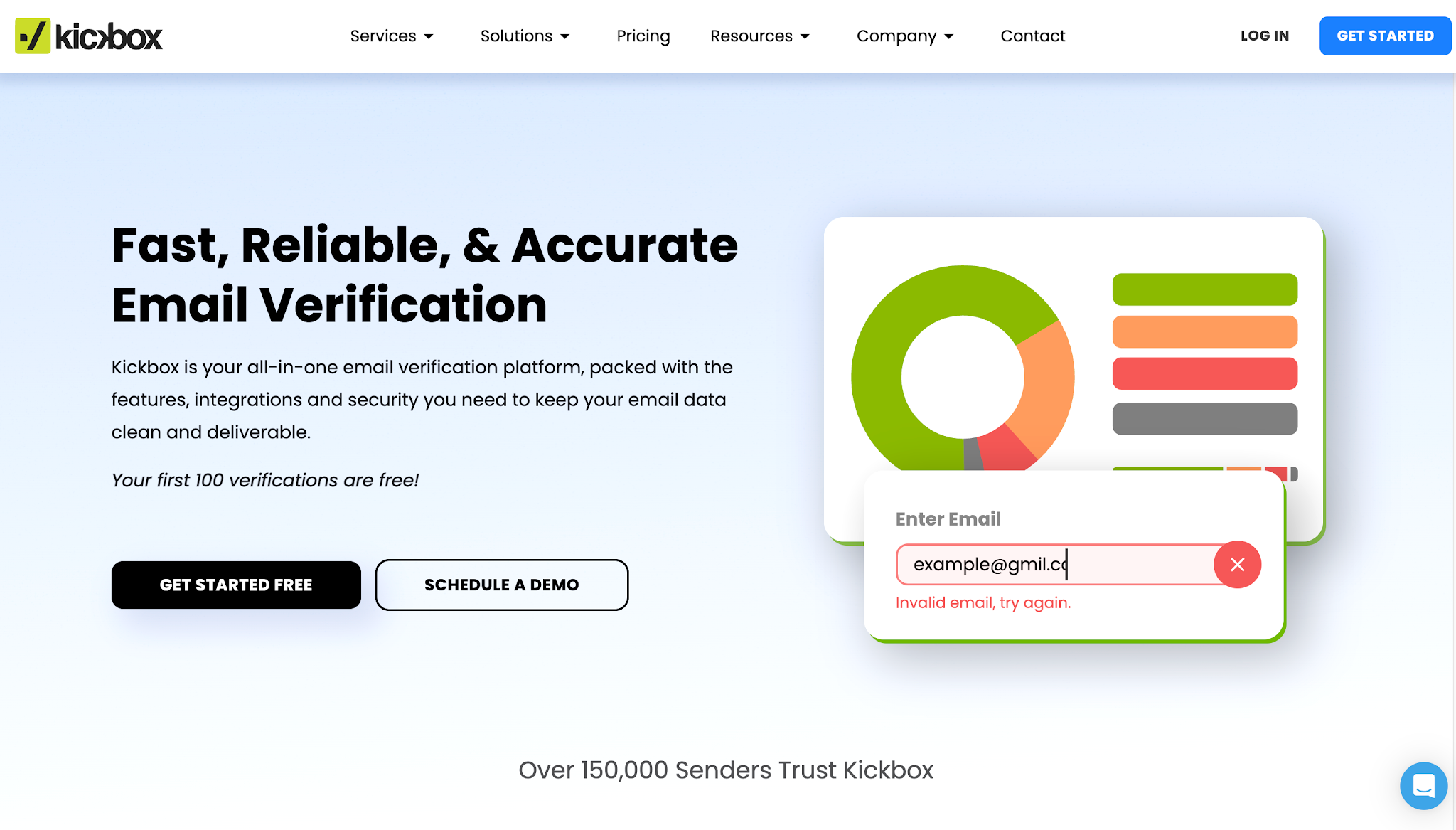
Kickbox is built for teams that want to implement email verification directly into their products and workflows.
Its platform combines bulk email verification with a real-time verification API that can validate email addresses as they're collected.
Kickbox also offers email deliverability services, a partner ecosystem, and integrations that help teams keep email verification connected to the tools they already use.
Kickbox focuses heavily on API-based verification, so teams looking for a broader set of built-in deliverability tools may find the platform more limited than some competitors.
It also has limited enrichment features, so teams that need more contact data alongside verification may need another tool.

Clearout combines verification and prospecting into a single workflow, helping teams validate contacts and uncover new ones without switching tools.
Their services cover bulk verification and real-time email validation, making it easier for teams to clean existing lists and check new contacts in the same workspace.
Clearout also integrates with commonly used workflow tools like HubSpot and Salesforce.
Clearout covers more than email verification, so the platform includes tools your team may not need if your goal is simple list cleaning.
While its prospecting features add value, teams that need deeper lead search will likely still need a dedicated prospecting database.
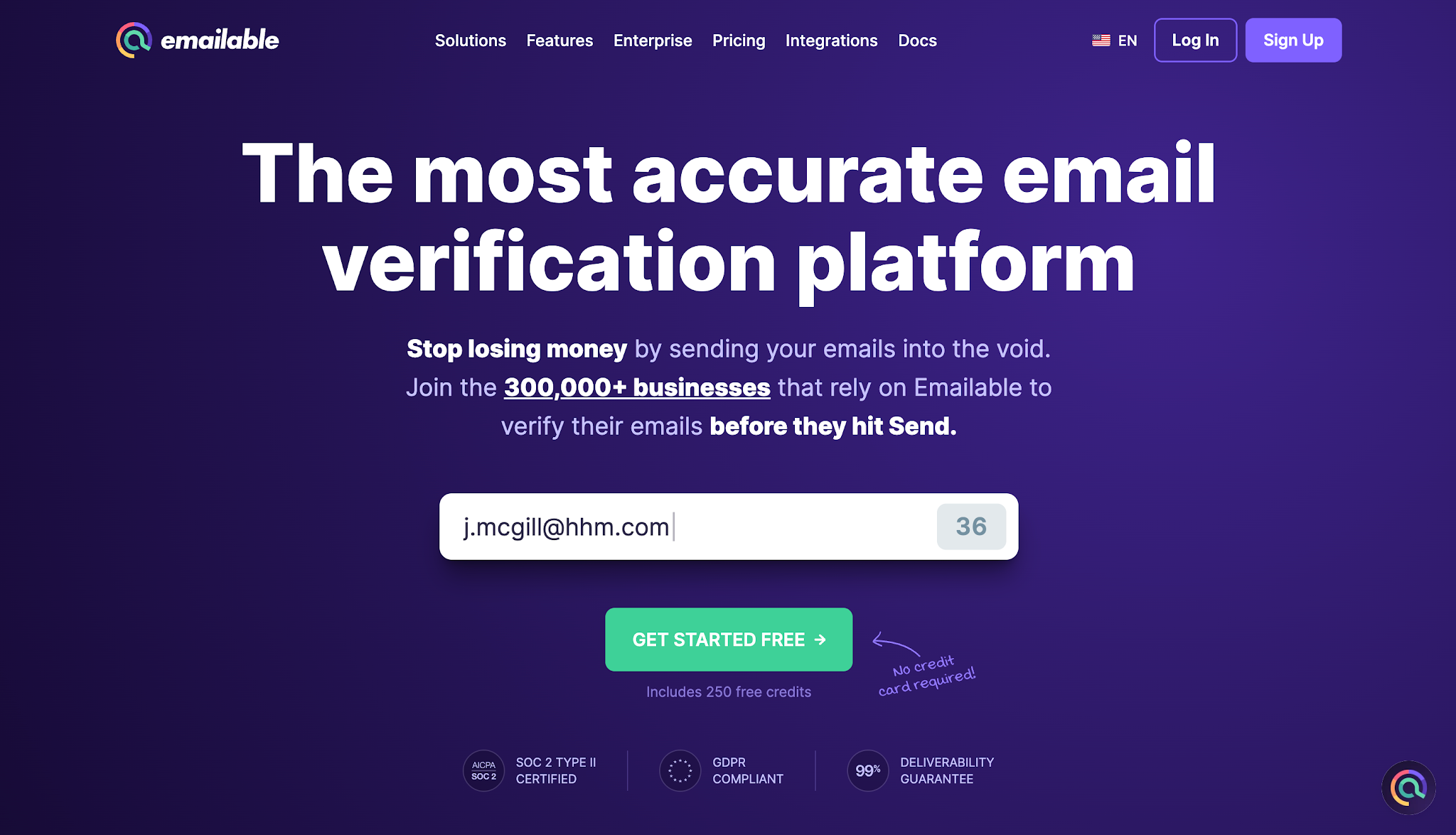
Emailable is built for teams that want a simple email verification workflow.
It covers bulk verification, real-time email checks, and an embeddable widget to validate user input as emails are entered into a form. Emailable also includes deliverability tools like inbox placement testing and blacklist monitoring.
It is Service Organization Control (SOC) 2 Type II-certified and General Data Protection Regulation (GDPR)-compliant, which can be important for teams handling large customer or prospect databases.
Emailable is easy to use, but it is more focused on verification than prospecting. It doesn't offer the same depth of contact discovery or B2B enrichment as tools built around lead search.
They also have limited list-cleaning controls, so teams that want to perform more detailed cleanup checks may need another tool.
While every DeBounce alternative has its own advantage, choosing the right platform comes down to what your team needs most from email verification.
Here are a few attributes that can make that decision easier.
Email verification is only as valuable as the accuracy of its results.
When a tool verifies an email address, you're trusting that result before you send a campaign or add the contact to your CRM. If the verification isn't accurate, you could remove valid leads, keep invalid leads, or end up with higher-than-expected bounce rates.
That is why verification accuracy is one of the first things you should be checking. A high-quality email verification tool should consistently identify valid and invalid email addresses, flag risky contacts like spam traps, and give you results you can confidently act on.
Catch-all emails are where email verification becomes less straightforward.
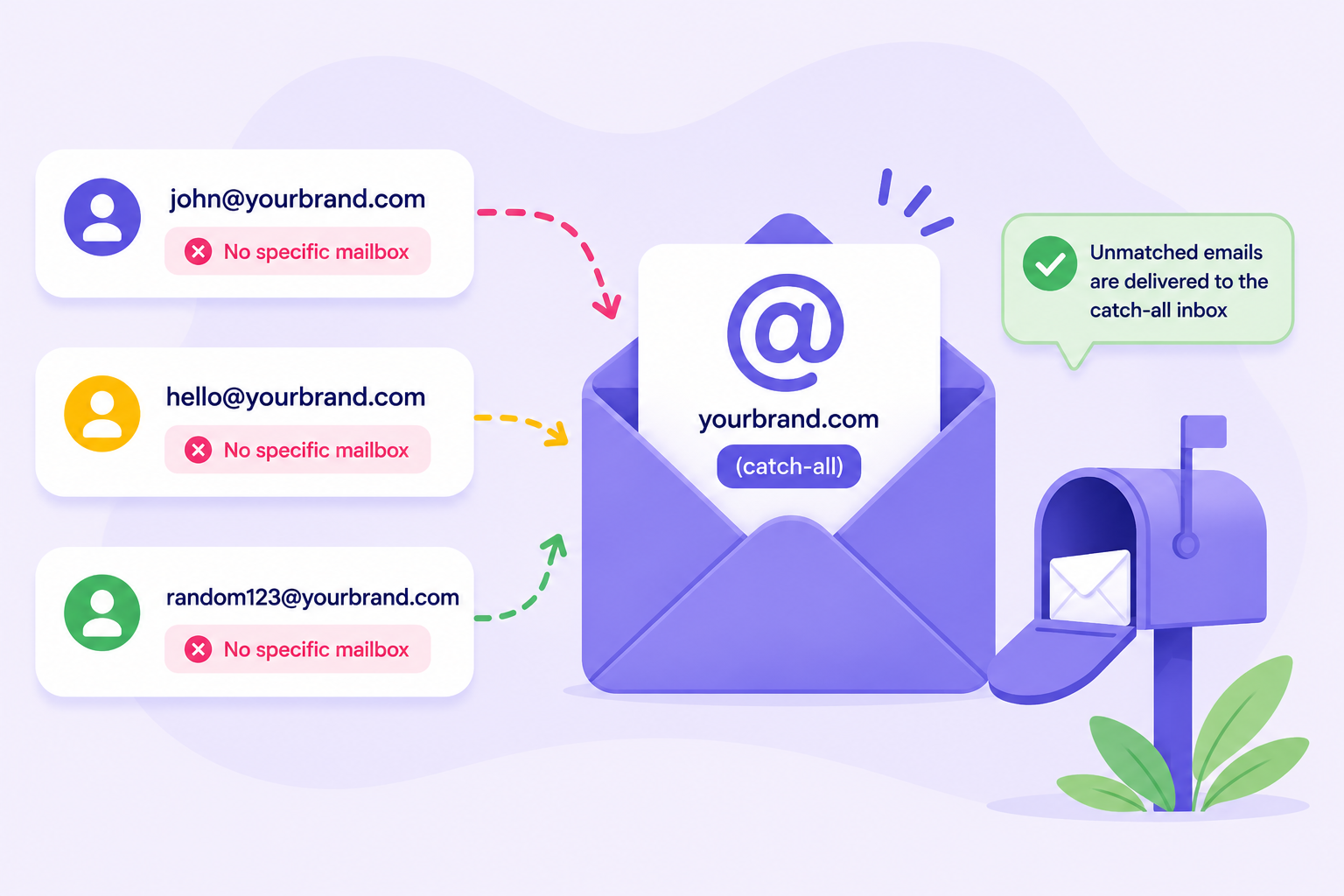
With a regular email address, the tool can usually tell whether the mailbox looks valid or invalid. With a catch-all domain, the server may accept messages for almost any address, even if the specific mailbox doesn't exist.
That is what makes catch-all handling important. If a tool only marks these emails as risky or unknown, your team still has to decide what to do with them. A better alternative should give you a clearer way to understand whether those contacts are worth keeping.
Real-time verification allows an email to be checked the moment it enters your system.
This is different from checking emails later, after they have already been added to your list. If someone fills out a form on your page or joins a waitlist, real-time verification helps check that email right away.
It's especially helpful for teams running lead forms or automated workflows because it keeps bad data from piling up in the first place. It also reduces the extra cleanup work that usually happens before a campaign goes live.
Bulk verification is important when your team works with large lists rather than checking emails one by one.
If you are cleaning thousands of contacts, the tool needs to process the list without slowing down your workflow. The results also need to be easy to export and use inside your CRM or outreach platform.
This is especially important for SDR teams, agencies, and marketers working with purchased or scraped lists. The faster a list can be cleaned properly, the sooner your team can decide which target contacts are ready for outreach.
Email APIs and integrations matter because email verification rarely occurs in a single place.
A team may collect emails from a form, store them in a CRM, and use them inside an outreach tool. If your verification platform doesn't connect with that workflow, your team may need to move data manually just to keep lists clean.
That is why this attribute is worth checking closely. Your chosen DeBounce alternative should either connect with the tools you already use or provide an API that lets your team build verification into the process.
Pricing isn't only about which tool looks cheaper at the start. The real question is how costs compare as your team verifies more emails.
A tool that works for a small list may become expensive once you start cleaning larger files or running checks through an API.
Scalability also matters if email verification is part of your regular workflow. The right platform should match your current volume while still supporting the way your list size grows over time.
Every platform in this list has its own strength. Some focus on deliverability, while others are built around API workflows, bulk verification, or prospecting.
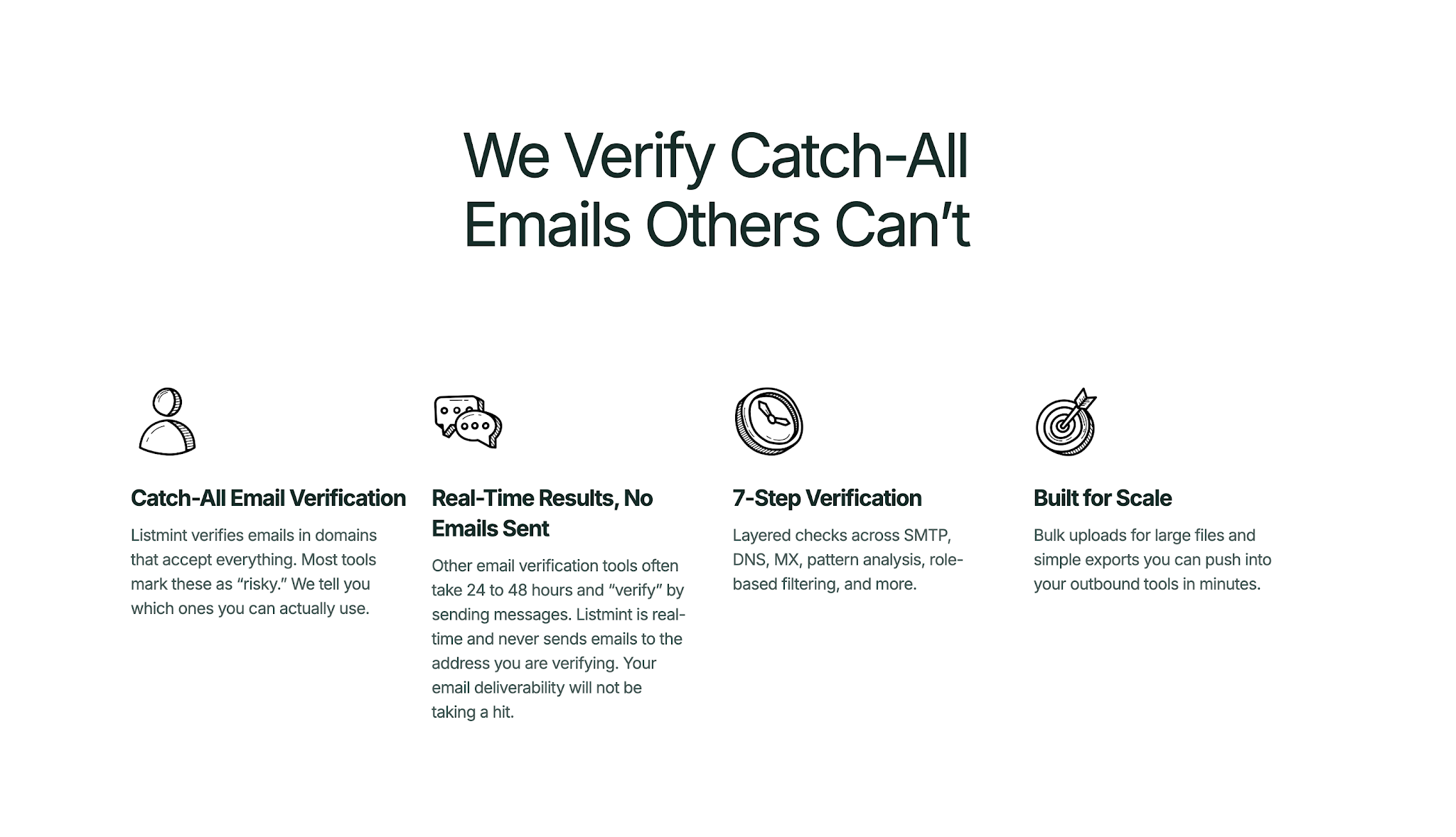
Listmint takes a different approach by focusing on one of the hardest parts of email verification: catch-all email addresses.
Many tools can detect when an address belongs to a catch-all domain. But detection alone does not always tell your team whether that specific email is valid or invalid.
That leaves the contact in a gray area. Removing it may mean losing a valid lead, while keeping it may increase the chance of a bounce.
Listmint helps fix that gap by verifying both standard and catch-all email addresses with 99%+ accuracy and zero waiting time. Instead of leaving catch-all emails unresolved, it classifies them as valid or invalid so teams can make clearer decisions before sending.
With this approach, you can get more usable contacts from the same lead list without doing manual checks. It makes your verification workflow more cohesive and saves you time from sorting through uncertain results yourself.
There are plenty of DeBounce alternatives available today, and each one brings something different to the table. The right choice ultimately comes down to the problem you're trying to solve.
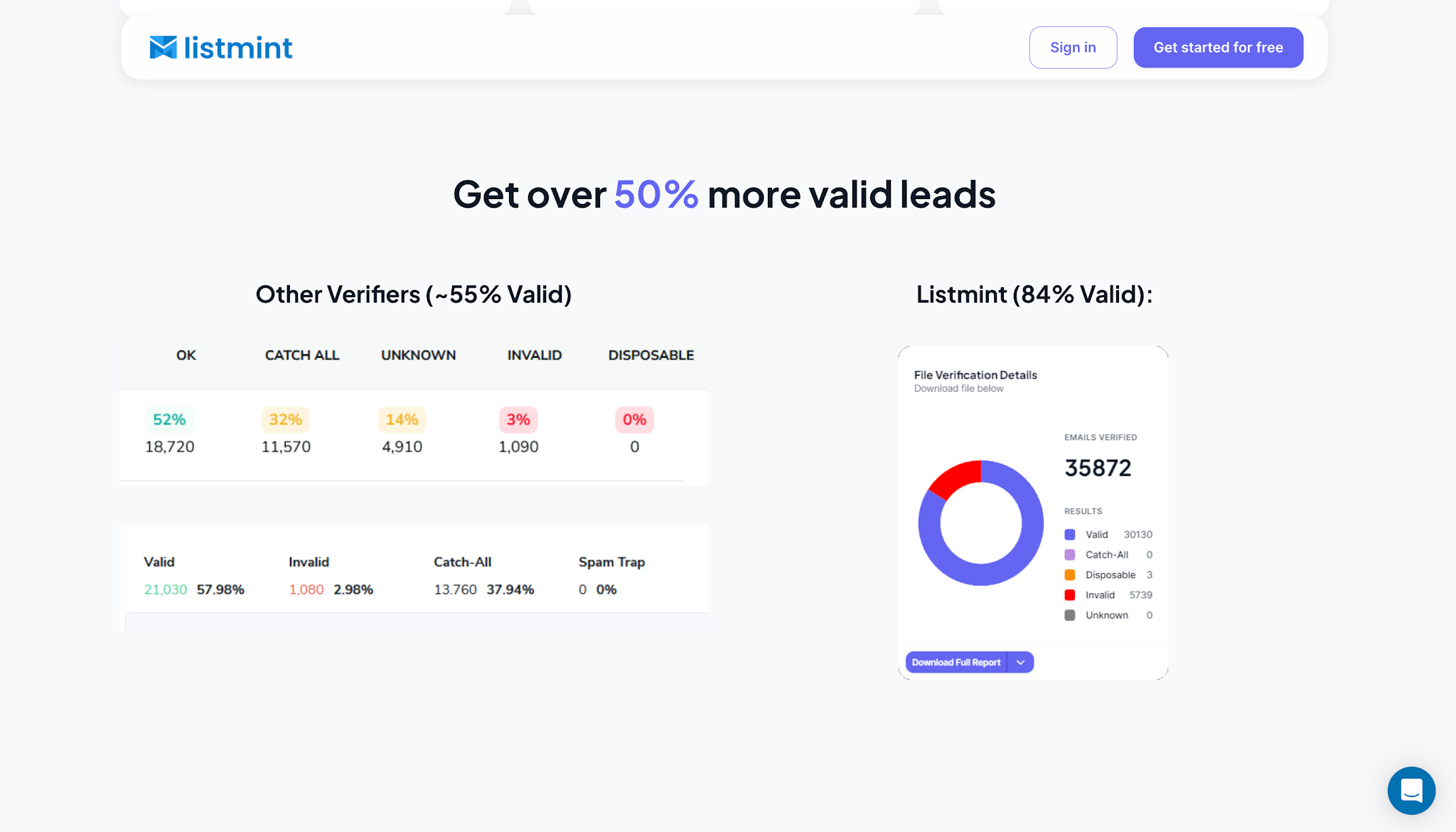
If your biggest challenge is knowing whether catch-all email addresses are actually safe to use, Listmint gives you the clarity other tools often cannot provide.
The best DeBounce alternative depends on what your team needs. If your priority is catch-all email verification in real time, Listmint is the strongest choice. If you need broader deliverability tools or prospecting features, other platforms in this guide may be a better fit.
Most teams look for a DeBounce alternative because they need features beyond basic email verification. This may include real-time verification, better catch-all handling, more integrations, or tools that fit their workflow more closely.
Listmint is the best choice if catch-all email verification is your priority. It verifies catch-all email addresses in real time and classifies them as valid or invalid, giving teams clearer results than simply labeling them as risky or unknown.
Focus on verification accuracy, catch-all email handling, real-time verification, API support, integrations, bulk verification, and pricing. The right platform is the one that best matches how your team collects, verifies, and uses email data.
Yes. Many DeBounce alternatives offer real-time email verification. However, not every platform supports this feature, so it's worth checking before making the switch.