Imagine someone visiting your website, looking through your products, and leaving without buying anything.
Maybe they found you through social media. Maybe they're comparing options or simply aren't ready to spend yet. Either way, you don't want every interested visitor to become a missed opportunity.
Email marketing helps your business stay in touch with potential customers who choose to subscribe. You can share useful information, introduce new products, send offers, and give existing customers a reason to return.
Knowing how to use email marketing to grow your business can help you turn those connections into lasting customer relationships.
This guide walks through the steps to build an email list, create campaigns, and use your results to improve future sales.
Email marketing gives your business a direct communication channel with people who have shown interest in what you offer.
Unlike relying only on website visits, this marketing channel provides direct audience access to subscribers who have agreed to hear from you.
For example, someone might subscribe to receive a discount but isn't ready to buy. Your email marketing process can introduce your products, answer their questions, and help turn that interest into a sale.
Those email marketing efforts can also help attract new customers and nurture relationships with people who need more time to decide. Each useful message gives you another opportunity to build a customer relationship.
After someone makes a purchase, relevant updates and offers can encourage them to return. Regular follow-ups also help foster customer loyalty by keeping your business connected with customers beyond their first purchase.
Getting started with email marketing doesn't have to be complicated. What helps is having a plan for who you want to reach, what you want them to do, and how you'll stay connected after they subscribe.
Here are eight practical steps to help you get started and make email marketing work for your business:
Before writing your first email, decide what you want it to achieve.
Your email marketing plan might focus on attracting new leads, increasing purchases, booking consultations, or encouraging customers to buy again.
Think about your target audience next. Who would benefit from your product or service, and what would make them interested enough to take action?
Understanding your target customers helps you choose a message that speaks to their needs.
For example, a business owner running an online store might want to increase first-time purchases. A marketing manager at a service company may focus on getting more consultation bookings.
Each business needs a different message and a measurable target, such as 20 new orders or 10 booked consultations.
Your broader marketing plan may include several marketing strategies, but start your email efforts with one specific objective.
That gives each campaign a purpose and helps you decide what to communicate.
An email list starts with people who genuinely want to hear from your business.
For small business email marketing, that means giving interested visitors a reason to subscribe and making it easy for them to sign up.
A small business owner might add a newsletter form to their website, while a marketing team could offer a free guide through a blog post or invite customers to subscribe during checkout.
For example, an online store might offer 10% off a first purchase when someone signs up for product updates. The offer gives visitors something useful in return for their email address.
Make sure subscribers know what they're signing up for and agree to receive marketing emails. Avoid buying email lists, even if they promise thousands of contacts.
Building a list this way gives your business a direct line to interested subscribers.
Your digital marketing efforts can help attract visitors, and email gives you direct access to potential and existing customers who have chosen to stay connected.
Once you have a way to collect subscribers, you'll need a platform to manage your list and send emails without handling everything manually.
The right email marketing platform should fit your business size, budget, and the number of emails you plan to send. Look for email marketing software that lets you organize contacts, create campaigns, and review results in one place.
Useful features include email templates to save time on design, segmentation to organize subscribers, and automation to handle follow-ups. Reporting features also help you see how people respond to your emails.
Popular options include Mailchimp, Brevo, and HubSpot. Features and plans vary by email service provider, so check what your subscription includes.
You don't need every advanced feature from the start. Focus on the email marketing tools your business will actually use, with room to support more subscribers and email campaigns as you grow.
Not everyone on your email list is interested in the same things.
Someone who just subscribed may need more information about your business, while existing customers might be interested in new products or special offers.
Segmenting your email list means grouping subscribers based on their interests, buying behavior, or level of customer engagement. It helps you send personalized messages that reflect what each group is interested in.
A clothing store can use purchase history to identify customers who frequently buy workwear.
Based on their past purchases, the store could send updates about new office clothing collections or recommend matching accessories.
The idea is to engage customers with emails that feel relevant to them. When subscribers receive information or offers that match their interests, they're more likely to click through and consider making a purchase.
Now that your subscribers are organized, it's time to decide what emails to send them.
Your marketing emails should give readers a reason to take the next step, such as exploring a product, booking a service, or making a purchase.
The type of email depends on what you want to achieve. Here are a few examples:
When you create email campaigns, start with an email subject line that tells readers what to expect. Keep the message focused on one offer or topic, and include a specific call to action that makes the next step obvious.
For example, a product announcement could highlight what's new, explain how it helps customers, and invite them to shop.
Keep paragraphs short and check how your email looks on mobile devices. Readers should be able to understand your message without scrolling through unnecessary content.
A successful email marketing campaign gives subscribers something useful and a reason to act. For promotional commercial messages, make the offer easy to understand without relying on exaggerated claims.
Following up with every subscriber manually takes time, especially as your email list grows. Marketing automation helps by sending emails when someone takes a specific action or reaches a scheduled point in your customer journey.
For example, when someone joins your list, you can set up a welcome sequence. The first email introduces your business. A few days later, subscribers receive helpful information and a relevant offer.
You can also use automated campaigns to follow up after a customer requests information or leaves items in their shopping cart. These automated emails help you stay in touch without having to remember every follow-up.
After a purchase, transactional emails can confirm orders or provide delivery updates. Separate promotional follow-ups can recommend related products or invite customers to shop again, provided you have the appropriate permission.
Your email marketing program can use these timely messages to maintain contact with interested buyers and support customer retention long after the first purchase.
Before sending a campaign, check how your email looks and works from a subscriber's perspective. A message might look fine in your editor but display differently once it reaches your audience's inbox.
Start by sending a test email to yourself or a colleague. Open it on a computer and phone, check that the links work, and confirm that any personalized details appear correctly.
A few practical checks can also reduce the risk of delivery problems. Use accurate sender information and follow your email provider's authentication requirements.
For instance, Gmail requires SPF or DKIM for senders to personal Gmail accounts, plus SPF, DKIM, and DMARC for bulk senders. Avoid misleading subject lines or sending more often than subscribers expect.
For US commercial email, the CAN-SPAM Act requires accurate sender information, a valid postal address, and a working opt-out method, among other rules.
According to the FTC's compliance guide, businesses must honor opt-out requests within 10 business days.
Having permission to email subscribers doesn't mean they want frequent messages. Choose a sending schedule that matches what people signed up for, then adjust it based on their engagement.
Once your emails have been sent, review the results to see if they're helping your business reach its objectives.
Your email marketing platform should provide reports showing how subscribers respond to each campaign. Focus on the key metrics that relate to what you wanted to achieve, such as purchases, consultation bookings, or website visits.
Here are the main metrics worth tracking:
Look at these numbers together. A campaign might get plenty of clicks but few purchases, which could mean the offer or landing page needs attention.
A/B testing can help identify what works better. Try two versions of a subject line or offer, then compare their results. Open rates can also provide context, but privacy features may affect their accuracy.
Measuring email marketing success goes beyond getting emails opened. Those results can help your business improve its offers, adjust future emails, and identify effective marketing strategies that bring in more sales.
Imagine a small e-commerce store selling casual clothing. The business gets regular website visitors through social media and digital advertising, but not everyone makes a purchase right away.
To stay connected with interested shoppers, the store offers a 10% discount when visitors subscribe to its newsletter. New subscribers receive a welcome email introducing the brand and sharing their discount code.
Over the next few days, the store shares a few ideas for styling popular items and recommends products based on subscribers' interests. The emails may also include a few tips on caring for their clothes.
After someone makes a purchase, the store sends a thank-you email and later shares relevant new arrivals or special offers to encourage another order.
The owner tracks email clicks, first-time purchases, and repeat orders to see which emails encourage sales and help turn first-time buyers into loyal customers.
Growing your email list is a good sign, but not every address will stay valid forever. People change jobs, abandon old accounts, or enter incorrect email addresses when signing up.
Sending emails to invalid addresses can lead to hard bounces, which may hurt your email deliverability. Even a large contact list won't help much if your messages aren't reaching the people you want to contact.
Regular list maintenance helps you identify and address these problems. Remove invalid addresses, honor unsubscribe requests, and review inactive subscribers before continuing to email them.
Many email marketing platforms provide tools for managing contacts, but email verification can help identify invalid or outdated addresses before a campaign goes out.
A reliable contact list also helps your business maintain brand awareness among subscribers who still want to hear from you.
Even when you're using other marketing channels to attract customers, keeping your email list accurate helps you stay connected with the people already interested in your business.
A reliable email list gives your business a better foundation for reaching customers. Listmint helps you maintain that list with standard SMTP verification and dedicated catch-all verification, all in one platform.
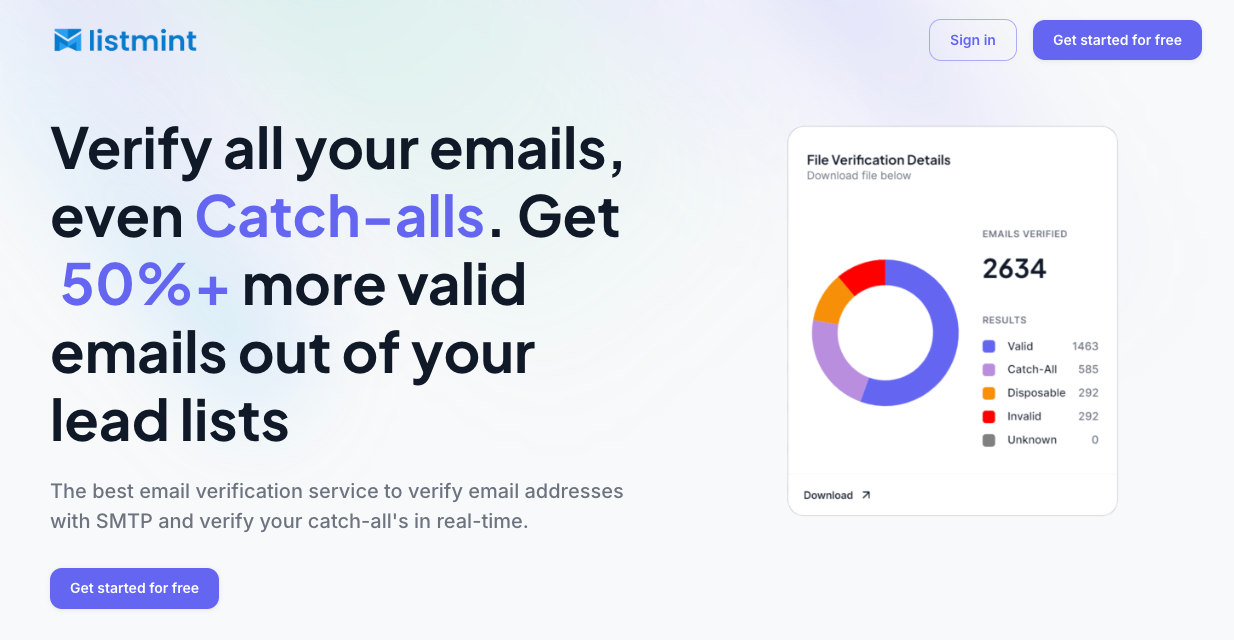
Listmint has verified over 1 billion email addresses, with 99%+ SMTP and catch-all verification accuracy.
You can check existing contact lists through bulk verification, verify newly collected addresses in real time, or use its API to add verification directly to your business workflows.
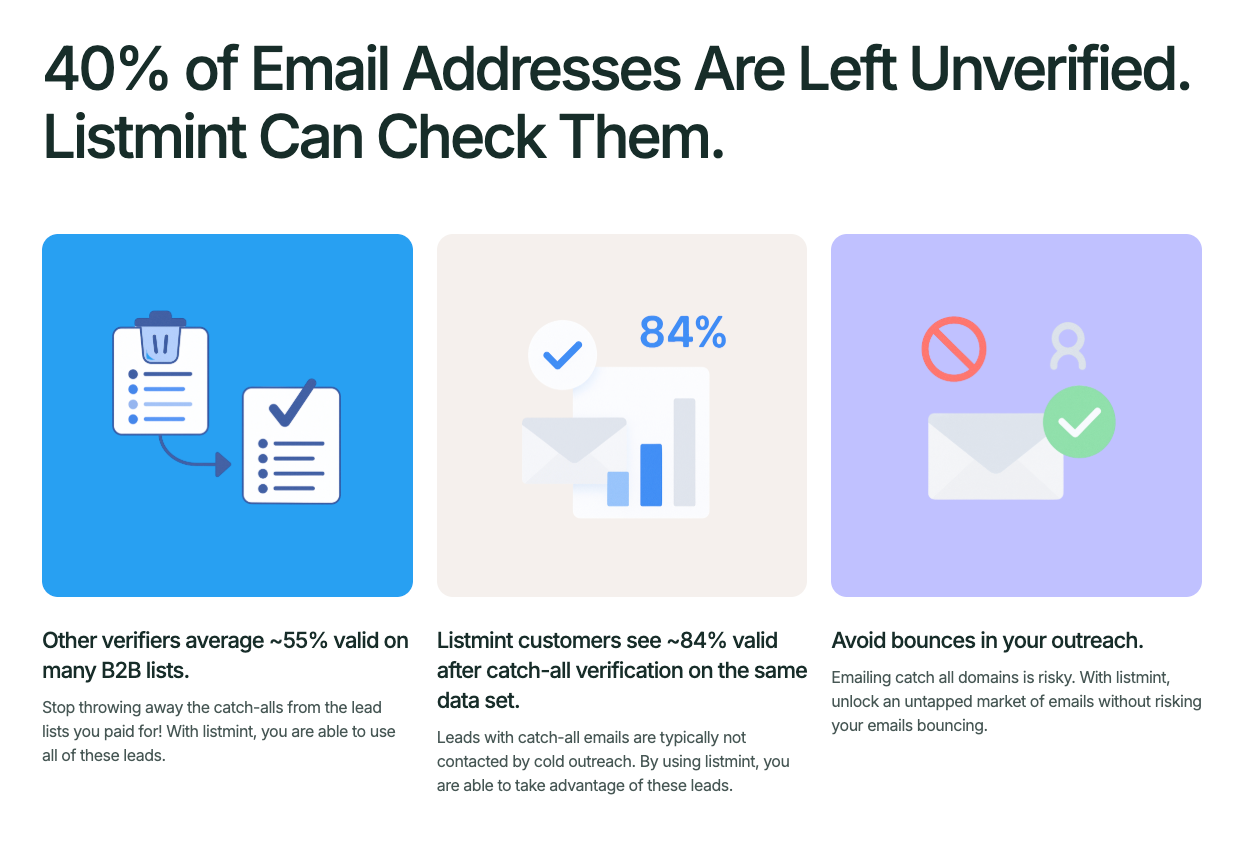
For businesses with B2B subscribers, a key advantage is how Listmint handles catch-all emails. Standard verification often leaves these addresses marked as risky or uncertain, even when they belong to legitimate B2B contacts.
Listmint verifies catch-all addresses in real time without sending test emails. It identifies them as catch_all_valid or catch_all_invalid, helping your business retain usable leads and remove invalid contacts before outreach.
Listmint identifies up to 84% valid contacts from lead lists, compared with approximately 55% using generic verifiers. That's over 50% more valid contacts identified from the same list, based on Listmint's comparison.
For your business, that means making better use of the contacts you've already collected, reducing avoidable bounces, and identifying more usable addresses for outreach where you have permission to contact them.
Verify your catch-all emails with Listmint. Get started for free.
Email marketing can help your business attract new leads, turn interested subscribers into customers, and encourage people to buy again.
You don't need a complicated strategy to see progress. Focus on reaching the right people, sharing emails they find useful, and giving them a reason to stay connected.
Pay attention to what works, make adjustments when needed, and keep your contact list accurate as your business grows.
Listmint can help with that last part by verifying email addresses before your campaigns go out, so you can spend less time dealing with invalid contacts.
Get started for free with Listmint.
The 3-3-3 rule in marketing is one approach to planning your campaigns. You focus on three messages you want customers to remember, three audience groups you want to reach, and three channels where you can connect with them.
Other versions of the rule exist, so businesses can use it as a planning framework rather than a strict formula.
Yes, email marketing is still worth it in 2026 because it helps businesses reach interested subscribers, generate sales, and encourage repeat purchases at a relatively low cost.
Its effectiveness depends on list quality, relevant content, and how well campaigns turn subscribers into customers.
The 80/20 rule in email marketing can refer to two guidelines. One suggests sharing 80% helpful content and 20% promotional content, as explained in Forbes Advisor's email marketing guide.
The other refers to the Pareto principle, which suggests that roughly 80% of results may come from 20% of the efforts or activities driving them. The exact percentages can vary.
The 60/40 rule in email marketing is an informal email design guideline suggesting approximately 60% text and 40% images.
It encourages a readable balance of text and images, so the main message still makes sense when images don't load. However, this ratio is not a technical requirement or a guarantee that emails will reach the inbox.
Yes, email marketing can hurt your sender reputation when recipients frequently mark your messages as spam or when you repeatedly send unwanted emails.
These problems can increase the risk of future campaigns landing in spam folders. Following Google's email sender guidelines can help businesses understand the sending practices that affect email delivery.