An email verification tool should fit the way your business collects and manages contacts, not create more work for your team.
Mailfloss focuses on automated list cleaning, with daily checks, real-time verification, bulk processing, and API access.
For businesses that prioritize ongoing list hygiene, Mailfloss can reduce the manual work involved in maintaining subscriber lists.
But your needs may look different.
You might be working with B2B prospect lists, checking new email leads before outreach, or reviewing catch-all addresses that standard checks cannot fully confirm.
Those differences can make another email verification service worth considering.
This guide compares seven Mailfloss alternatives, looking at their verification capabilities, practical differences, and limitations to help you find a suitable option.
The seven Mailfloss alternatives to consider in 2026 are:
Mailfloss is an email verification service designed to automate subscriber list maintenance.
It connects with email marketing platforms and checks existing contacts, verifies new signups, identifies invalid addresses, and helps correct common email typos.
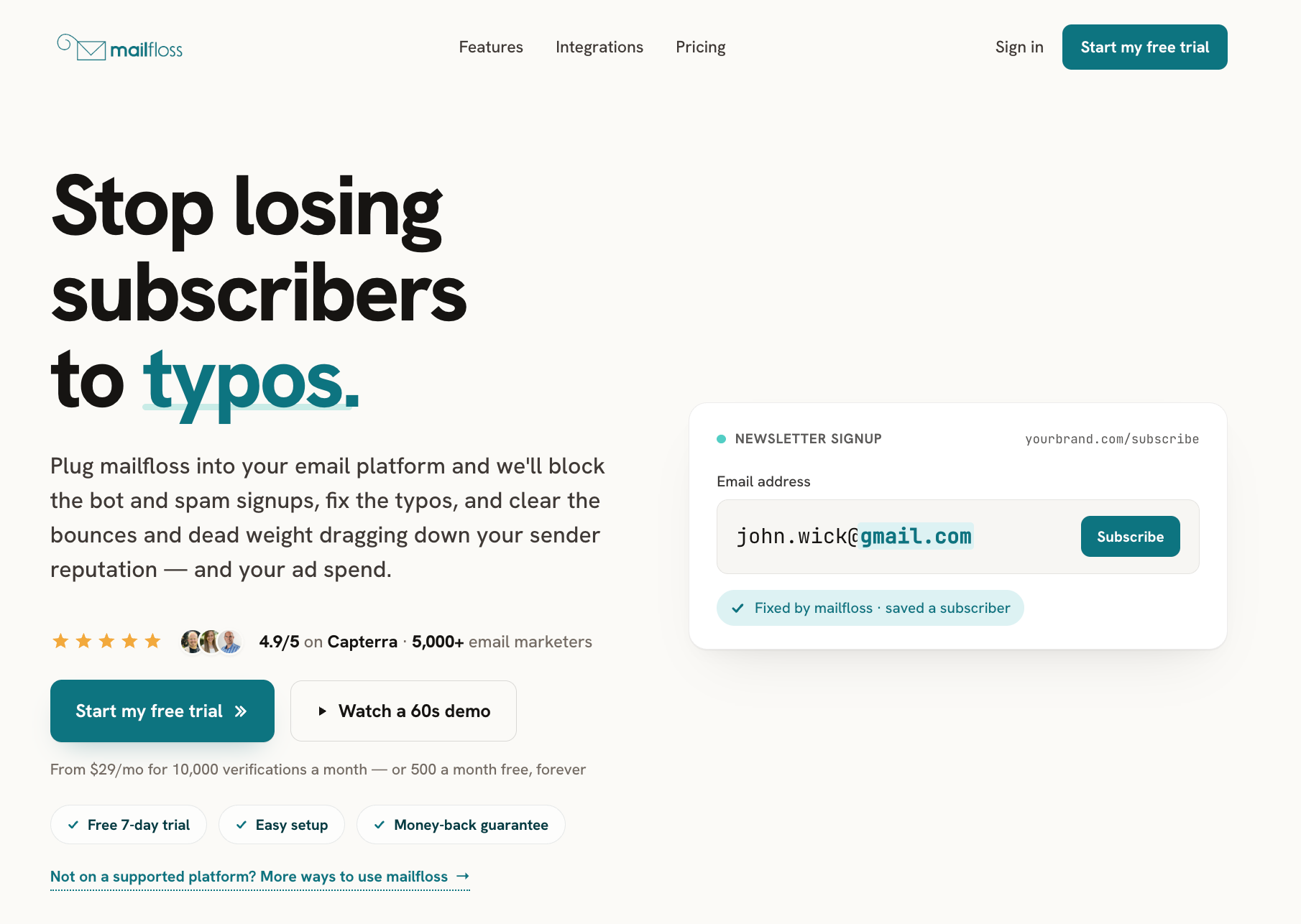
It also supports bulk verification, real-time API checks, and customizable cleanup rules. Its Decay Protection feature checks existing subscribers for addresses that become invalid over time.
Mailfloss offers subscriptions starting at $29/month for 10,000 verifications, along with prepaid credits for one-time checks. Higher-tier plans provide additional features and integration capacity.
A free 7-day trial is also available, and Mailfloss offers 500 verifications per month free forever, separately from its paid subscription.
For teams that want regular list cleaning without handling every check manually, Mailfloss covers much of the routine work.
Still, businesses may explore alternatives when their verification needs become more specific.
Catch-all domains can accept messages even when a particular mailbox does not exist. Mailfloss detects these addresses, but that result may not confirm which individual mailboxes are usable.
For sales teams managing B2B prospect lists, the uncertainty makes it harder to separate potentially valid contacts from bad addresses before outreach.
Mailfloss already supports several verification methods, but businesses may need a different approach to checking incoming leads.
Businesses managing a contact database may need to validate leads from different sources or check new signups before those records enter their systems.
When the priority is catching bad data at specific points, a different verification workflow may be worth considering.
Automated cleaning saves time, but businesses still need to understand what happens to their email lists after each check.
Businesses should also check how cleanup rules work, which changes can be reviewed, and how the service handles contacts flagged during verification.
Mailfloss offers customizable rules, subscriptions, and prepaid credits, so the concern is more about finding the right setup than missing features.
Businesses may also compare pricing and available controls as their verification volume or maintenance needs change.
Mailfloss is built around automated subscriber maintenance, while its alternatives differ in verification detail, automation, and workflow options. The table below highlights each service's main approach before the individual reviews:
Each alternative offers a different approach to email verification, from automated list maintenance to more detailed validation and developer tools.
Below, we take a closer look at how these other tools compare with Mailfloss, including their capabilities, limitations, and pricing.
Listmint is an email verifier that combines standard SMTP checks with dedicated catch-all verification. It helps businesses verify email addresses that standard checks may leave marked as risky or unknown.
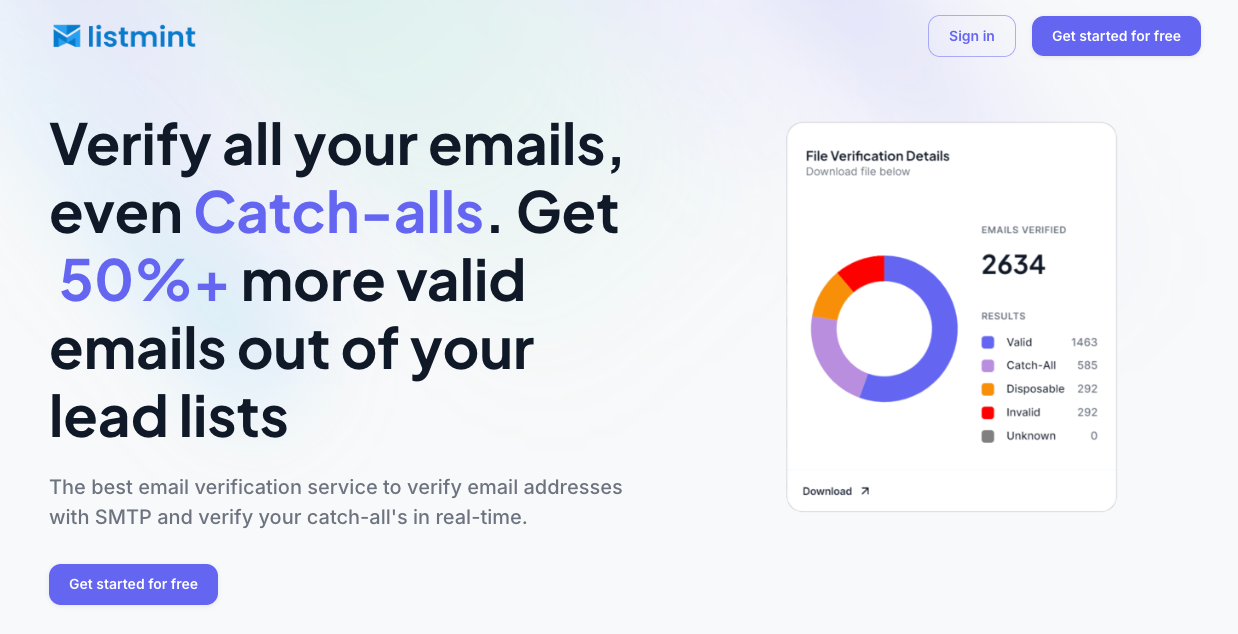
With bulk email verification, real-time checks, and API access, Listmint gives sales teams, agencies, and software companies a way to verify both regular and catch-all contacts in one place.
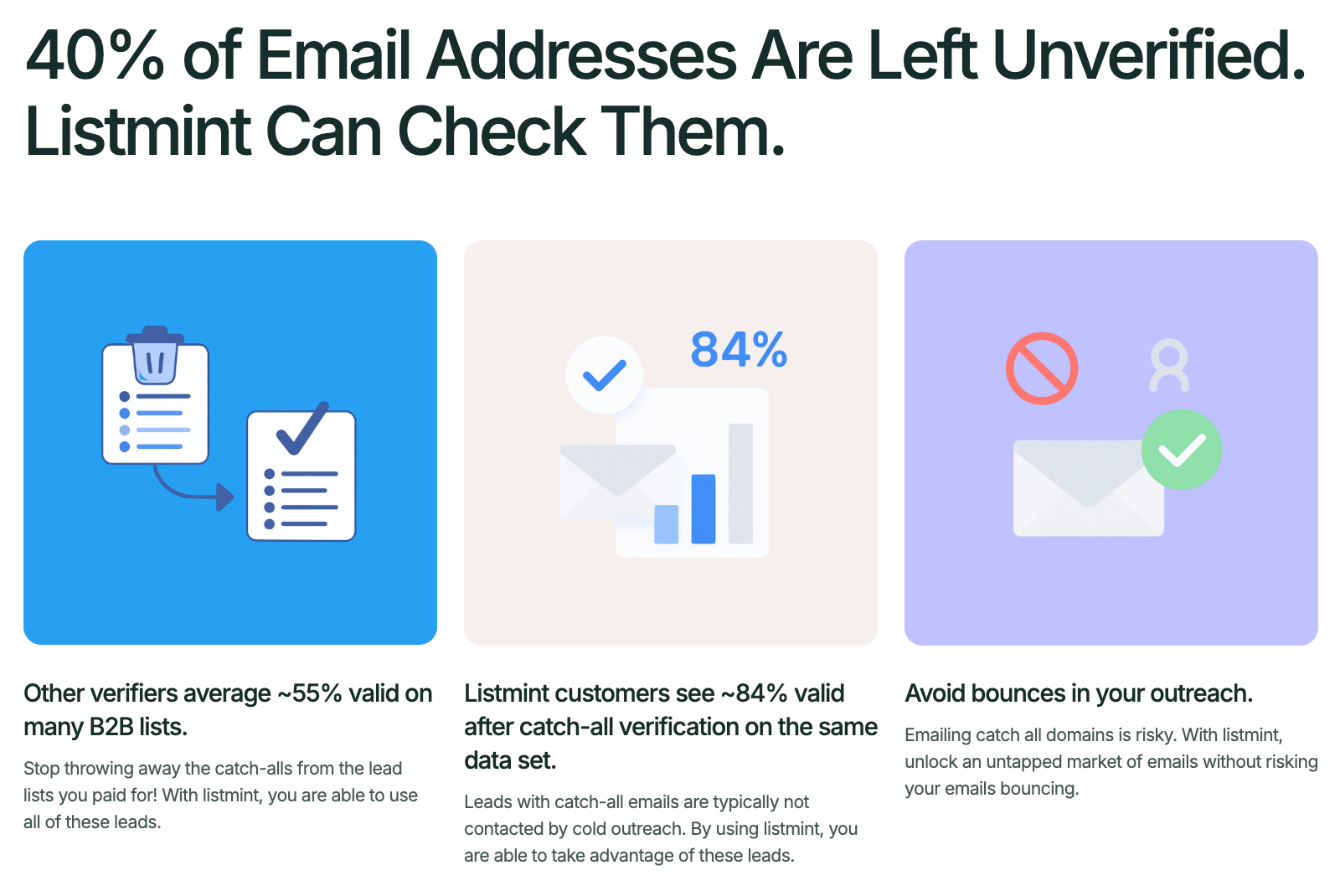
Listmint has verified over 1 billion emails, with 99%+ SMTP and catch-all verification accuracy. Its customers can see up to 84% valid results, compared with approximately 55% from generic verifiers, based on Listmint's published figures.
Mailfloss identifies catch-all addresses and provides automated cleaning for connected subscriber lists. Listmint goes further with dedicated catch-all verification that checks individual addresses without sending verification emails.
Its results distinguish between catch_all_valid and catch_all_invalid, so your team can keep verified contacts and remove invalid ones before outreach.
For B2B teams preparing to run outbound campaigns, this means more usable leads from the lists they already own. A catch_all_valid address can enter an outreach sequence like any other verified contact, without needing separate test campaigns or manual follow-up checks.
Listmint also provides real-time email verification through its API, including catch-all results, so businesses can build the same verification process into lead-generation systems or customer-facing software.
Get more verified contacts from your existing lead lists. Start verifying with Listmint today!
NeverBounce provides bulk list cleaning, real-time email verification, and automated list synchronization.
Businesses can upload existing contacts or connect an email platform to check addresses regularly without handling every verification manually.
It also offers an API and integrations for businesses that want email list cleaning built into their existing workflows.
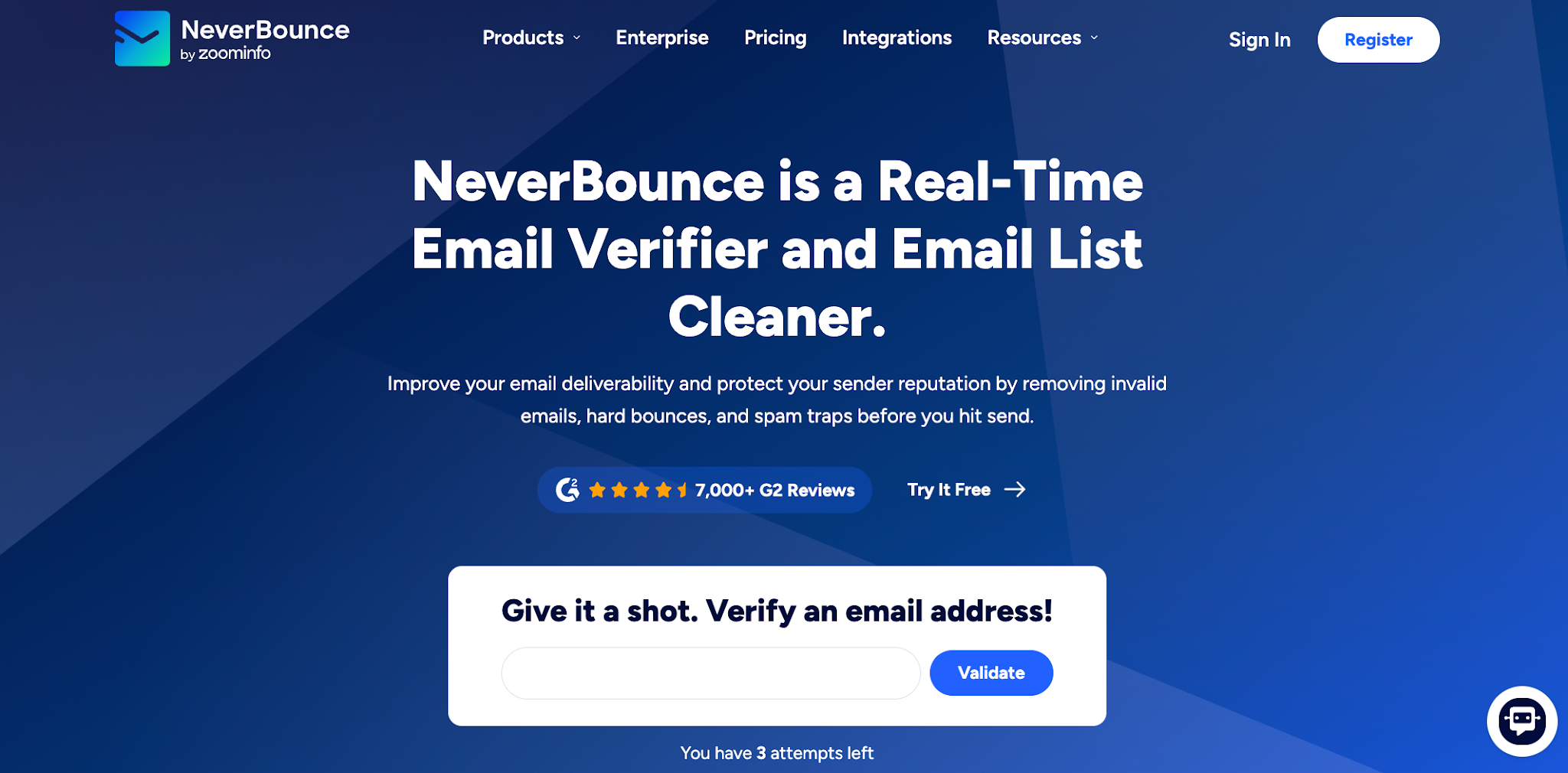
NeverBounce offers Sync for recurring verification of connected lists, alongside separate bulk cleaning and API services. This gives businesses another way to organize regular checks within their existing email workflows.
Mailfloss combines daily checks with typo correction and configurable actions that can update, suppress, or remove subscriber records.
Businesses comparing the two should consider how each service handles synchronization and cleanup actions in their existing systems.
MillionVerifier is an email verification service that helps businesses check existing contacts and maintain clean lists. Its bulk verifier processes uploaded files, while its API checks addresses as they are collected.
For email marketers who need regular maintenance, EverClean automatically verifies new subscribers in connected email marketing accounts.
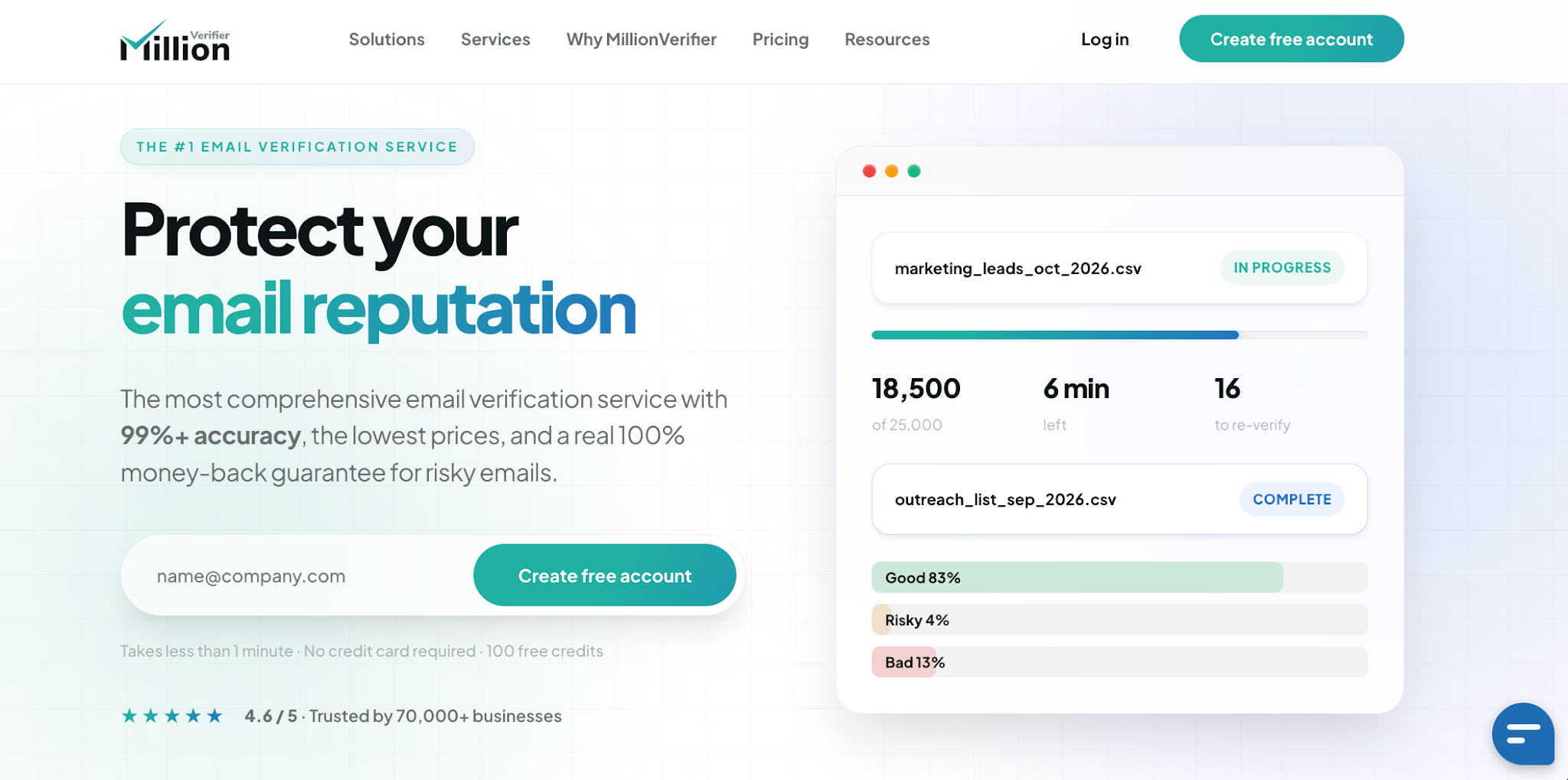
MillionVerifier offers EverClean as a separate monthly service for automatically checking connected email lists. Its one-time verification credits are purchased separately and do not expire.
Mailfloss also offers prepaid credits, but its subscription plans are designed around daily cleaning and configurable actions for connected subscriber lists.
The difference comes down to how each service organizes recurring maintenance and one-time checks.
Verification credits do not expire. EverClean is billed separately for automated list maintenance.
Kickbox is an email verification tool that helps businesses check existing contact lists and validate new addresses in real time through its API.
It classifies results as deliverable, risky, or undeliverable, helping teams identify valid contacts and flag disposable, role-based, or accept-all addresses before sending.
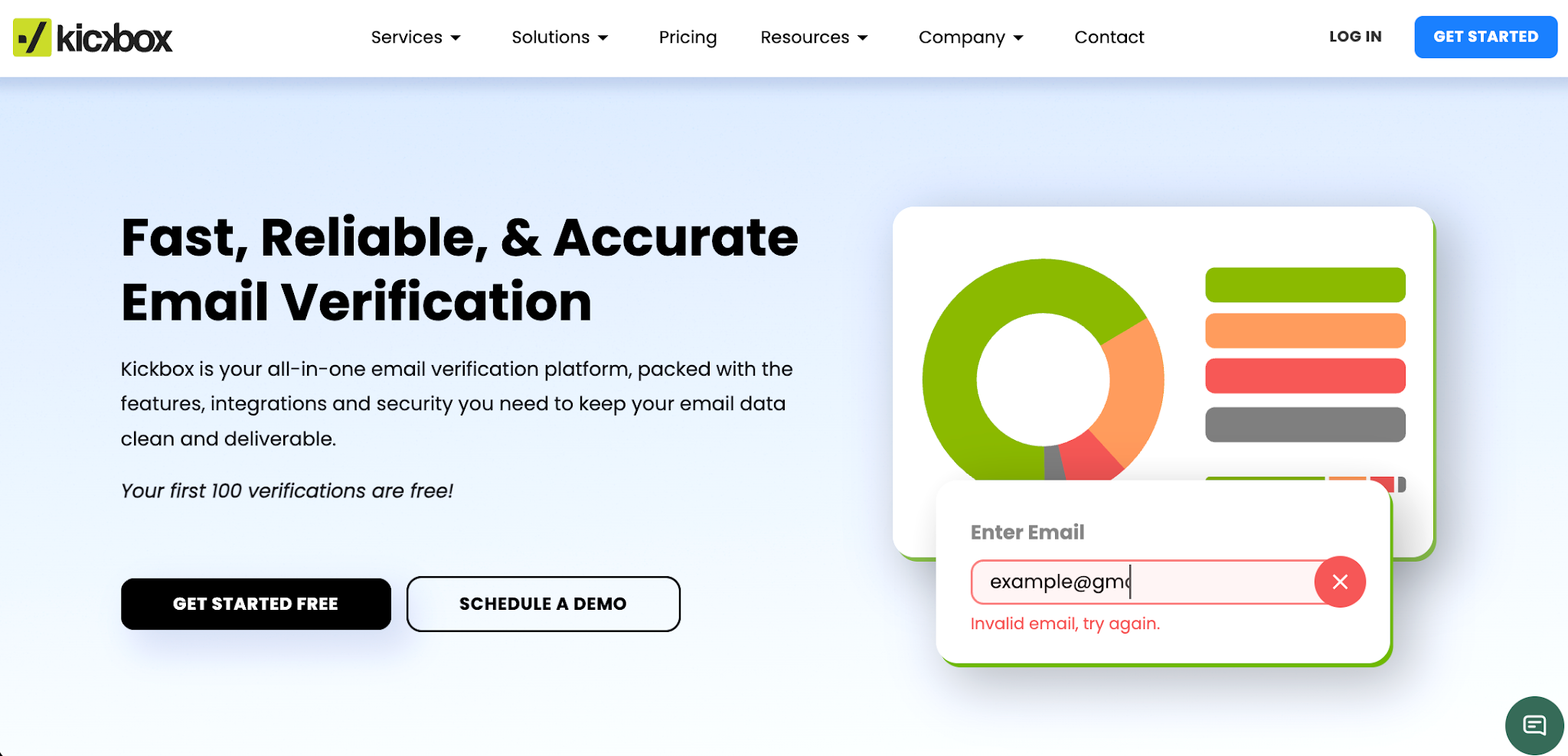
Kickbox focuses on verification results that businesses can use to review uploaded lists or check addresses as they are collected. Its API can also suggest corrections for mistyped email domains.
Mailfloss offers similar verification options but focuses more on automated subscriber maintenance, including daily checks and configurable cleanup actions.
Kickbox may suit businesses that prefer a standalone verifier and want to manage how verification results are used in their own workflows.
Clearout combines email verification with lead discovery tools for businesses managing email data from different sources.
It offers bulk and real-time verification, an email finder for locating business addresses, and Form Guard for checking information entered through signup and lead forms.

Mailfloss is primarily designed for automated subscriber list maintenance, while Clearout also covers lead discovery and validation before contacts enter a CRM.
When job changes leave business records outdated, Clearout's prospecting and enrichment features can help teams find updated contact information.
Its Deep Verify feature also performs additional checks on catch-all addresses, although some results may remain unresolved.
Verifalia is an email verification service that checks individual addresses and uploaded lists. It offers three verification quality levels: Standard, High, and Extreme, allowing businesses to adjust how thoroughly each address is checked.
It also provides an API for businesses that need verification built into their existing systems.
Verifalia gives technical teams more control over the verification process. Higher quality levels allow additional validation attempts, which can help resolve addresses affected by temporary mail server issues.
Mailfloss handles recurring list maintenance through automated checks and configurable cleanup rules.
Verifalia lets businesses select verification quality and processing settings for individual jobs, making it relevant for custom API workflows that require more detailed configuration.
Abstract API offers an Email Validation API for checking addresses during signup, lead capture, and application workflows.
Its real-time API checks email format, MX records, SMTP responses, disposable domains, and catch-all behavior. It also supports bulk verification for businesses processing larger lists.

Abstract returns structured API responses with deliverability status, quality scores, and validation signals.
Developers can use these results to check signups in real time and decide how applications handle questionable addresses.
Mailfloss also offers an API, but includes automated cleaning and subscriber management for connected email marketing accounts.
With Abstract, businesses can write code that blocks bad signups or flags addresses for review based on their own rules.
Finding a better pick starts with checking how each service handles your email lists, verification results, and existing workflows. Here are four areas to review before making a decision.
Start by checking what list verification results tell you about individual addresses. Look for separate statuses for invalid, risky, unknown, and catch-all emails.
The difference between these results can help your team decide which contacts to keep, remove, or review before sending, although verification alone cannot guarantee inbox placement.
Check how often a service verifies connected lists and what happens after each check. Does it remove invalid contacts, flag risky ones, or let your team approve changes first?
Also, check if it fixes common typos automatically or only flags them for manual correction. These details determine how much cleanup work remains for your team.
Review how the service will connect with your email marketing software, CRM, or signup forms. Check if setup requires development work and how verification results are returned.
When you compare integrations, consider how easily your team can act on those results to support email deliverability.
Estimate how many addresses you expect to verify each month. For example, calculate the cost of 10,000 verifications a month, including additional checks and automated maintenance.
Check what the free trial covers and if a money-back guarantee applies. If pricing or usage limits are unclear, contact sales before committing.
Mailfloss remains a practical choice for businesses that want automated email list maintenance. However, finding a suitable alternative depends on how your team verifies contacts, handles uncertain results, and manages its daily workflows.
For B2B teams that need more detailed verification, Listmint combines standard SMTP checks with dedicated catch-all verification. You can identify more usable addresses from existing lead lists without leaving catch-all contacts unresolved.
If verifying more of your leads is a priority, Listmint gives your team another approach to consider.
Verify your catch-all emails with Listmint. Get started for free.
The best email verification tool depends on your business needs. Listmint offers standard SMTP and dedicated catch-all verification, while Mailfloss provides automated email list maintenance. Businesses should compare verification results, integrations, and pricing before choosing a service.
Mailchimp has several major competitors, including Brevo, Constant Contact, Klaviyo, and MailerLite.
These services offer email marketing features such as campaign creation, automation, and contact management. No single competitor is universally the biggest, as comparisons depend on customer base, revenue, or specific features.
Brevo and Mailchimp are two options for sending email newsletters for free. Brevo's free plan allows up to 300 email sends per day, while Mailchimp supports up to 250 contacts and 500 monthly sends. The right choice depends on your audience size and sending needs.
Yes, AI agents can help businesses build lists by researching prospects, organizing contact information, and assisting with data collection. Their capabilities depend on the tools and data sources available.
Verifying those email addresses before outreach helps businesses identify invalid contacts and review uncertain results.