Choosing an email verifier means looking beyond the number of addresses it can check.
You need a service that works with your contact lists, returns useful verification results, and fits your budget.
ZeroBounce and MillionVerifier are both established email verification services with bulk and real-time verification capabilities. However, their approaches to catch-all checks, additional features, and pricing differ.
Listmint is also worth considering, especially if your business regularly needs to verify email addresses from B2B prospect lists.
In this ZeroBounce vs MillionVerifier vs Listmint comparison, we'll look at their verification accuracy, catch-all handling, integrations, and pricing.
ZeroBounce is an email verification and deliverability platform used by businesses to check contact lists and monitor email performance. It is among the popular email verification services that offer tools beyond basic address validation.
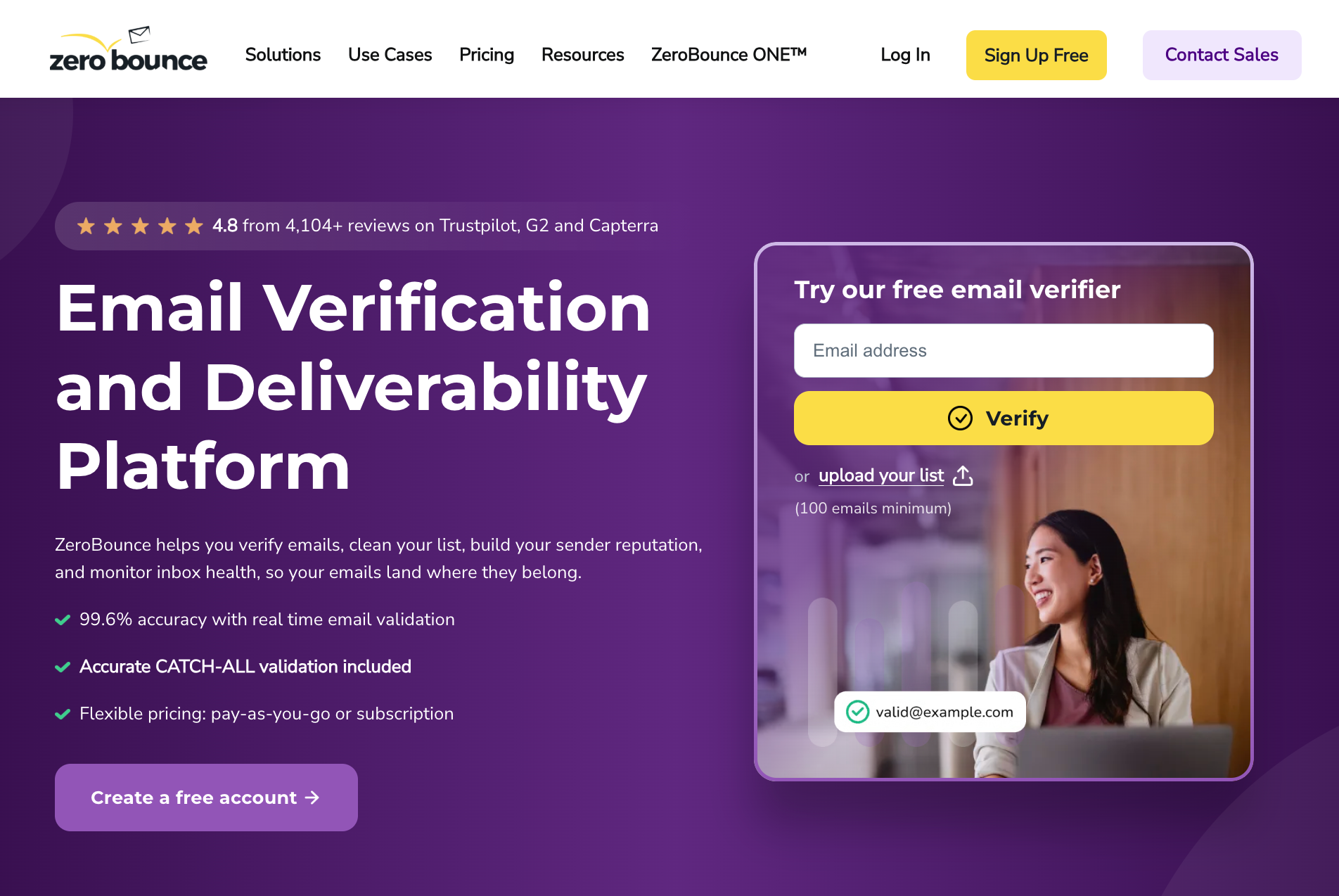
The platform lets users verify individual addresses, upload bulk lists, or check new contacts through its real-time API. Its validation process identifies invalid and disposable addresses, spam traps, and other potentially problematic contacts.
ZeroBounce also provides Verify+ for additional catch-all verification. It can check certain addresses further when standard verification cannot confirm their status.
Beyond verification, ZeroBounce includes email scoring to assess address quality and an email finder for locating business contacts.
Businesses can also use its inbox placement tests, blacklist monitoring, email server tests, and DMARC monitoring to identify potential delivery problems.
MillionVerifier is an email verification service that helps businesses check existing contact lists and identify invalid, disposable, or uncertain email addresses before outreach.
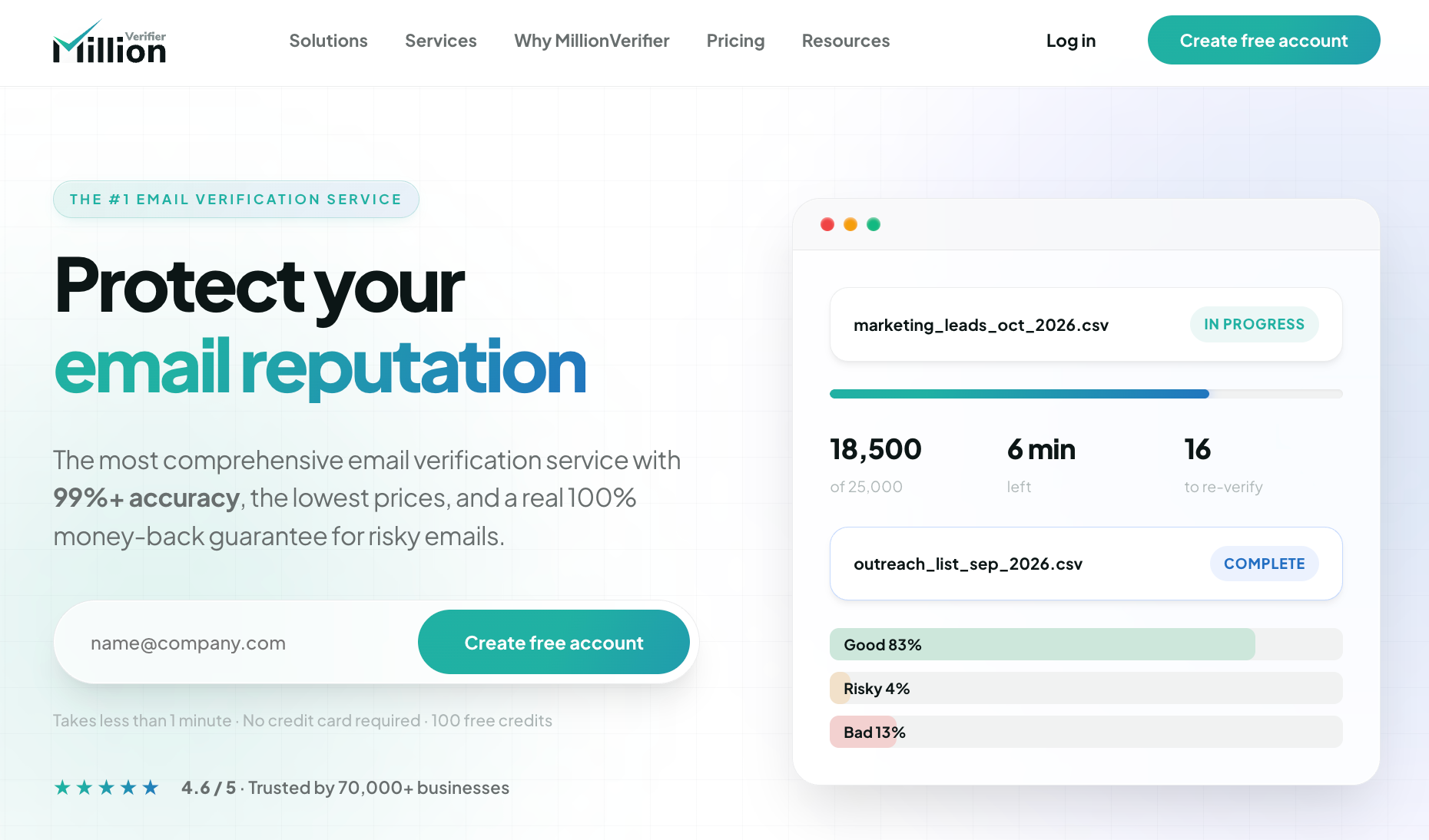
MillionVerifier supports individual checks, bulk uploads, and a real-time API. Businesses looking for a cheap bulk verifier can purchase verification credits based on the number of addresses they need to check.
MillionVerifier groups verification results into Good, Risky, and Bad categories, helping users decide which contacts to keep or remove. It also offers advanced catch-all verification, which its documentation currently describes as a beta feature.
For ongoing bulk list cleaning, MillionVerifier provides EverClean. This service automatically checks new contacts added to connected email marketing platforms, helping businesses maintain their mailing lists without repeatedly uploading files.
EverClean follows a separate subscription model from MillionVerifier's pay-as-you-go verification credits.
Listmint is an email verification service that combines standard SMTP checks with dedicated catch-all verification for businesses managing B2B contact lists.
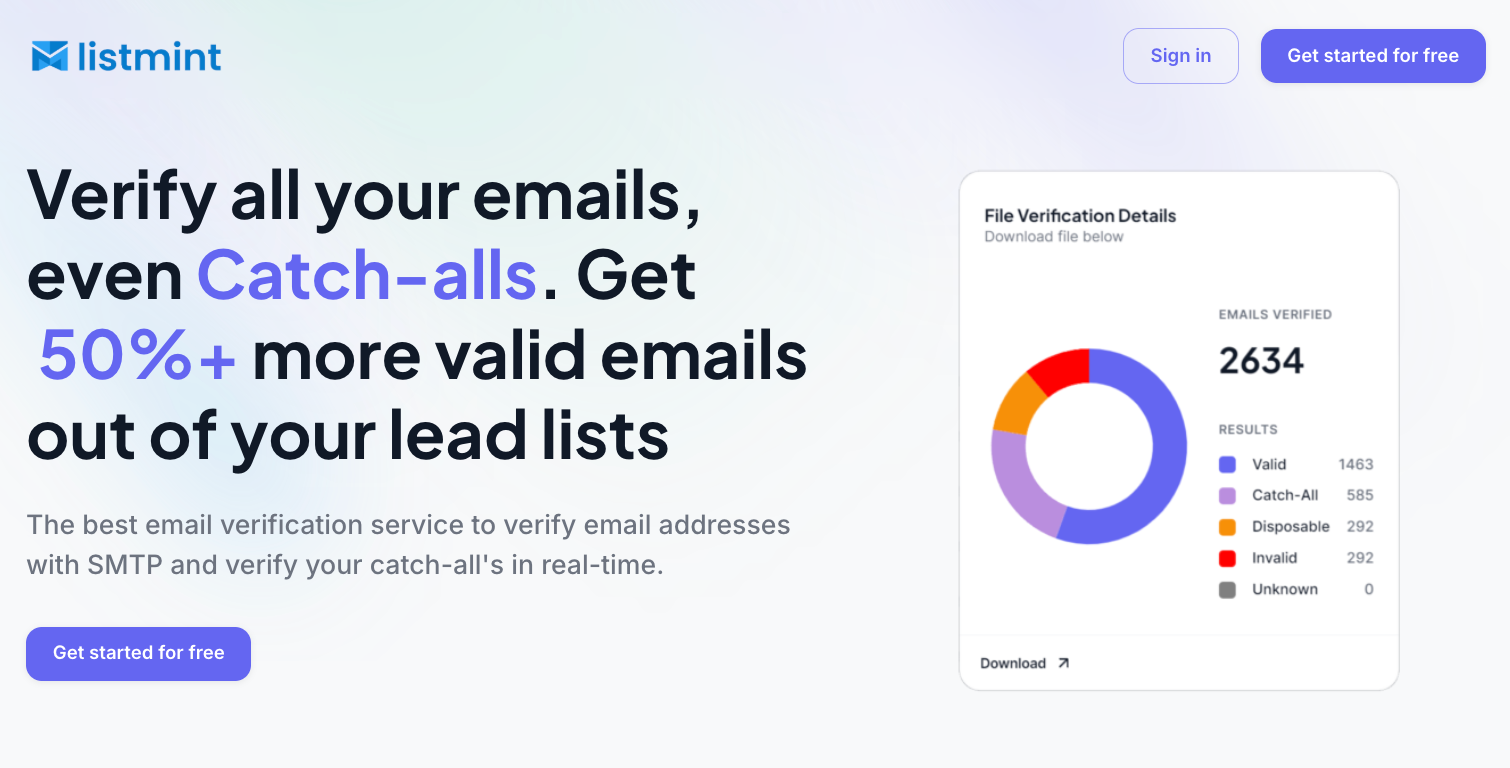
Listmint uses standard verification to check email addresses through syntax, domain, MX record, and SMTP checks. When an address belongs to a catch-all domain, it can go through an additional verification process to determine its status.
Businesses can upload existing contact lists for bulk verification or use Listmint's APIs for real-time verification. The Standard and Catch-All APIs also allow software providers to incorporate email verification into their own applications without sending verification emails to recipients.
Listmint uses separate Standard and Catch-All Credits because each verification type requires a different process.
The service is designed for sales teams, lead generation agencies, business owners, and software companies that need to verify contact data before outreach or within their existing workflows.
Verify standard and catch-all emails with Listmint. Get started for free.
ZeroBounce, MillionVerifier, and Listmint all offer email verification, but they differ in the features and workflows they support.
The table below compares the three tools to help you see what each email verifier offers before we look at their differences in more detail.
The three services differ in their result categories, catch-all checks, integrations, and pricing. The following comparison explains how those differences affect daily use.
Let's compare the five areas that can affect which one works best for your business:
Verification accuracy affects how confidently businesses can use their contact lists. An accurate service helps identify valid contacts, remove invalid emails, and recognize addresses that need further checking before outreach.
However, high accuracy claims don't always tell the full story. The results each service returns are just as important.
ZeroBounce guarantees 99.6% verification accuracy. It checks addresses for issues such as invalid mailboxes, disposable domains, and spam trap addresses.
Its results include Valid, Invalid, Catch-All, Spamtrap, Abuse, Do Not Mail, and Unknown. ZeroBounce also provides detailed sub-statuses, giving users more information about why an address received a particular classification.
MillionVerifier claims 99%+ verification accuracy. It checks addresses using domain information and responses from mail servers to identify invalid contacts and other potentially problematic addresses.
Results are grouped into Good, Risky, and Bad, with more specific classifications such as Ok, Invalid, Disposable, Catch-All, and Unknown. These categories help users distinguish confirmed addresses from unknown results that need further review.
Listmint offers 99%+ accuracy for both SMTP and dedicated catch-all verification.
Its verification process uses layered checks, including syntax validation, domain and MX record checks, and SMTP mailbox checks. Standard verification identifies valid and invalid addresses, with dedicated classifications available for catch-all verification.
Businesses can use these results to make more informed decisions about their contact lists, including addresses that require additional verification beyond standard SMTP checks.
Accuracy percentages alone cannot establish which service performs best. The important consideration is how each provider classifies contacts and how useful those results are when deciding which addresses to keep, remove, or verify further.
Catch-all domains, also called accept-all domains, are configured to accept emails sent to different addresses under the same domain. Because of this, an accepted SMTP response doesn't necessarily confirm that a specific mailbox exists.
Verifying catch-all emails requires additional checks beyond standard SMTP verification. Here's how the three services handle them.
ZeroBounce performs catch-all analysis during standard verification. Its Verify+ feature runs additional checks on eligible catch-all addresses that remain unresolved.
Verify+ can reclassify some addresses as Valid or Invalid, although others may retain the Catch-All status. This additional process can take up to 12 hours.
MillionVerifier offers advanced catch-all verification, which its documentation currently describes as a beta feature.
The service automatically performs additional checks on addresses associated with catch-all domains. These checks typically take 10–30 seconds, or up to 60 seconds for certain providers, without an additional credit charge.
Addresses that cannot be confirmed may still receive a Catch-All result.
Listmint takes a dedicated approach to catch-all verification by checking addresses that standard SMTP verification cannot confirm individually.
Its real-time Catch-All API provides results without sending verification emails to recipients. Addresses processed through its dedicated workflow receive catch_all_valid or catch_all_invalid classifications, giving businesses a more direct answer about which contacts to retain or remove.
A catch_all_valid result means the contact can be treated like other verified valid addresses, rather than remaining in an unresolved category.
For B2B teams, the benefit is getting a real answer about more of the contacts in their existing lists.
All three services support bulk email verification for existing contact lists and API checks for individual addresses. The main difference is how businesses submit their data, process larger lists, and receive results.
ZeroBounce accepts CSV, XLS, XLSX, and TXT files for bulk uploads. After processing, users can download their verification results. It can also identify duplicate emails in uploaded lists.
For API users, ZeroBounce supports single-address checks, batch requests, and bulk file submissions. Its documentation estimates around 45–60 minutes to process 100,000 contacts through file verification.
MillionVerifier supports file uploads for checking existing lists and provides an API for verifying individual addresses as they are submitted.
For high-volume checks, its bulk API lets businesses submit files and retrieve results programmatically, without uploading each list manually through the dashboard.
Listmint supports bulk email verification for existing contact lists, along with separate Standard and Catch-All APIs for real-time checks.
Businesses can upload lists for processing or use the APIs to verify individual addresses within their existing workflows.
Standard SMTP verification can process thousands of addresses within minutes. Bulk catch-all verification takes longer because it requires additional checks.
Email verification becomes easier to manage when it connects with the systems your business already uses. Integrations can help teams check new contacts, update verification statuses, and maintain their lists without repeatedly transferring data between services.
ZeroBounce integrates with CRM and email marketing tools, including Zoho CRM. Businesses can connect their accounts, verify existing contact lists, and send the results back to their CRM.
For Zoho CRM users, ZeroBounce also supports scheduled verification and Contact Monitoring, which checks new addresses added to connected lists. These features help teams maintain contact quality within their existing workflows.
MillionVerifier integrates with various email marketing and CRM tools, promoting 40+ integrations with popular platforms.
For example, businesses can connect Campaign Monitor to verify their existing lists. Its EverClean service takes this further by automatically checking connected lists on a recurring schedule.
Users can choose which lists to monitor and configure EverClean to unsubscribe or remove addresses that match selected invalid results. This reduces the need to clean the same lists manually.
Listmint supports API-based integrations for businesses that want email verification built into their existing workflows.
Your team can connect Listmint to a CRM, lead capture system, or custom application to check addresses and use the results to update contact records. These workflows can bring standard and catch-all verification into one dashboard, depending on how the integration is built.
Listmint also supports software providers that want to offer email verification within their own products. Its Standard and Catch-All APIs give developers the flexibility to build verification features for their customers.
For businesses that need more control over how verification fits into their operations, Listmint offers a practical option without requiring a separate verification service for catch-all contacts.
Email verification helps businesses identify problematic addresses, but it doesn't cover every factor that affects email delivery. Some services offer extra features to help teams investigate deliverability issues and protect their sender reputation.
ZeroBounce offers a broader set of email testing tools beyond address verification.
Its inbox placement testing helps businesses see where test messages land before sending a campaign. Blacklist monitoring checks for blocklist listings, and DMARC monitoring helps teams identify email authentication issues.
ZeroBounce also provides email scoring to assess address quality and Activity Data for additional insights into email-address activity.
These tools are useful for businesses that want to investigate delivery problems alongside verifying their lists.
MillionVerifier focuses primarily on email verification and list maintenance. Its tools help businesses identify problematic contacts and keep their lists updated through recurring checks.
It is a practical option for teams that mainly need verification and automated list cleaning.
Listmint focuses on verifying contacts, including unknown addresses that standard checks cannot resolve. For inbox placement testing or DMARC monitoring, assess a separate tool.
The cost of email verification depends on more than the price of a plan. You also need to consider how many addresses you can verify, what features are included, and how credits are charged.
ZeroBounce, MillionVerifier, and Listmint use different pricing models, so let's look at what each service offers and how those costs compare.
ZeroBounce offers a free plan with 100 monthly verification credits. Its pay-as-you-go option costs $129 for 10,000 credits, with one credit used per email validation. Unknown results are not charged.
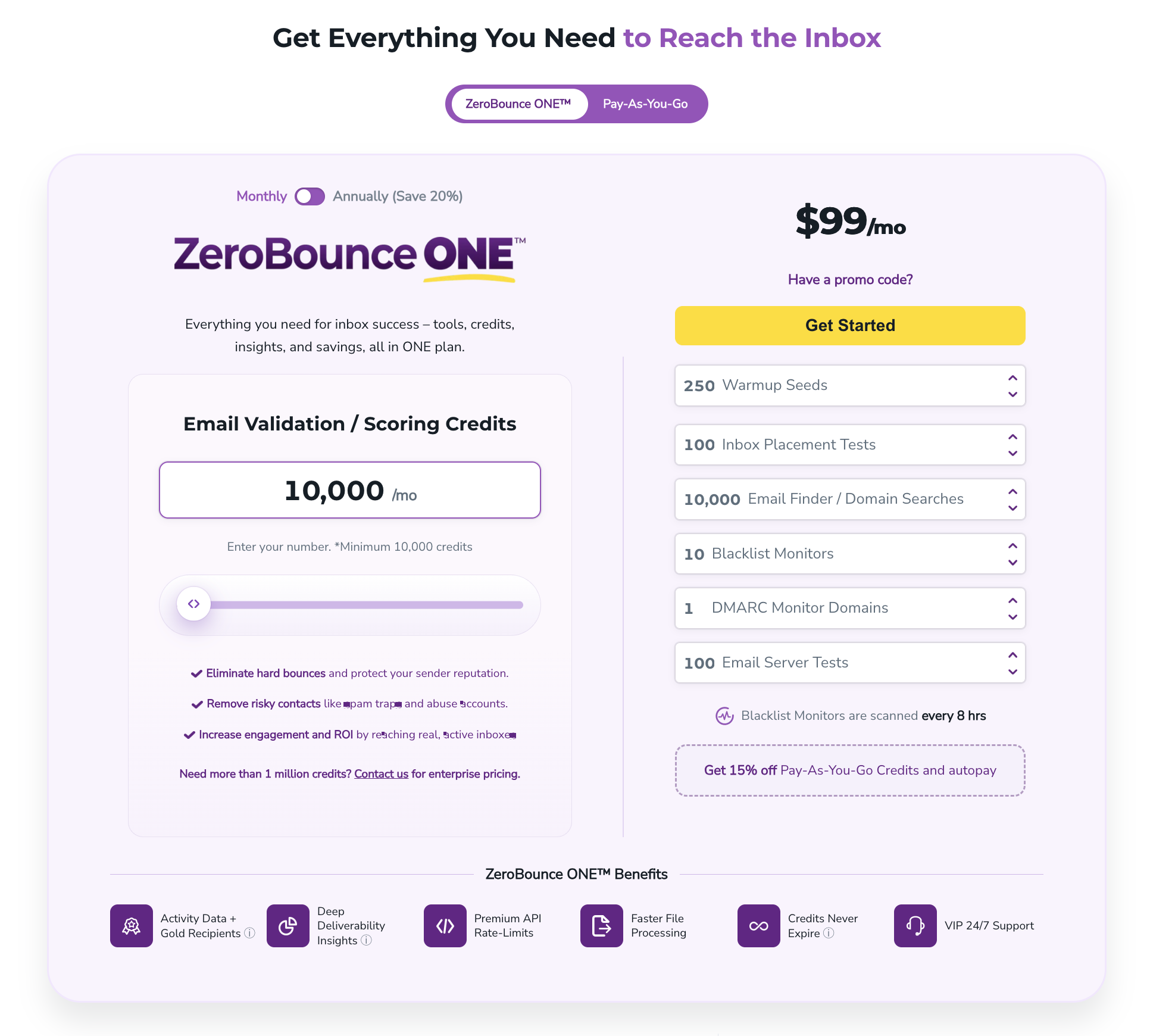
For recurring use, ZeroBounce ONE starts at $99/month, including 10,000 monthly validation/scoring credits and additional deliverability tools. Custom enterprise pricing is also available.
Credit expiration depends on account creation date. Purchased credits don't expire for accounts created on or before June 1, 2026. For newer accounts, credits expire two years after the latest purchase, with each new purchase resetting that period.
Credits remain valid during an active ZeroBounce ONE subscription, with a new two-year period starting when the subscription ends.
MillionVerifier uses pay-as-you-go verification credits, with lower per-email rates for larger purchases.
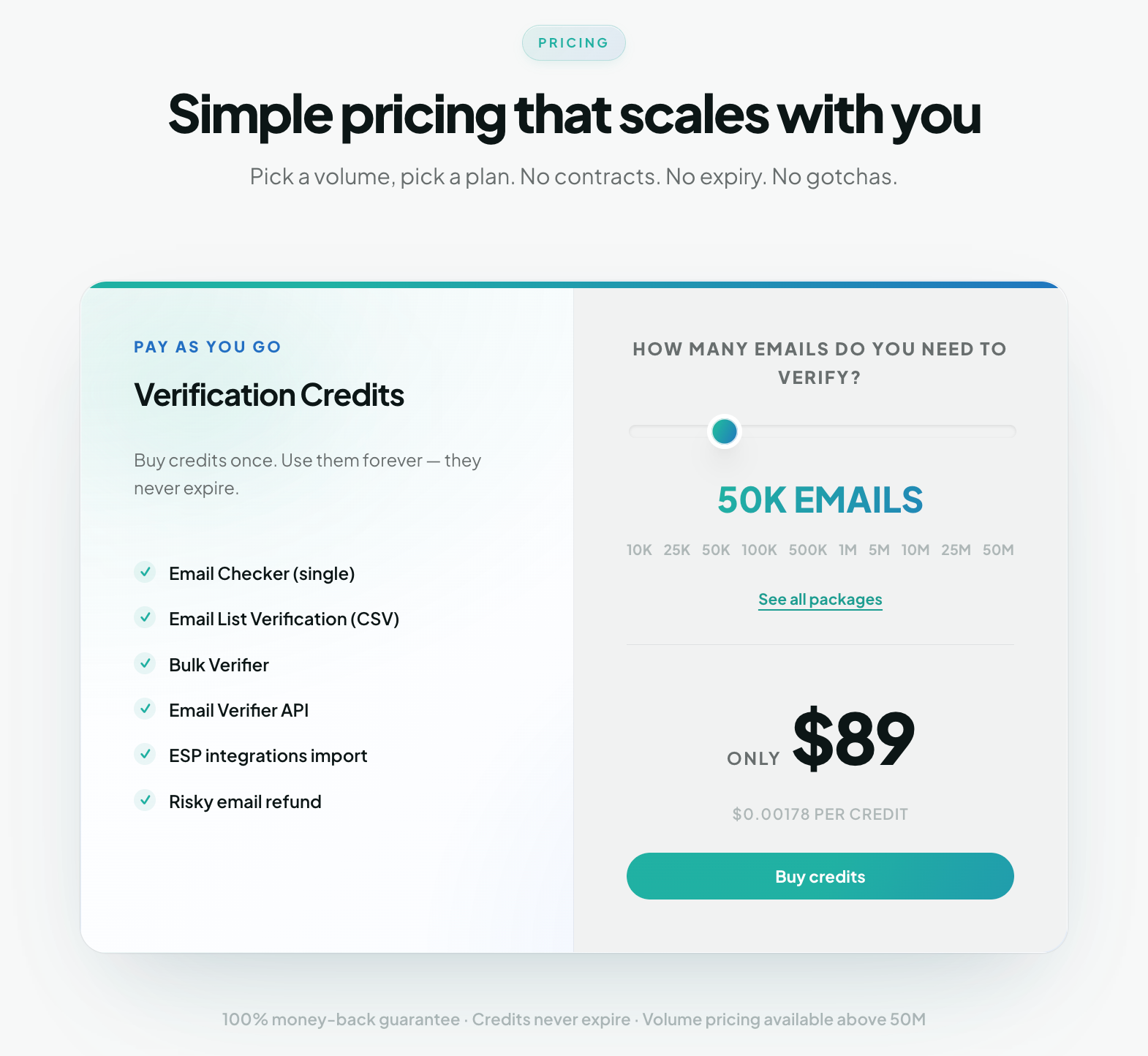
Prices start at $39 for 10,000 emails, increase to $89 for 50,000, and reach $449 for 1 million. Purchased credits never expire, making this option useful for businesses that verify large lists periodically.
MillionVerifier automatically returns verification credits for eligible Risky results, including Catch-All and Unknown addresses. These credits can be used for future verifications, although accounts flagged for misuse may not qualify.
EverClean is billed separately for businesses that need automated list cleaning.
Listmint offers monthly plans that include both standard SMTP and dedicated catch-all verification.
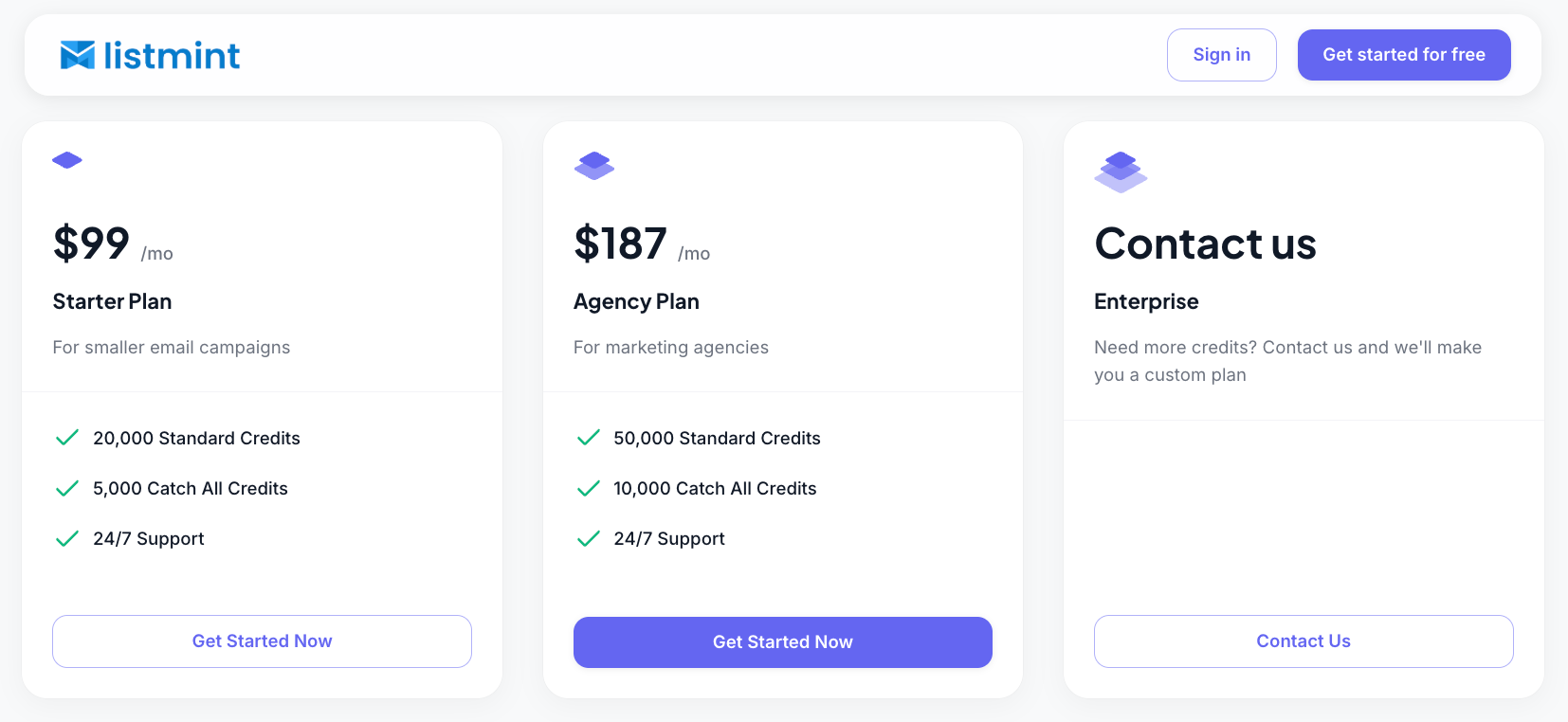
The Starter plan costs $99/month and includes 20,000 Standard Credits and 5,000 Catch-All Credits.
For agencies managing larger contact lists, the Agency plan costs $187/month, with 50,000 Standard Credits and 10,000 Catch-All Credits. Both plans include 24/7 support, and Enterprise pricing is available for custom requirements.
Standard and Catch-All Credits are separate because each verification process has a different cost. This allows businesses to pay for the verification types they need.
The better value depends on how often you verify addresses and which features you need.
MillionVerifier can suit businesses that occasionally clean large lists. Its prepaid credits don't expire, so you can use the same credits over time without a monthly verification subscription.
ZeroBounce makes sense when you also need deliverability testing and monitoring tools. Its subscription combines verification credits with these additional services.
Listmint is worth considering if your business regularly verifies both standard and catch-all addresses. Its plans include dedicated allowances for each verification type.
When comparing MillionVerifier and ZeroBounce with Listmint, consider your monthly verification volume, catch-all requirements, and included features before you decide.
ZeroBounce, MillionVerifier, and Listmint are all capable tools, but the right choice depends on what your business needs from email verification.
Consider the types of addresses you work with, how often you verify lists, and how verification fits into your daily workflow. These factors matter more than choosing a service based on accuracy claims alone.
ZeroBounce is a good choice if your team needs more than email verification.
Its detailed verification results help you understand why contacts receive certain classifications. You also get access to inbox placement testing, blacklist monitoring, and other deliverability tools.
If you're comparing ZeroBounce with other verifiers because you want to monitor delivery problems alongside list quality, its broader toolkit may be worth considering.
MillionVerifier is worth considering if your business regularly processes large contact lists and wants affordable verification credits.
Its pay-as-you-go model works for occasional list cleaning, and EverClean supports ongoing maintenance of connected lists.
For businesses running email campaigns or managing email marketing lists, MillionVerifier offers a practical way to verify contacts without purchasing a broader deliverability toolkit.
Listmint is a particularly great choice for B2B sales teams, agencies, and lead generation businesses that regularly work with catch-all addresses.
It supports standard SMTP and dedicated catch-all verification, making it useful for teams that need both verification types in one service.
Listmint also offers real-time APIs for businesses that want verification built into their existing workflows.
Your business may already have thousands of contacts sitting in your CRM, prospecting database, or previous lead lists.
But how many of those contacts have you excluded from outreach because they were marked as catch-all or uncertain?
That could mean leaving potentially valuable leads untouched, even after you've paid to acquire the data.
Listmint's catch-all verification helps you identify more usable contacts from the email lists you already own. Its dedicated verification process classifies addresses as catch_all_valid or catch_all_invalid, so you can keep verified contacts and remove invalid ones.
You don't need to purchase another prospect list just to find more people you can contact.
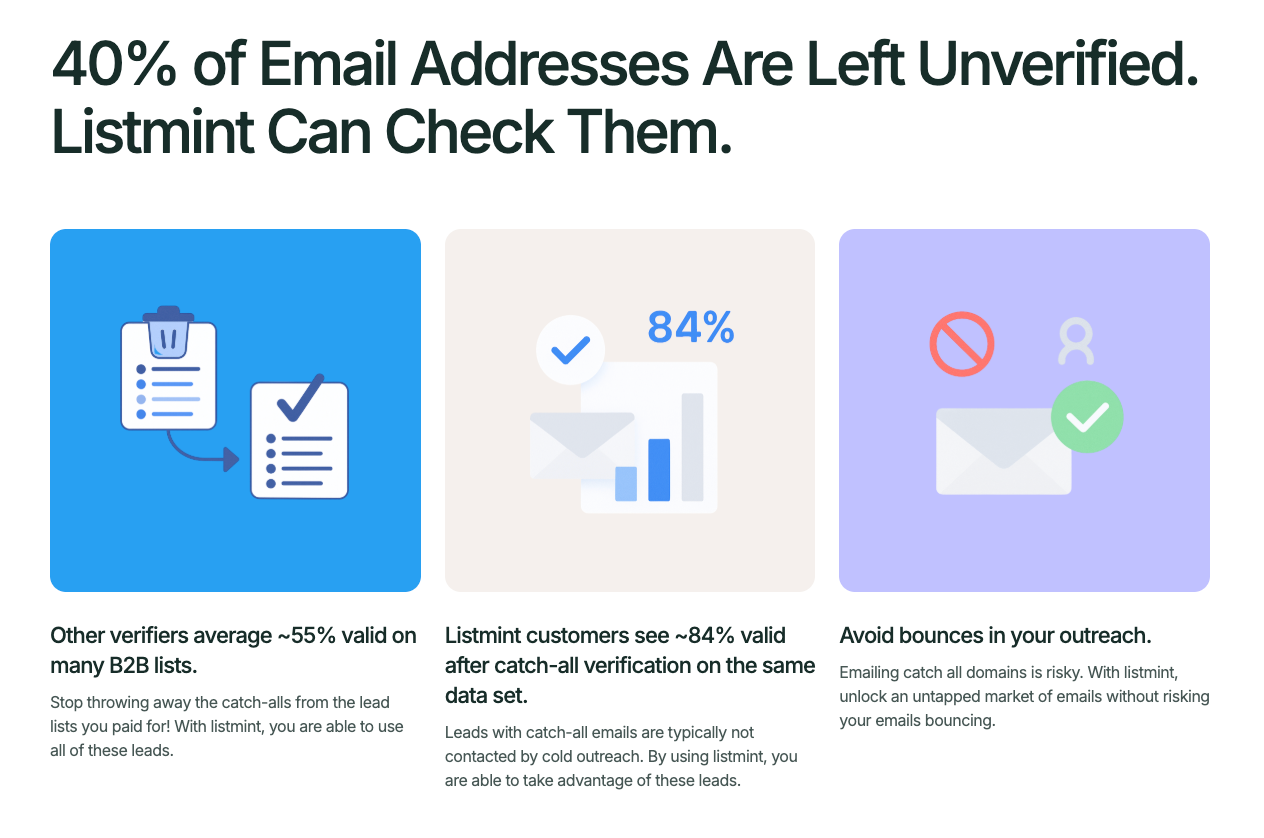
Listmint has verified over 1 billion emails, achieving 99%+ accuracy in both SMTP and catch-all verification. Listmint's own comparison shows up to 84% valid results, compared with approximately 55% using generic verification approaches.
For B2B sales teams and agencies, that means more opportunities to work with existing leads without adding unnecessary bad data to outreach lists.
Software providers can also bring Listmint's verification capabilities into their products, giving customers access to standard and catch-all checks in one service.
A clean list helps lower your bounce rate before your next campaign. Before you invest in another prospect list, see how many usable contacts are already sitting in your database.
Unlock more valid B2B leads with Listmint's catch-all verification. Get started for free.
ZeroBounce is a better fit for businesses that need email verification alongside inbox placement testing, email scoring, and deliverability monitoring.
NeverBounce is worth considering for teams focused on bulk verification, real-time checks, and automated list cleaning. Between ZeroBounce and NeverBounce, the better choice depends on your workflow and required features.
Yes, MillionVerifier provides data protection measures for businesses uploading contact lists. It states that it complies with GDPR and offers a Data Processing Agreement. Uploaded files and verification results are normally deleted within 30 days, subject to its retention policy.
ZeroBounce is one option for free email verification, offering 100 verification credits that renew monthly. Its free plan also includes limited email testing and monitoring features. For larger lists, businesses will need to consider paid verification credits or subscriptions.
Yes, ZeroBounce is an established email verification service with a published 99.6% accuracy guarantee, subject to its stated conditions.
It identifies invalid, disposable, and potentially problematic addresses, although no verifier can guarantee that every verified address will accept future messages.
If one service flags more risky emails than another, review the classifications before deciding which contacts to use.
Unresolved Catch-All and Unknown results may need additional verification to determine if the addresses are usable. If a dedicated verifier confirms a catch-all address as valid, businesses can treat it like other verified contacts.